
If water pools in your yard after every storm, runs toward the house, or leaves the lawn soggy for days, the right yard drain can fix it. The challenge is choosing the right type. Catch basins, French drains, channel drains, pop-up emitters, dry wells, swales and rain gardens all move water, but each solves a different problem. Pick the wrong one and you can spend thousands and still have a wet yard.
This updated 2026 guide explains the main types of yard drains, how each one works, where it performs best and where it falls short, with a focus on the heavy clay soils, flat subdivisions and freeze-thaw winters common across Naperville and the Chicago suburbs.
Stop Your Backyard From Becoming a Retention Pond
Installing the wrong type of drain won't just waste your money—it can actually channel water toward your foundation. Let our drainage engineers design a high-capacity system that permanently keeps your yard dry and protected.
Get a Free QuoteQuick Answer: Which Type of Yard Drain Do You Need?
| Problem | Best drain type(s) |
|---|---|
| Puddles in a low spot after rain | Catch basin connected to solid pipe, or regrading |
| Lawn stays soggy for days | French drain, often with catch basins |
| Water running off a driveway, patio or garage apron | Channel (trench) drain |
| Downspouts or sump pump flooding the yard | Buried downspout/sump lines to a pop-up emitter or other outlet |
| Water flowing in from a neighbor or uphill area | Curtain drain or swale along the property line |
| Large volumes of surface water crossing the yard | Swale or regrading, plus catch basins |
| No downhill outlet available | Sump basin and pump system, or dry well in permeable soil |
Most properties need a combination. A typical Chicagoland backyard system might pair regrading with a French drain, several catch basins and buried downspout lines that all discharge to one outlet.
Surface Drains vs. Subsurface Drains
Before comparing individual products, it helps to understand the two broad categories:
- Surface drains collect water that is visibly flowing or pooling on top of the ground, such as runoff from roofs, patios and lawns. Catch basins, channel drains and swales are surface drains.
- Subsurface drains collect water that has soaked into the soil and is saturating the root zone or pressing against foundations. French drains and curtain drains are subsurface drains.
Many drainage problems involve both. Watching your yard during a heavy rain, then checking it again a day later, tells you which kind of water you are fighting.
1. Catch Basins
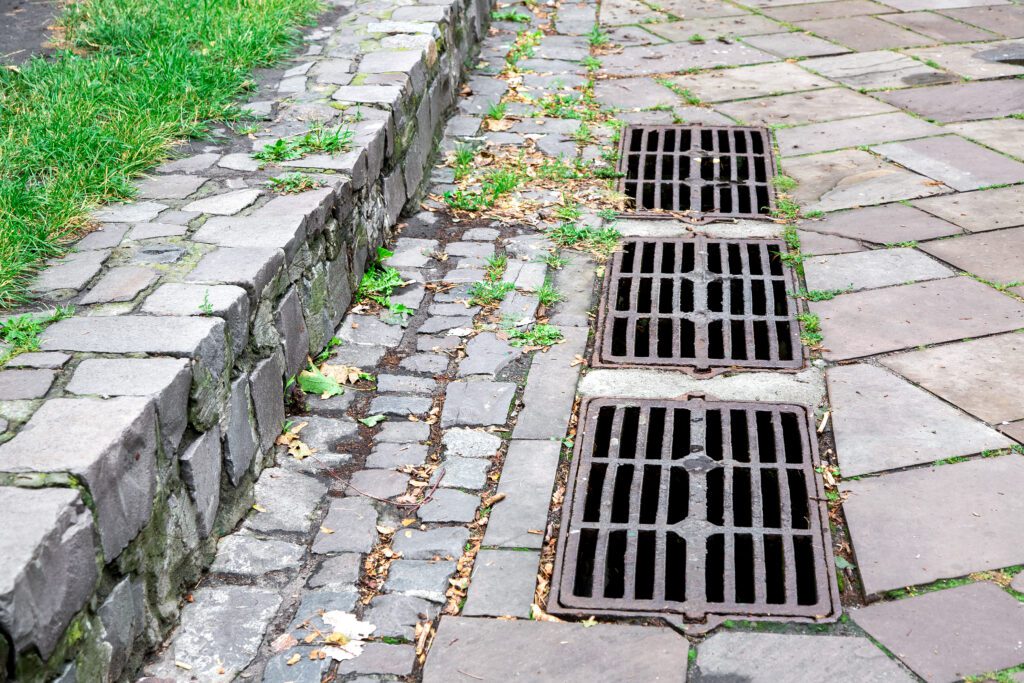
A catch basin is a box set into the ground at a low point with a grate on top. Surface water drops through the grate, sediment settles in the bottom of the box, and water exits through a solid pipe to an outlet.
Best for: low spots where water ponds, the bottom of slopes, areas next to patios and walks, and collecting downspout water.
Pros: collects surface water quickly; easy to clean; works well with French drains and buried downspout lines.
Limitations: only collects water that reaches the grate, so it does not dry out saturated soil by itself. Grates need to be kept clear of leaves and mulch.
In our experience, several small catch basins placed at true low points often outperform one large basin, because water does not have to travel far across the lawn to reach them.
2. French Drains
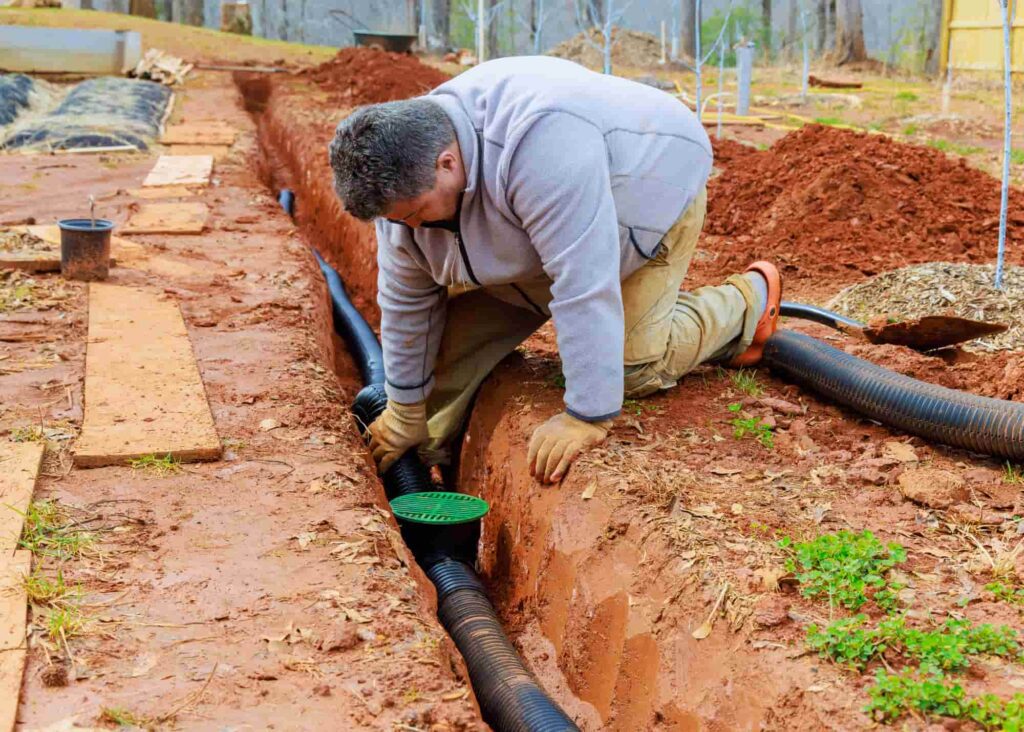
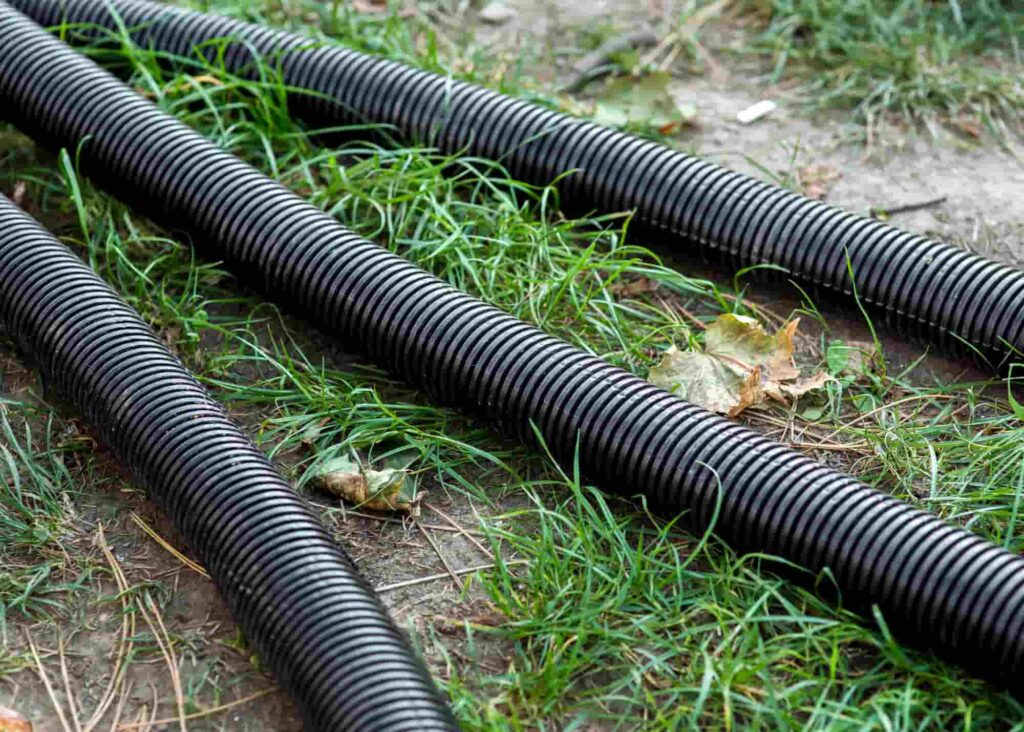
A French drain is a trench lined with filter fabric, filled with clean angular stone and a perforated pipe. Water in saturated soil moves into the stone, enters the pipe and flows downhill to an outlet.
Best for: lawns that stay soggy for days, areas where water seeps up from below, wet strips along foundations and long low areas of the yard.
Pros: removes water from the soil, not just the surface; hidden under lawn or decorative stone; long-lasting when built with fabric and a good outlet.
Limitations: requires a continuous slope and a downhill outlet; can be overwhelmed by large surface flows if used alone; costs more than simple surface solutions.
Most residential French drains are 18 to 24 inches deep. Our guide to how deep a French drain should be covers depth, width and slope in detail, and our French drain installation page explains how we build them.
3. Curtain Drains
A curtain drain is a type of French drain placed across a slope, uphill of the area you want to protect. It intercepts water moving through the soil before it reaches your lawn, patio or foundation.
Best for: yards below a neighbor’s property or hillside, and houses where water arrives from one direction.
Limitations: must be placed where water is actually moving and deep enough to intercept it. See French drain vs. curtain drain for the differences.
4. Channel Drains (Trench Drains)
Channel drains are long, narrow drains with a continuous grate, set flush with a hard surface. They catch water sheeting across driveways, patios, pool decks and garage aprons.
Best for: the low edge of a driveway sloping toward a garage, patio edges next to the house, and walkways that ice over from runoff.
Pros: collects water across a wide area; low profile; strong grates are available for vehicle traffic.
Limitations: needs to be built into or cut into the hardscape; grates must be rated for the loads they will see; must connect to a solid pipe and outlet. Compare options in our French drain vs. trench drain guide.
5. Buried Downspout and Sump Pump Lines
Instead of letting downspouts and sump pumps dump water next to the house, their discharge can be connected to underground solid pipe that carries it to a safe outlet.
Best for: wet areas next to the foundation, soggy strips below downspouts, and sump pumps that keep the same spot wet year-round.
Pros: removes one of the largest sources of yard water; invisible once installed; inexpensive compared with larger systems.
Limitations: needs cleanouts or catch basins to clear debris, and outlets that will not freeze shut. Sump lines should drain completely between cycles.
6. Pop-Up Drain Emitters
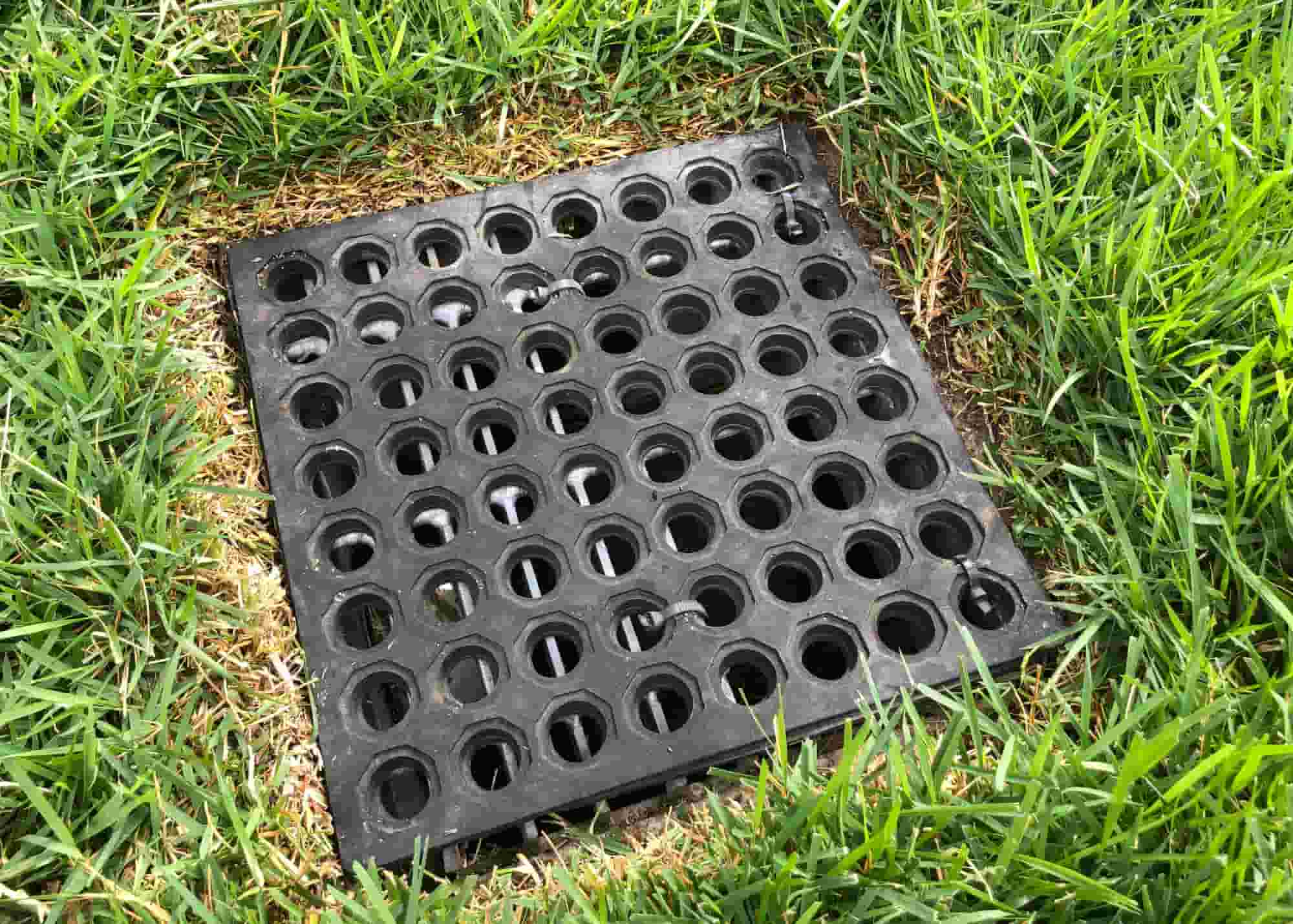
A pop-up emitter is a small cap at the end of a buried drain line. When water flows through the pipe, pressure lifts the cap and water spills onto the lawn. When the flow stops, the cap closes to keep debris and animals out.
Best for: discharging downspout, sump and drain lines in a lower part of the yard when no street or ditch outlet is available.
Limitations: the emitter must be lower than the inlet; it can freeze or be buried by snow; and it releases water onto the lawn, so it needs enough distance and slope to keep that water from flowing back. Learn more in our lawn pop-up drain guide.
7. Dry Wells
A dry well is an underground chamber or stone-filled pit that collects water and lets it soak slowly into the surrounding soil.
Best for: properties with sandy or gravelly soil that drains well, and modest amounts of roof water where there is no other outlet.
Limitations: in heavy clay, which is common in DuPage and Will counties, water leaves a dry well very slowly. The well can stay full for days and stop accepting new water, especially in spring when the soil is already saturated. Always test the soil before relying on a dry well.
8. Swales
A swale is a shallow, gently sloped channel, usually grass-lined, that carries surface water across a property to an outlet. Many subdivisions have swales along rear and side lot lines.
Best for: large volumes of surface water, runoff from higher properties, and moving water along property lines.
Pros: inexpensive; low maintenance; handles big storms well.
Limitations: needs room and a continuous slope; does not dry saturated soil; often damaged by fences, gardens or fill placed in it. Our swales vs. French drains guide compares them in detail.
9. Dry Creek Beds
A dry creek bed is a decorative channel lined with river rock and boulders that carries water during storms and looks like a natural streambed the rest of the time.
Best for: visible drainage paths where you want a landscape feature, such as below downspouts or along a slope.
Limitations: works like a swale, so it needs slope and an outlet. Stone alone does not fix saturated soil, and loose stone can wash out if the channel is undersized.
10. Rain Gardens
A rain garden is a shallow planted depression that captures runoff and lets it soak in over a day or two, using deep-rooted native plants.
Best for: collecting moderate roof or lawn runoff in soils that drain reasonably well, with environmental and pollinator benefits.
Limitations: in heavy clay that drains very slowly, a rain garden can become a long-lasting puddle. Size it correctly, test the soil and include an overflow route. See our guide to rain garden plants for wet and dry conditions.
11. Sump Basin and Pump Systems
When there is no downhill outlet, a yard drainage system can collect water in a buried basin and use a pump to lift it to an outlet at a higher elevation.
Best for: very flat lots, yards lower than the street, and properties where gravity drainage is impossible.
Limitations: requires power, maintenance and a backup plan for outages. It is a solution of last resort, but a reliable one when designed properly.
Don’t Forget Grading
Grading is not a drain, but it is often the most important part of a drainage fix. If the ground slopes toward the house or has low areas with no way out, every drain on the property works harder. Building codes generally call for ground to fall about 6 inches within the first 10 feet away from the foundation. Regrading, combined with the right drains, solves most residential water problems.
How to Choose the Right Yard Drain
- Observe the water. Where does it come from, where does it go, and how long does it stay?
- Identify surface vs. subsurface water. Puddles that disappear quickly point to surface drains; soggy soil points to French drains.
- Find the outlet. Every system needs a legal, downhill place for water to go.
- Test the soil. Clay limits options like dry wells and rain gardens.
- Plan the whole property. Fixing one spot can push water to another. A full drainage plan connects downspouts, sump lines and drains into one system.
Common Yard Drain Mistakes
- Installing a drain with no outlet, or an outlet higher than the drain.
- Relying on a dry well in heavy clay.
- Using a French drain alone to handle large surface flows.
- Skipping filter fabric so soil clogs the stone.
- Connecting downspouts straight into a perforated drain without cleanouts.
- Sending water onto a neighbor’s property.
- Not calling 811 (JULIE in Illinois) before digging.

Frequently Asked Questions
What is the most common type of yard drain?
French drains and catch basins are the most common residential yard drains in the Chicago suburbs, usually combined with buried downspout lines and some regrading.
What is the difference between a catch basin and a French drain?
A catch basin collects surface water through a grate and sends it through solid pipe. A French drain collects water from saturated soil through a perforated pipe surrounded by stone. They often work together.
Does mulch help with yard drainage?
Mulch helps planting beds absorb rain and reduces erosion and surface crusting, but it does not fix drainage problems caused by grading, clay soil or excess water. Keep mulch from washing into drain grates.
Are dry wells good for Illinois yards?
They can work in sandy soils, but in the heavy clay common in the western suburbs, dry wells often fill and drain too slowly. A gravity outlet or pump system is usually more reliable.
Can I install a yard drain myself?
Simple fixes like downspout extensions or a single catch basin are reasonable DIY projects. Larger systems need careful grading, slope and outlet planning, and benefit from professional equipment and experience.
How long do yard drains last?
Properly built systems with fabric, clean stone and accessible cleanouts can last for decades. Most failures come from clogged outlets, missing fabric and poor slope.
Get the Right Drainage System for Your Yard
There is no single best yard drain, only the right combination for how water moves on your property. Ware Landscaping designs complete drainage systems for homes and businesses across Naperville and the western suburbs, and qualifying installations are backed by our 10-year drainage guarantee.
Stop Your Backyard From Becoming a Retention Pond
Installing the wrong type of drain won't just waste your money—it can actually channel water toward your foundation. Let our drainage engineers design a high-capacity system that permanently keeps your yard dry and protected.
Get a Free QuoteContact us to schedule a drainage consultation.