
Choosing the right drainage system can make a significant difference in how well your property handles excess water. Whether you’re dealing with a soggy lawn, water pooling around your driveway, or moisture collecting near your home’s foundation, understanding the difference between French drains and trench drains can help you make a more informed decision.
Although both systems collect and redirect water, they are designed to address different drainage challenges. A French drain primarily manages groundwater moving through the soil, while a trench drain collects surface water through a grated channel. Choosing the wrong system can leave the underlying problem unresolved, even after installation.
This guide explains how French drains and trench drains work, where each performs best, their installation requirements, maintenance needs, and the costs to consider before making a decision.
What Is a French Drain?
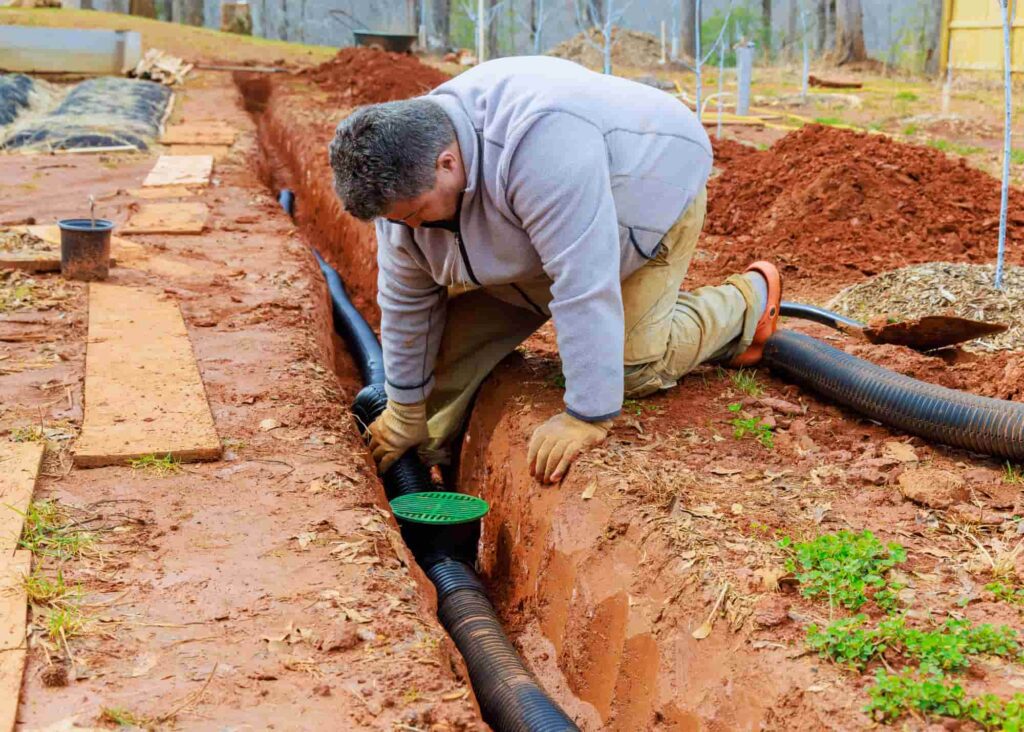
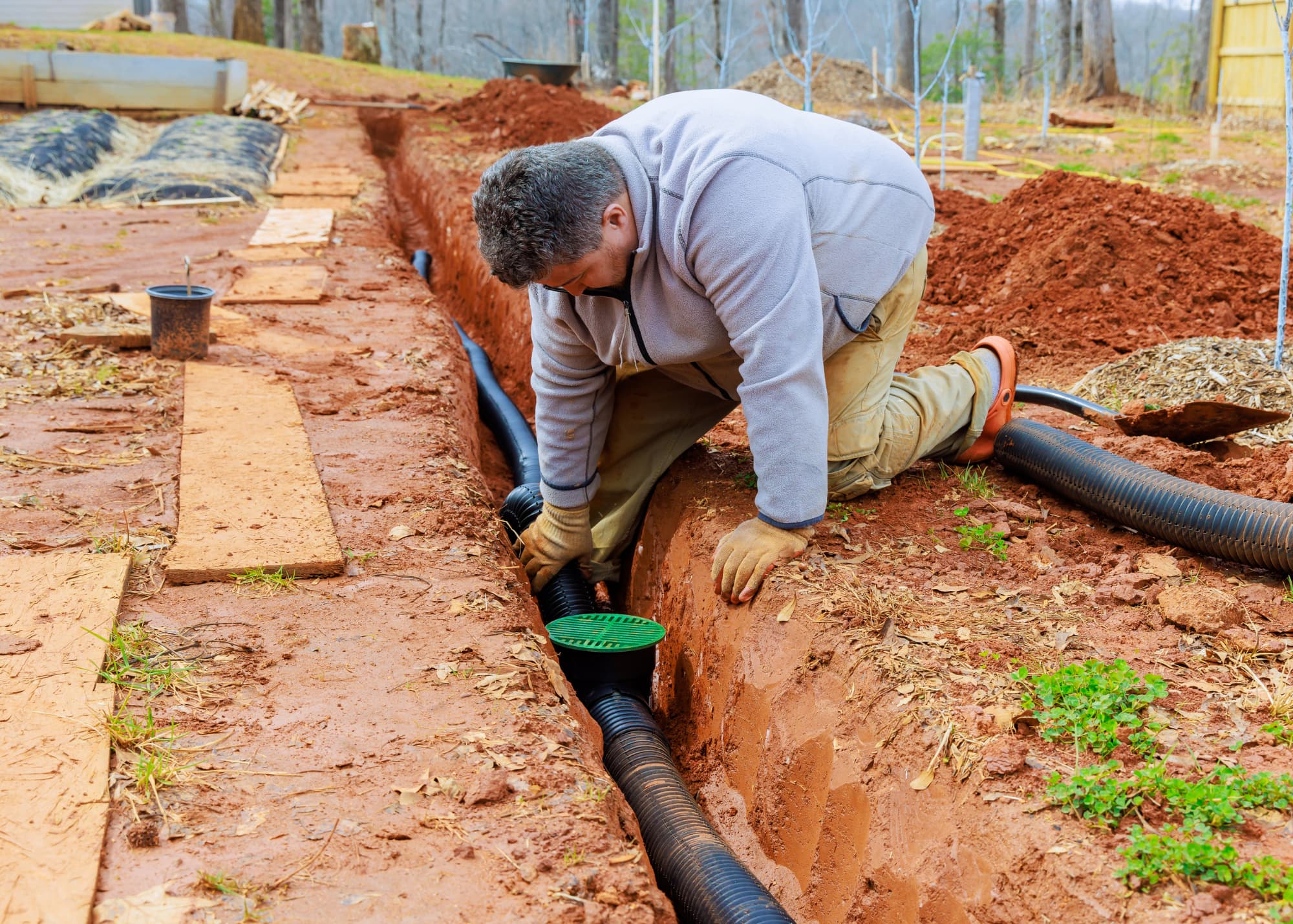
A French drain is an underground drainage system designed to collect and redirect groundwater away from areas where excess moisture accumulates. It typically consists of a trench containing a perforated pipe surrounded by drainage gravel, often separated from the surrounding soil with filter fabric.
As water moves through saturated soil, it enters the gravel-filled trench and flows into the perforated pipe. The pipe then carries the water toward a suitable discharge point, provided the system has the appropriate slope and outlet.
French drains are commonly used to address:
- Persistently soggy lawns and garden beds
- Groundwater accumulating around foundations
- Waterlogged areas where soil drains poorly
- Moisture problems caused by groundwater moving toward a building
- Drainage issues on properties where water collects below the surface
Because the system is installed underground, it can manage subsurface water without leaving an open channel across the landscape.
The correct design depends on soil conditions, groundwater levels, the depth of the problem, and the location of a suitable discharge point.
What Is a Trench Drain?
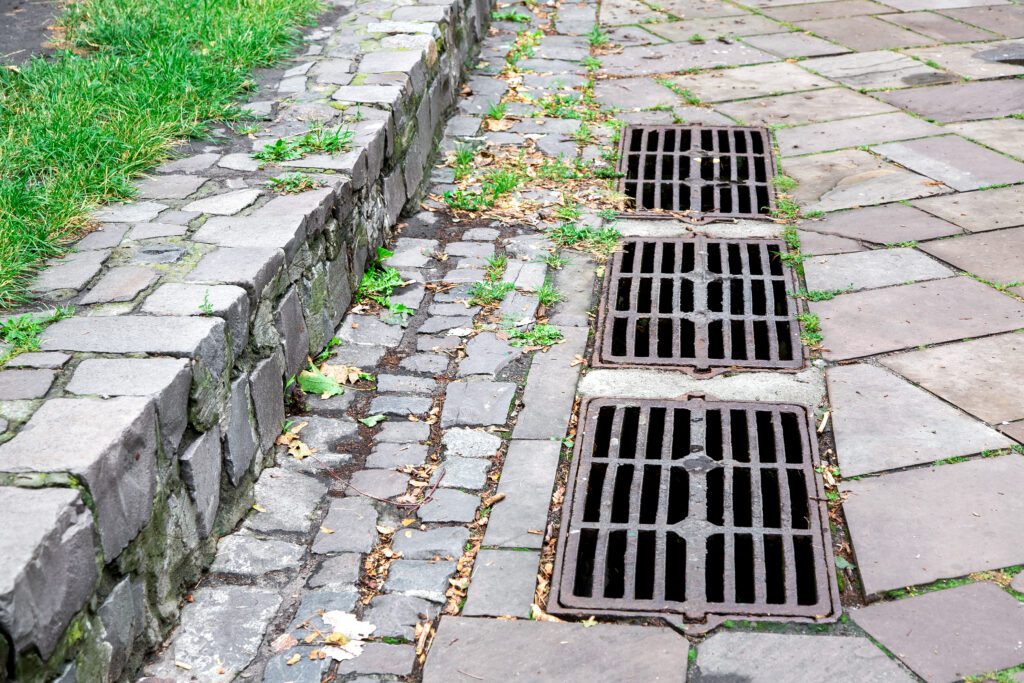
A trench drain, also known as a channel drain, is a surface drainage system designed to collect runoff flowing across hard surfaces. It typically consists of a long, narrow channel covered by a removable grate.
Rainwater flows across a driveway, patio, garage entrance, or paved walkway and enters the channel through the grate. The water then travels through the drain toward a suitable outlet, such as an approved stormwater connection or another properly designed discharge point.
Trench drains are particularly useful in areas where surface runoff needs to be collected along a defined line.
Common applications include:
- Driveways and garage entrances
- Patios and paved outdoor entertainment areas
- Pool decks and other hardscaped spaces
- Commercial walkways and loading areas
- Areas where runoff crosses a paved surface and needs to be intercepted
Unlike a French drain, a trench drain is designed to collect water at the surface rather than draw groundwater through the surrounding soil. The grate also allows the channel to be inspected and cleared when leaves, sediment, and other debris accumulate.
For a closer look at how this system is designed and used, Ware Landscaping explains the purpose and applications of trench drain systems.
French Drain vs. Trench Drain: Key Differences
The most important difference between these systems is where they collect water and the type of drainage problem they are designed to solve.
| Feature | French Drain | Trench Drain |
| Primary purpose | Collects and redirects groundwater | Collects surface runoff |
| Water collection | Through soil, gravel, and a perforated pipe | Through a grate into a channel |
| Typical location | Lawns, garden beds, and areas near foundations | Driveways, patios, garages, and paved surfaces |
| Visibility | Mostly hidden underground | Usually visible as a grated channel |
| Installation | Requires excavation, drainage aggregate, pipe, and often filter fabric | Requires channel installation, grating, and a suitable outlet |
| Maintenance | May require flushing and checks for sediment or root intrusion | Requires regular grate and channel cleaning |
| Main design consideration | Soil conditions, groundwater movement, slope, and discharge | Surface grading, runoff volume, channel capacity, and discharge |
| Best suited for | Persistent subsurface moisture | Water pooling or flowing across hard surfaces |
Neither system is automatically better than the other. The right choice depends on the source of the water and how it moves across or beneath your property.
How French Drains Work
French drains manage water that collects below the ground’s surface. When soil becomes saturated, water can move into the gravel surrounding the perforated pipe. The pipe then conveys it away from the affected area.
A properly designed system usually involves several important components:
A gravel-filled trench: The gravel creates a permeable path that allows groundwater to move toward the drain pipe.
A perforated pipe: Openings in the pipe allow water to enter before it travels toward the outlet.
Filter fabric, where appropriate: Suitable geotextile fabric helps limit the movement of surrounding soil into the drainage aggregate, reducing the risk of clogging.
A suitable discharge point: Water needs somewhere safe and permitted to go. The outlet must be designed to prevent water from returning to the problem area or affecting neighbouring properties.
Appropriate grading: Where gravity drainage is used, the pipe needs a consistent fall toward the outlet. Properties without a suitable natural outlet may require a different drainage design.
French drains are especially useful when the ground remains saturated long after rainfall or when groundwater accumulates near a foundation. However, they are not a universal solution for heavy surface runoff. A system that is not designed to handle the actual source and volume of water may provide limited improvement.
How Trench Drains Work
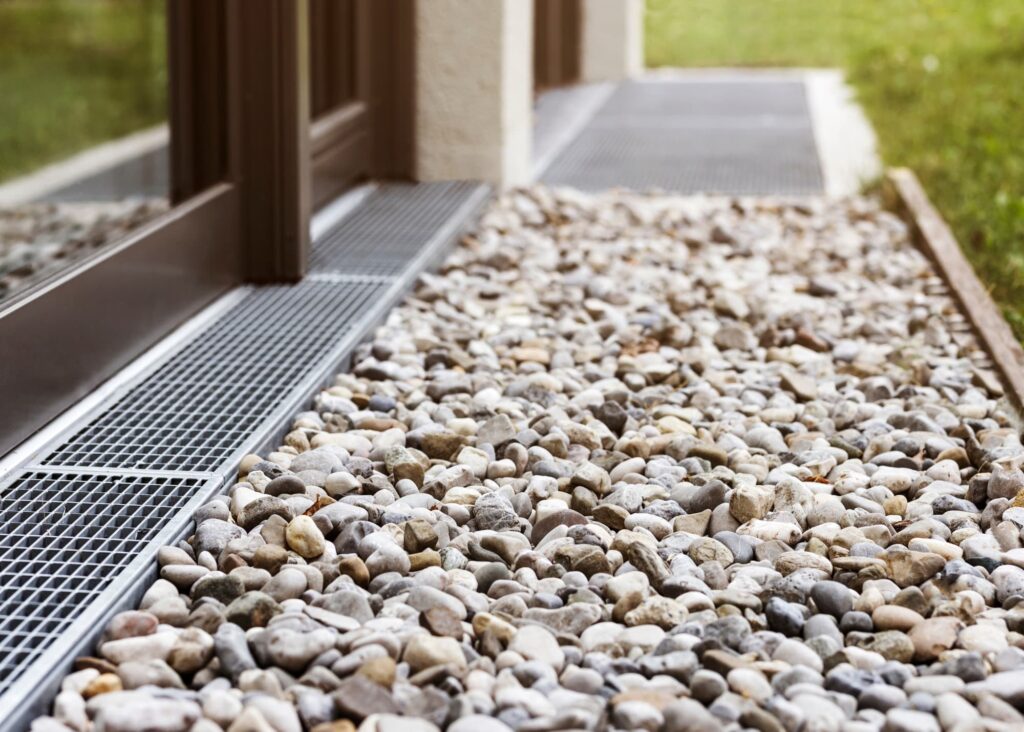
Trench drains collect water directly from the surface. Their grated openings allow runoff to enter a channel before it spreads across a paved area or reaches a vulnerable structure.
The system typically includes a channel body, a removable grate, and a pipe or outlet arrangement that carries collected water away.
For effective performance, the surrounding surface must direct water toward the drain. The channel must also be sized to handle the expected runoff, while the outlet needs enough capacity to carry the collected water away.
Trench drains are often installed at the bottom of sloped driveways, across garage thresholds, along patio edges, or near other paved areas where water follows a predictable path.
The grate can be selected to suit the location, appearance, and expected loading. A residential patio may need a different grate from a driveway that regularly carries vehicles. In commercial settings, the system may need to withstand heavier loads and greater runoff volumes.
Trench drains are effective for intercepting surface water, but they do not automatically solve groundwater problems beneath a lawn or foundation. If the soil remains saturated after the surface runoff has drained away, a subsurface drainage solution may also be needed.
When Should You Choose a French Drain?
A French drain is generally the more appropriate option when water is accumulating within the soil rather than simply flowing across the surface.
Consider this system if your lawn remains soggy for days after rainfall, garden beds stay waterlogged, or moisture collects around the foundation despite reasonable surface grading.
It can also help manage groundwater moving toward a structure, provided the system is designed for the actual source of moisture. Basement water intrusion, however, can have several causes, including foundation defects, surface runoff, and groundwater pressure. A French drain should not be selected without identifying the underlying problem.
Before installation, assess the soil, water movement, available slope, and possible discharge locations. These factors affect both the system’s performance and the amount of excavation required.
French drains can be a long-term solution when they are properly designed and maintained, but they can become less effective if sediment, roots, or other obstructions restrict water movement.
When Should You Choose a Trench Drain?
A trench drain is usually the better option when rainwater collects or flows across a hard surface and needs to be intercepted before it reaches another area.
For example, a driveway that slopes toward a garage may direct runoff toward the entrance during heavy rain. A suitably positioned trench drain can collect that water and convey it to an appropriate outlet.
The same principle applies to patios, paved courtyards, pool decks, and commercial entrances. In these locations, the channel creates a defined collection point for surface runoff.
A trench drain may also be useful where traditional surface grading alone cannot direct water away effectively. However, the drain needs to be positioned correctly and sized for the volume of runoff it will receive.
If the channel is too small, the outlet is restricted, or the surrounding paving slopes away from the grate, water may continue to pool despite the installation.
Can You Use Both French Drains and Trench Drains?
Yes. Some properties experience both surface runoff and subsurface moisture problems, making a combined drainage approach more suitable than relying on one system.
For example, a paved driveway may direct rainwater toward the garage while the lawn beside it remains saturated for several days. A trench drain can intercept runoff along the driveway, while a French drain can help manage groundwater in the affected lawn.
The systems must be designed to work together. Their locations, capacities, and discharge routes should account for the property’s overall drainage pattern.
Using both systems does not automatically guarantee better drainage. If the outlet cannot handle the combined flow or the systems are installed without considering the site’s grading and soil conditions, water may still accumulate.
A site assessment can help establish whether one drain is sufficient or whether a coordinated drainage plan is needed. Other options, such as regrading, catch basins, or surface drainage channels, may also be appropriate depending on the cause of the problem.
French Drain vs. Trench Drain: Installation Differences
Both systems require planning and careful installation, but their construction methods differ.
French Drain Installation
Installing a French drain generally involves:
- Identifying the source of groundwater and the area that needs drainage.
- Planning the trench route, depth, slope, and discharge point.
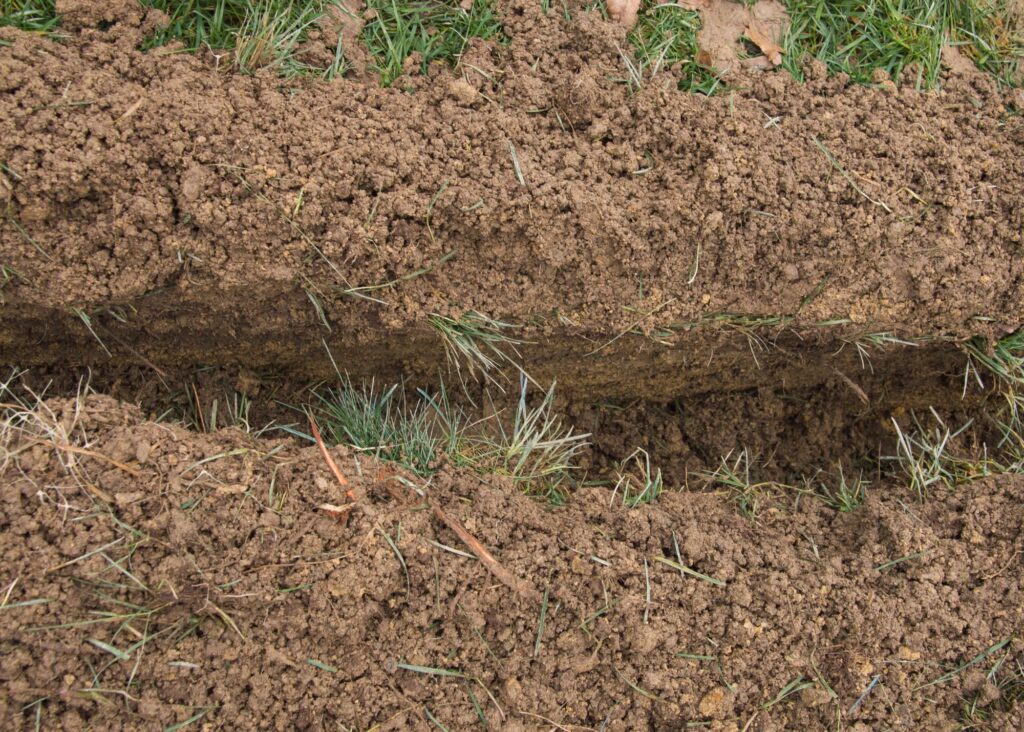
- Excavating the trench to the dimensions required by the design.
- Installing suitable filter fabric and drainage aggregate where specified.
- Positioning the perforated pipe at the correct grade.
- Covering the pipe with appropriate aggregate and completing the trench.
- Testing the drainage route and restoring the affected landscape.
The depth and length of the trench depend on the problem being addressed. Foundation drainage may require more complex excavation than a shallow yard installation.
Before digging, have underground utilities located and check applicable local requirements. The discharge route must also comply with relevant regulations.
Trench Drain Installation
Trench drain installation generally involves:
- Identifying where surface runoff collects and the best location to intercept it.
- Determining the required channel capacity and grate rating.
- Excavating the area to accommodate the channel and its supporting base.
- Setting the channel at the correct elevation and connecting it to the outlet.
- Securing the channel and installing the grate.
- Restoring surrounding paving or landscaping as required.
- Testing the system to confirm that water enters the channel and drains away correctly.
Because trench drains are often installed within or beside paved surfaces, the channel must be properly supported and set at the correct elevation. Poor installation can result in movement, cracking, standing water, or damage to the surrounding surface.
Professional installation can help ensure that the selected system suits the property’s drainage requirements and expected loading.
How Much Do French Drains and Trench Drains Cost?
The cost of either drainage system depends on the length of the installation, excavation requirements, soil conditions, materials, labour, access to the site, and the complexity of the discharge route.
As a broad US budgeting guide, French drain installation may cost approximately 10–50 per linear foot, while trench drain installation may range from 30–150 per linear foot. More complex projects can fall outside these ranges. These are indicative estimates, not a quote for a particular property.
French drains may cost more when the installation requires deep excavation, difficult soil removal, extensive landscaping restoration, or drainage work near a foundation. Trench drains may cost more when they require heavy-duty grates, concrete work, or substantial modifications to existing paving.
The initial installation price is only one part of the decision. Consider the maintenance requirements, expected service life, and potential cost of correcting an undersized or poorly positioned system.
The cheapest option is not necessarily the most cost-effective if it fails to address the source of the water.
Maintenance Requirements
Both drainage systems need periodic inspection to maintain performance.
French Drain Maintenance
French drains are largely concealed, so changes in drainage performance may be the first sign of a problem. Watch for recurring soggy areas, water pooling where the system previously worked, or moisture returning near the foundation.
Maintenance may include checking the outlet, removing obstructions, and having the pipe inspected or flushed when necessary. Roots and sediment can restrict flow, especially where the system was not adequately protected against soil intrusion.
Avoid assuming that every wet area indicates a clogged drain. Changes in grading, unusually heavy rainfall, or a blocked discharge point can also affect performance.
Trench Drain Maintenance
Trench drains are easier to inspect because their grates provide access to the channel. Leaves, dirt, litter, and other debris should be removed regularly, particularly after storms or during seasons when leaves accumulate.
Check that the outlet is clear and that the grate remains secure and undamaged. In areas exposed to vehicles, inspect the channel and surrounding paving for signs of movement or deterioration.
Routine cleaning helps prevent debris from reducing the channel’s capacity and allows problems to be identified before they lead to more significant drainage issues.
Common Mistakes to Avoid
Choosing and installing a drainage system without understanding the property’s water flow can lead to poor results. Avoid these common mistakes:
Choosing a drain based only on the visible water. Surface pooling may be caused by poor grading, while persistent wet soil may indicate a groundwater issue. Identify the source before selecting a system.
Ignoring the outlet. A drain cannot work effectively if water has nowhere suitable to go. The discharge point must be safe, functional, and compliant with local requirements.
Undersizing the system. A channel or pipe that cannot handle the expected water volume may overflow or allow water to continue pooling.
Neglecting maintenance. Leaves, sediment, roots, and other obstructions can reduce drainage performance over time.
Overlooking site conditions. Soil type, slope, paving, nearby structures, and underground utilities all affect the design and installation process.
Assuming one system solves every problem. A trench drain may intercept surface runoff without resolving saturated soil, while a French drain may not be suitable for collecting large amounts of water flowing across a driveway.
If standing water persists despite previous drainage work, the existing system may need inspection or redesign rather than simply adding another drain.
Frequently Asked Questions
Is a French drain better than a trench drain?
Neither system is universally better. French drains are generally suited to groundwater and saturated soil, while trench drains are designed to collect surface runoff from paved areas. The right choice depends on the source of the water and the property’s conditions.
Can a French drain be installed along a driveway?
Yes, a French drain can be installed near a driveway when subsurface water needs to be managed. However, if rainwater is flowing across the driveway surface, a trench drain or another surface drainage solution may be more suitable. The system should be selected based on the actual drainage problem.
Are trench drains suitable for residential properties?
Yes. Trench drains are commonly used around residential driveways, patios, garage entrances, pool decks, and other paved areas where surface runoff needs to be collected.
Which drainage system requires less maintenance?
Maintenance depends on the design, installation, surrounding conditions, and debris exposure. Trench drains are generally easier to inspect and clean because their channels are accessible through the grate. French drains may need periodic inspection or flushing if sediment or roots restrict the pipe.
Can either system prevent foundation water problems?
Both may contribute to foundation protection when used for the problem they are designed to address. A French drain can help manage groundwater, while a trench drain can intercept surface runoff near a building. Neither should be treated as a guaranteed fix without identifying the cause of the water intrusion.
How do I know which system my property needs?
Start by observing when and where the water appears. Water flowing across paving during rainfall points toward a surface drainage issue. Soil that stays saturated long after rain may indicate a subsurface problem. A drainage professional can assess the site’s grading, soil, water flow, and available outlets before recommending a solution.
Final Thoughts
French drains and trench drains both help manage excess water, but they work in different ways. A French drain collects groundwater through a gravel-filled trench and perforated pipe, while a trench drain intercepts surface runoff through a grated channel.
If your lawn remains waterlogged or groundwater collects near your foundation, a French drain may be the more appropriate choice. If water pools on a driveway, patio, or other paved surface, a trench drain may provide more effective collection.
Properties with both surface runoff and subsurface moisture problems may need a combination of drainage solutions. The key is to identify the source of the water, assess the site’s conditions, and choose a system that can carry the water safely to a suitable outlet.
For additional options, Ware Landscaping outlines several home drainage solutions for standing water and foundation protection.
If you’re unsure which system is right for your property, request a landscaping quote from Ware Landscaping to discuss your drainage concerns and determine the most suitable approach.