
French drains and curtain drains look almost identical once they are built: a trench, filter fabric, clean stone and a perforated pipe that carries water away by gravity. The difference is where they go and what water they are meant to catch. Choosing the wrong one, or putting the right one in the wrong place, is one of the most common reasons drainage projects fail to fix a wet yard.
This updated 2026 guide explains the difference between a French drain and a curtain drain, how each works, when to choose one or both, typical depths and costs, and how they perform in the clay soils and freeze-thaw winters of Naperville and the Chicago suburbs.
Stop Your Yard From Becoming a Swamp
The wrong drain choice won't just waste your money—it will leave your foundation vulnerable to rot and mold. Let our experts engineer the high-capacity system your property actually needs.
Get a Free QuoteQuick Answer: French Drain vs. Curtain Drain
- A French drain is placed in or along the wet area. It collects water that has saturated the soil (and surface water through catch basins) and carries it to an outlet. Use it when a lawn stays soggy, a low area holds water or a foundation needs relief.
- A curtain drain is a type of French drain placed uphill of the area you want to protect, running across the slope. It intercepts water flowing downhill through the upper soil and across the surface before it reaches your lawn, patio or house. Use it when water is coming from somewhere else.
If water arrives from a neighbor’s yard, a hill or a higher part of the property, a curtain drain stops it at the source. If water collects and sits in one place, a French drain removes it. Many yards need both.
What Is a French Drain?
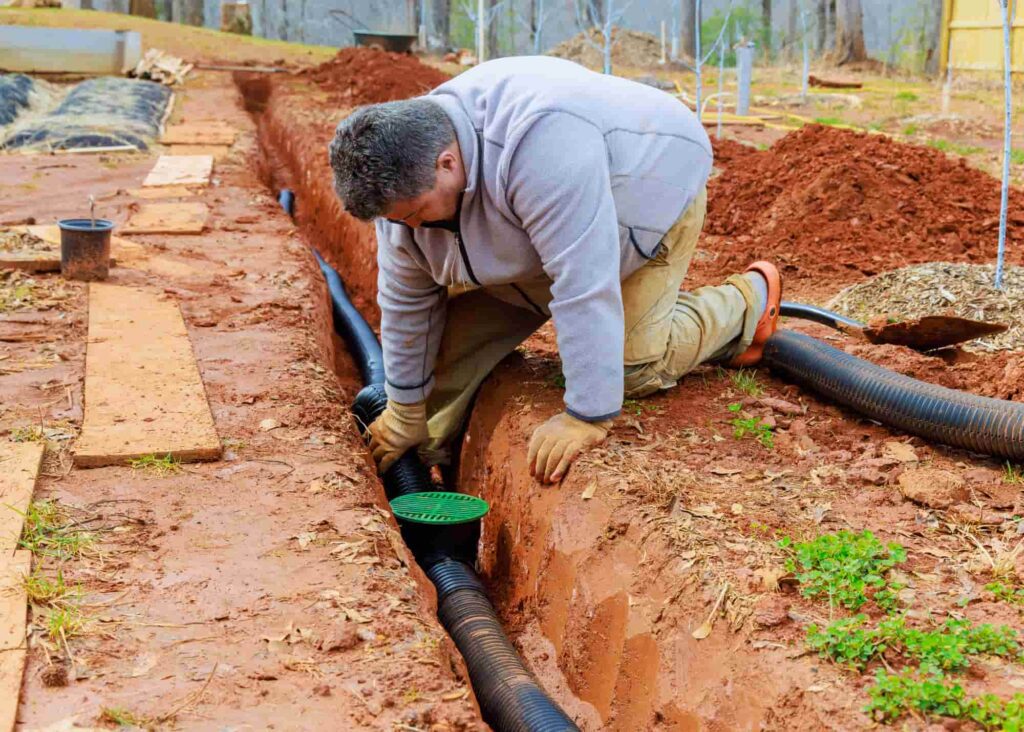
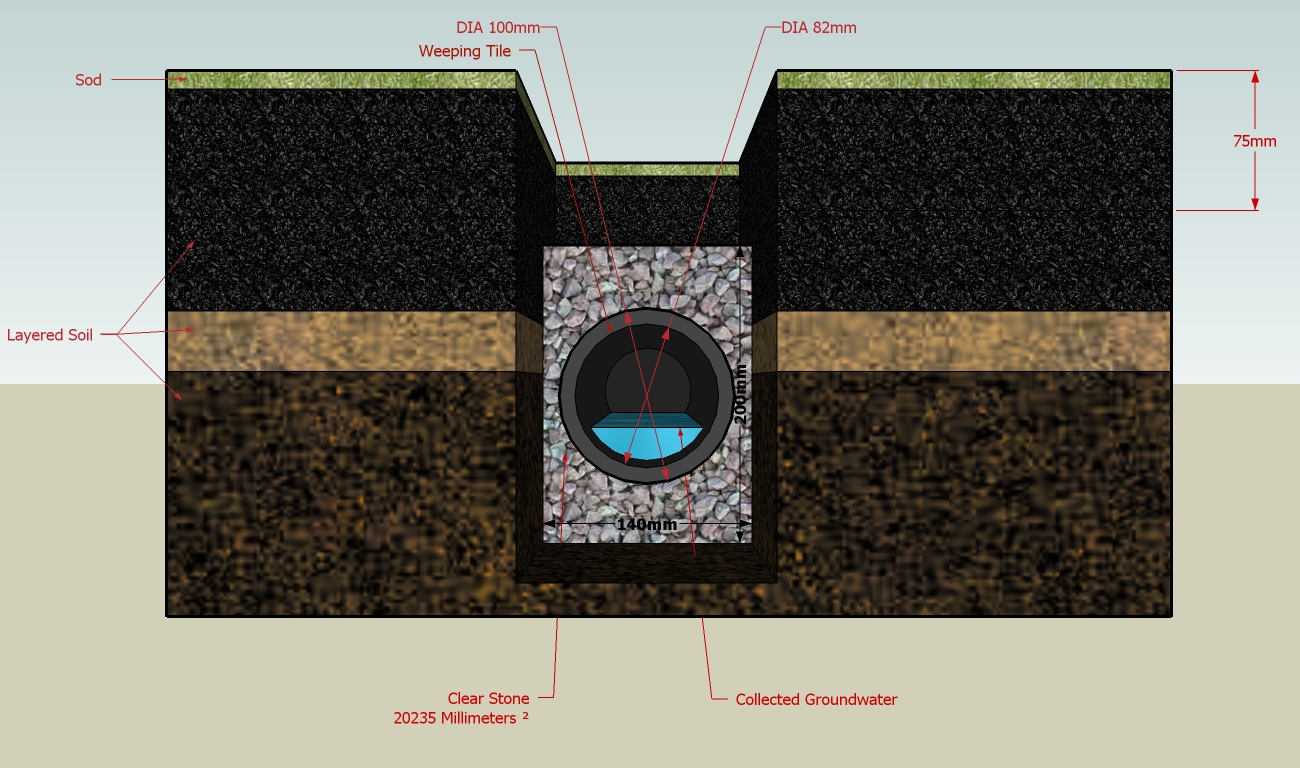
A French drain is a sloped trench lined with non-woven filter fabric, filled with clean, angular stone and a perforated pipe. Water in the surrounding soil moves into the stone, enters the pipe and flows downhill to an outlet such as a pop-up emitter, swale, curb outlet or approved storm connection. The name comes from Henry Flagg French, a Massachusetts judge and farmer who described the technique in 1859.
Typical residential French drains are about 18 to 24 inches deep and 9 to 12 inches wide, though depth depends on where the water is and how deep the outlet can be. See our detailed guide on how deep a French drain should be.
Best for:
- Lawns that stay soggy for days after rain
- Low areas that collect water
- Wet strips along foundations
- Areas where water seeps up from below
- Collecting water from catch basins and connecting multiple problem spots to one outlet
What Is a Curtain Drain?
A curtain drain (also called an interceptor drain) uses the same construction, but its job and location are different. It runs perpendicular to the direction water is flowing, on the uphill side of the area you want to keep dry, like a curtain hung across the slope. As water moves downhill through the upper layers of soil and across the surface, it drops into the stone-filled trench and is carried around or away from the protected area.
Curtain drains are commonly about 18 to 36 inches deep, set deep enough to intercept the layer where water is actually moving. In many subdivisions, that is the topsoil and fill sitting on top of denser clay.
Best for:
- Homes at the bottom of a slope
- Yards that receive runoff from neighboring properties
- Protecting patios, driveways, septic fields or gardens from uphill water
- Hillside properties with erosion and seepage
Key Differences at a Glance
| Feature | French drain | Curtain drain |
|---|---|---|
| Location | In or along the wet area | Uphill of the area to protect, across the slope |
| Water it targets | Water already saturating the area | Water flowing toward the area |
| Typical depth | 18–24 inches (deeper for foundations) | 18–36 inches, set to the seepage layer |
| Layout | Follows the wet area or perimeter | Perpendicular to water flow |
| Common pairing | Catch basins, downspout lines | Swales, French drains downstream |
| Outlet | Required, downhill | Required, routed around the protected area |
How to Tell Which One You Need
1. Watch where the water comes from
During a heavy rain, walk the property. If water visibly enters from a neighbor’s yard, flows down a slope or seeps out along a hillside, you have an interception problem. If water simply collects in a low spot or the lawn stays spongy without obvious inflow, you have a collection problem.
2. Dig a test hole
In wet weather, dig a hole 18 to 24 inches deep where water appears. If water seeps in from the uphill side of the hole, water is moving through the soil and a curtain drain uphill may stop it. If water rises evenly or the soil is simply saturated, a French drain in the wet area is more effective.
3. Check the timing
Yards that flood only during storms are often dealing with runoff that a curtain drain or swale can intercept. Yards that stay wet for days are often dealing with saturated soil that needs a French drain.
4. Look at the outlet
Both systems need a safe, legal, downhill outlet. A curtain drain is only useful if its water can be routed around the area you are protecting. If no outlet exists, the design needs a different approach, such as regrading or a sump and pump system.
Installation Overview
French drain installation
- Locate utilities by calling JULIE (811) in Illinois.
- Plan the route through the wet area to the outlet and set the slope, typically at least 1%.
- Excavate the trench, often with a trencher or mini excavator.
- Line the trench with non-woven geotextile fabric.
- Add a bed of clean, washed stone, lay perforated pipe and cover with more stone.
- Wrap the fabric over the stone, then backfill with topsoil and restore the lawn.
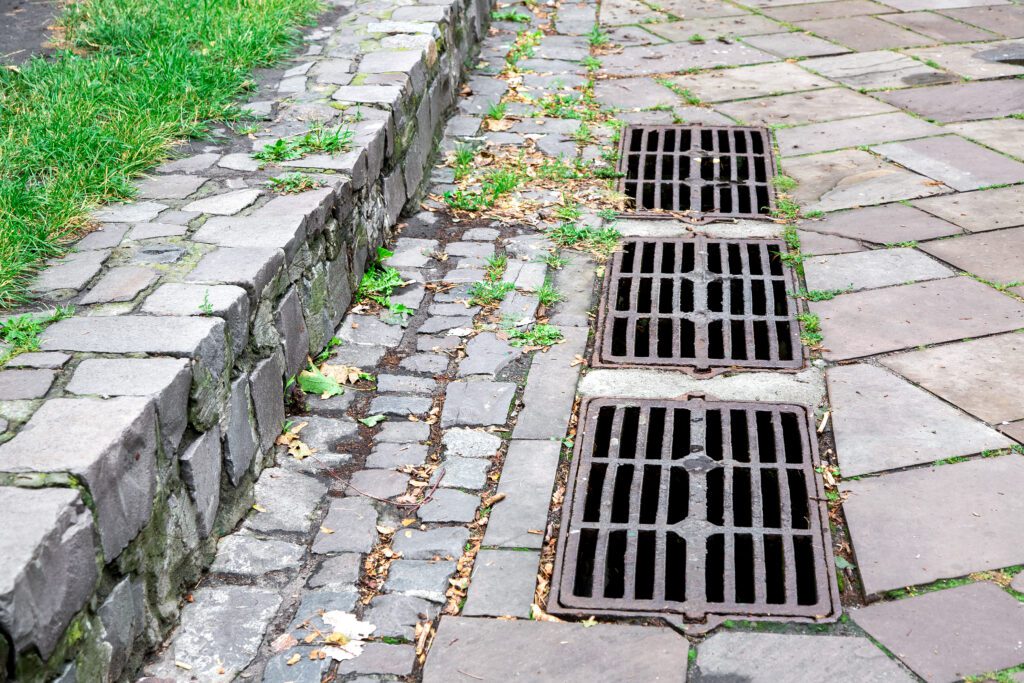
- Add catch basins at low points and connect downspouts through solid pipe where needed.
Curtain drain installation
- Identify the direction of water flow and the seepage layer with test holes.
- Lay out the trench across the slope, uphill of the protected area.
- Excavate to the depth where water is moving, keeping a continuous fall toward the outlet.
- Install fabric, stone and perforated pipe as with a French drain.
- Route the outlet pipe around the protected area to a safe discharge point.
- Finish the surface with lawn, decorative stone or a shallow swale above the trench to catch surface flow too.
Pros and Cons
French drain
Pros: dries saturated soil; handles water from several sources when combined with catch basins; hidden beneath lawn or stone; long-lasting when built correctly.
Cons: does not stop water from arriving in the first place; needs a downhill outlet; can be overwhelmed if used alone for large surface flows.
Curtain drain
Pros: stops water before it reaches the problem area; protects multiple downhill features at once; often shorter than draining the whole wet area.
Cons: only effective if placed where water is actually flowing; may need to cross property lines or easements; still requires an outlet.
Cost Comparison
Both systems use the same materials, so cost per foot is similar. Yard drains commonly run in the range of about $10 to $65 per linear foot nationally, depending on depth, soil, access, catch basins and restoration. Curtain drains are sometimes shorter because they intercept water at one line, but they may be deeper. The total depends far more on project length, outlet distance and site conditions than on the drain type. See our French drain cost guide for more detail.
Maintenance and Longevity
Both drains can last for decades when built with filter fabric, clean stone and an accessible outlet. To keep them working:
- Keep outlets, emitters and catch basin grates clear of leaves, mulch and snow.
- Flush lines through cleanouts if they are included.
- Avoid planting trees with aggressive roots directly over drain lines.
- Watch the outlet during storms to confirm water is flowing.
Using Both Together
On many Chicagoland properties, the best solution combines both: a curtain drain or swale along the uphill property line intercepts water coming from neighbors, while a French drain with catch basins in the yard handles water that still collects in low areas. Downspouts and sump pump discharge are tied into solid pipe and routed to the same outlet. This approach handles both incoming and resident water and is far more reliable than either system alone.
Real-World Scenarios
Scenario 1: Backyard floods from the neighbor behind you
Water sheets across the rear lot line after every storm and the back third of the lawn stays wet. A curtain drain along the rear property line, combined with a shallow swale above it, intercepts the water and routes it to the side-yard outlet before it reaches the lawn.
Scenario 2: Low spot in the middle of a flat yard
No water enters from neighbors, but a depression in the middle of the yard stays soggy for days. A French drain through the low area with a catch basin at the lowest point collects the water and sends it to a pop-up emitter or curb outlet.
Scenario 3: House at the bottom of a hill with a damp basement
Water moves downhill through the soil toward the foundation. A curtain drain uphill of the house intercepts most of it, while grading and buried downspout lines keep roof water away from the walls.
Chicagoland Considerations
- Clay soil: water moves slowly through clay, so drains may need to be closer together, deeper or paired with surface inlets to work well.
- Shared swales and easements: many subdivisions in Naperville, Plainfield and Aurora have drainage easements along lot lines. Work within these may need HOA or municipal approval.
- Freeze-thaw: outlets must be placed where they will not be buried by snow or ice so spring melt can drain.
- Heavy storms: systems should be sized for intense rainfall, not just average events.
Common Mistakes
- Installing a French drain in the wet area when water is actually arriving from uphill, so the drain is overwhelmed.
- Placing a curtain drain too shallow to catch the layer where water moves.
- Routing a curtain drain’s outlet back toward the area it is supposed to protect.
- Skipping filter fabric in clay and silty soils.
- Discharging water onto a neighbor’s property.
Frequently Asked Questions
Is a curtain drain the same as a French drain?
A curtain drain is a type of French drain. The construction is the same; the difference is placement. A curtain drain is installed uphill of a protected area to intercept water, while a French drain is installed in the wet area to collect it.
How deep should a curtain drain be?
Deep enough to intercept the layer where water is moving, often 18 to 36 inches. Test holes during wet weather help determine the right depth.
Can a curtain drain stop water from a neighbor’s yard?
Yes, that is one of its most common uses. It must run along the uphill side of your property and discharge to a legal outlet without redirecting water onto another neighbor.
Which is better for a wet basement?
Start by fixing grading, downspouts and sump discharge. If water reaches the foundation from uphill, a curtain drain can intercept it. If soil next to the house stays saturated, a French drain closer to the foundation or a foundation drain may be needed.
Can I install a curtain drain myself?
A short curtain drain on an accessible slope is possible as a DIY project, but placement and depth are critical. If it misses the layer where water is moving or lacks a proper outlet, it will not help. For longer runs or water coming from neighboring properties, professional design is worth it.
Do curtain drains need a pipe?
Most effective curtain drains include perforated pipe to move water quickly to the outlet. Stone-only trenches can work for very small flows but fill and slow down more easily.
Choose the Right Drain the First Time
French drains collect water where it sits; curtain drains stop water before it arrives. Watching how water moves on your property, digging a test hole and identifying a safe outlet will tell you which one you need, and often the answer is both.
Ware Landscaping designs and installs French drains, curtain drains and complete drainage systems across Naperville and the western suburbs, backed by our 10-year drainage guarantee.
Stop Your Yard From Becoming a Swamp
The wrong drain choice won't just waste your money—it will leave your foundation vulnerable to rot and mold. Let our experts engineer the high-capacity system your property actually needs.
Get a Free Quote