
A frozen downspout may look like a minor winter inconvenience, but it can interfere with the entire drainage system around your home.
When ice blocks the downspout, melting snow and water from the roof have nowhere to go. Water may back up into the gutter, spill over the sides, refreeze around walkways, or collect near the foundation.
In some cases, a frozen downspout is simply the result of a stretch of very cold weather. In others, it is a warning sign of clogged gutters, poor drainage, an improperly positioned outlet, or conditions that are contributing to ice dams.
For homeowners dealing with Chicago winters, understanding why downspouts freeze and what to do about them can help prevent a small ice blockage from becoming a much larger problem.
Why Does a Downspout Freeze?
A downspout freezes when water inside it remains long enough to turn to ice instead of draining away.
Several conditions can cause that to happen.
Leaves and Debris Are Blocking the Flow
One of the most common problems begins before winter even arrives.
Leaves, twigs, pine needles, roof granules, and other debris can collect inside gutters and downspouts. Water becomes trapped behind the blockage.
Once temperatures drop below freezing, that trapped water can turn into ice.
The Insurance Institute for Business & Home Safety recommends clearing debris from gutters and downspouts before winter so water can move away from the home and the risk of ice dams and leaks is reduced.
Snow Is Blocking the Bottom of the Downspout
Sometimes the downspout itself is clear, but its outlet is buried beneath packed snow or ice.
Water moves down the pipe but cannot escape.
As temperatures fall, it begins freezing from the bottom upward.
This is particularly common after repeated snowstorms when snow is shoveled or piled near the house.
Water Is Not Draining Completely
Downspouts and extensions should allow water to continue moving away from the building.
If a section is poorly pitched, crushed, disconnected, or positioned in a low area, water can remain inside the drainage system after a thaw or winter rain.
That standing water becomes vulnerable to freezing.
If this happens repeatedly, the problem may extend beyond the visible downspout and involve the overall drainage design.
[Internal link: Downspout Drainage Solutions]
Melting Roof Snow Refreezes
A sunny winter afternoon or heat escaping through the roof can melt snow even when outdoor temperatures remain cold.
That meltwater moves toward the gutters and downspouts.
When it reaches colder portions of the roof edge or drainage system, it can freeze again.
Repeated melting and refreezing can gradually build a substantial ice blockage.
An Ice Dam Is Developing
A frozen downspout and an ice dam are not exactly the same problem, but they can occur together.
Ice dams form when snow melts on a warmer portion of the roof and the water refreezes near the colder eaves. As ice accumulates, additional water can become trapped behind it.
Proper attic air sealing, insulation, and ventilation can reduce the uneven roof temperatures that contribute to ice dams.
If you are seeing heavy ice along the roof edge in addition to a frozen downspout, the problem may require attention beyond the gutter itself.
Signs Your Downspout Is Frozen
Sometimes the ice is obvious. Other times the blockage is hidden inside the pipe.
Watch for these signs:
- Little or no water exiting the downspout during a thaw.
- Water overflowing from the gutter.
- A downspout that feels unusually heavy.
- Bulging or separated downspout seams.
- Ice forming around the bottom of the downspout.
- Large icicles developing along the gutter.
- Water running down exterior walls.
- Ice repeatedly forming on nearby sidewalks or driveways.
- Water collecting close to the foundation.
If temperatures have risen above freezing and water should be draining but nothing is coming out, an internal ice blockage may be preventing flow.
What Should You Do With a Frozen Downspout?
The safest response depends on where the blockage is located and how accessible it is.
1. Clear Snow Away From the Outlet
Start at ground level.
Remove snow and loose ice from around the bottom of the downspout and any extension attached to it.
Sometimes the problem is simply that the outlet has been buried by snowfall or snow-removal piles.
Make sure there is an open path for water to move away from the house once thawing begins.
2. Remove an Accessible Downspout Extension
If a detachable extension at ground level is frozen, it may be easier to disconnect it and allow it to thaw in a warmer location.
Do not force connections that are frozen together.
Bending or twisting metal and plastic components in freezing temperatures can damage them.
Once the extension is clear, check whether ice continues farther up the vertical downspout.
3. Let Warmer Weather Help When There Is No Immediate Danger
Not every frozen downspout needs aggressive intervention.
If temperatures are expected to rise, there is no active interior leak, and water is not causing dangerous icing or significant overflow, allowing the blockage to thaw naturally can sometimes be the safest choice.
Trying to chip out solid ice can cause more damage than waiting.
4. Address Roof Snow From the Ground When Appropriate
If large amounts of snow are repeatedly melting into the gutter, reducing the snow load near the roof edge can help limit additional water entering the frozen drainage system.
A roof rake designed for the job can sometimes be used from the ground.
Do not climb onto a snowy or icy roof to clear it yourself.
If the roof is difficult to reach or significant ice has already developed, contact a qualified professional.
5. Call a Professional for Heavy or Inaccessible Ice
A downspout filled with solid ice from top to bottom can be difficult to clear without damaging the system.
Professional assistance is especially appropriate when:
- The blockage is above a safe working height.
- The gutter contains heavy ice.
- An ice dam has formed.
- Water is entering the home.
- The downspout has split or pulled away.
- Electrical lines are nearby.
- Ice keeps returning after being cleared.
Solving the problem safely is more important than getting the downspout open immediately.
What Not to Do With a Frozen Downspout
Some thawing methods can damage your home or put you at risk.
Do Not Hit the Downspout
Do not use a hammer, shovel, bat, or other hard object to break the ice inside.
A metal downspout can dent, separate at its seams, or pull away from the house. Plastic components can crack, especially in very cold temperatures.
Do Not Use an Open Flame
Never use a propane torch or other open flame to thaw a downspout.
You could damage siding, roofing, sealants, paint, or the drainage system itself, and you introduce an unnecessary fire hazard.
Do Not Climb an Icy Ladder
Trying to reach a frozen gutter during snow and freezing weather creates a serious fall risk.
If the blockage cannot be safely reached from the ground, it is time to involve a professional.
Do Not Pour Boiling Water Into a Frozen System
Extremely hot water is not a good shortcut.
Rapid temperature changes can stress materials, and the water may simply refreeze farther down the downspout or across the ground.
Adding more water to a drainage system that does not have a clear outlet may make the problem worse.
Do Not Ignore Overflow Near the Foundation
If water is spilling from the gutter or downspout and collecting beside the house, do not treat it as only a gutter problem.
Repeated water accumulation around the foundation can indicate that the property needs better water management.
Can a Frozen Downspout Damage Your Home?
Potentially, yes.
The problem is not simply that ice exists inside a metal pipe. The larger concern is what happens to water when its normal drainage route is blocked.
Gutter Damage
Ice is heavy.
Accumulation inside gutters and downspouts can place additional stress on hangers, seams, elbows, and mounting points.
Roof and Interior Water Damage
If drainage at the roof edge is blocked, water may back up.
When ice dams are involved, meltwater can move beneath roofing materials and eventually reach ceilings or walls.
Slippery Walkways
Overflowing water can freeze across sidewalks, steps, driveways, and entrances.
A frozen downspout can therefore become a safety problem even when the house itself has not been damaged.
Foundation and Drainage Problems
Downspouts are intended to move roof runoff away from the home.
If frozen or poorly designed drainage repeatedly sends water toward the foundation, you may see standing water, saturated soil, basement moisture, or ice forming close to the building.
Ware Landscaping regularly encounters properties where downspouts, sump-pump discharge, grading, and underground drainage all contribute to the same water-management problem.
[Internal link: Yard Drainage Services]
How to Prevent a Frozen Downspout
Prevention is usually easier than trying to remove a solid column of ice in January.
Clean Gutters Before Winter
Remove leaves and debris after the majority of fall leaves have dropped.
Pay particular attention to the opening where the gutter enters the downspout.
Even a partial obstruction can slow drainage enough for water to freeze during a cold spell.
Keep the Outlet Clear
Do not pile shoveled or plowed snow against downspout outlets.
Check the area after major snowstorms and make sure meltwater has somewhere to go.
Check Downspout Pitch and Connections
Look for damaged elbows, sagging extensions, separated joints, or other places where water might remain trapped.
Water should be able to flow freely through the system.
Improve Where the Downspout Discharges
A downspout that dumps water directly beside the foundation can create problems throughout the year, not just in winter.
Depending on the property, better options may include:
- Properly positioned downspout extensions.
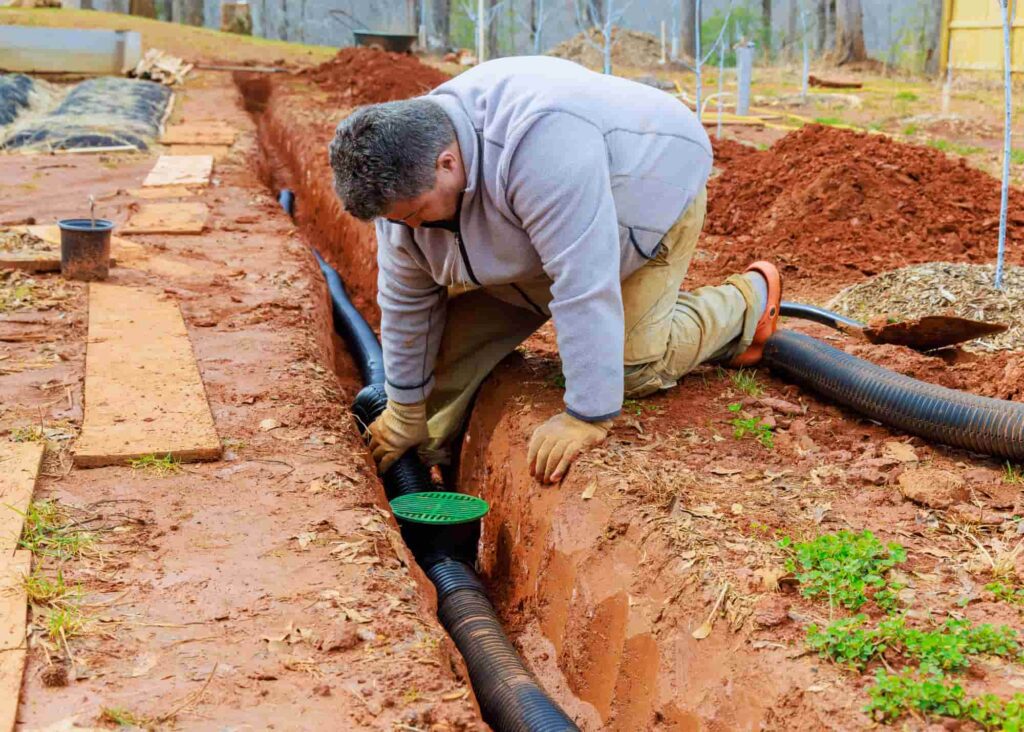
- Solid underground drainpipe.
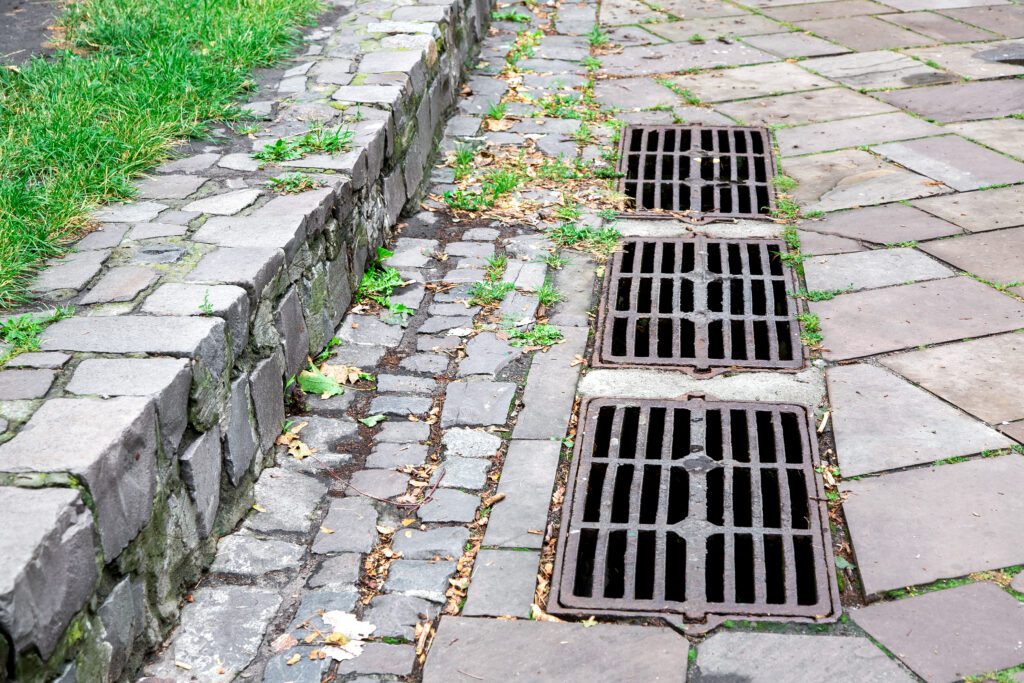
- Catch basins.
- Pop-up emitters.
- Dry wells.
- French drains.
- An approved discharge location.
The correct system depends on yard slope, soil, grading, and where water can safely be released.
[Internal link: Downspout Drainage Solutions]
Consider Professionally Installed Heating Cable Where Appropriate
In properties with recurring winter icing, professionally installed heating cables may help maintain drainage pathways along certain eaves, gutters, and downspouts.
The Insurance Institute for Business & Home Safety recommends using high-quality heating cables that are properly listed or certified and professionally installed.
Heating cable does not correct poor grading, clogged drains, or an improperly designed drainage system, so the underlying cause still matters.
Address Recurring Ice Dams
If your gutters and downspouts repeatedly fill with ice even when they are clean, investigate what is happening above them.
ENERGY STAR notes that proper attic air sealing, insulation, and ventilation can help keep the roof colder and reduce the conditions that lead to ice damming.
Repeated ice dams are often a building-envelope issue, not simply a gutter-maintenance problem.
What If an Underground Downspout Drain Keeps Freezing?
If your visible downspout is open but the buried drainage line does not accept water, the underground system may need to be evaluated.
Possible issues include:
- A blocked underground pipe.
- Poor slope.
- A damaged or collapsed line.
- An outlet that stays submerged or blocked.
- Standing water remaining in the system.
- A discharge point that repeatedly freezes.
- An improperly designed drainage route.
This is where the problem shifts from gutter maintenance to exterior drainage.
Ware Landscaping specializes in exterior water management, including underground downspout drainage, French drains, catch basins, grading, drainage-pipe repair, and related yard-drainage solutions throughout Chicagoland.
If the gutter or above-ground downspout itself is broken, a gutter or roofing contractor may be the appropriate professional. If the problem involves where the water goes after leaving the downspout, a drainage contractor can evaluate the larger system.
Stop a Frozen Downspout From Becoming a Bigger Drainage Problem
A frozen downspout usually means water is not moving through the property the way it should.
Start by checking the outlet, clearing snow from around it, and looking for obvious debris or drainage problems. Avoid striking frozen components, using open flames, or putting yourself on a slippery ladder or roof.
More importantly, pay attention to whether the problem keeps returning.
Repeated freezing, gutter overflow, ice near walkways, standing water beside the foundation, or problems with underground downspout lines can point to a larger water-management issue.
Ware Landscaping designs and installs yard drainage systems throughout Naperville, Chicago, and surrounding Chicagoland communities, including underground downspout drainage, French drains, catch basins, regrading, and drainage-system repairs.
If water from your downspouts is repeatedly collecting, freezing, or flowing toward your home, request a drainage consultation to find out where that water should be going instead.
Frequently Asked Questions
Why is my downspout frozen?
A downspout can freeze when water becomes trapped inside because of leaves, debris, packed snow, poor drainage, standing water, or repeated melting and refreezing from the roof.
How do you thaw a frozen downspout?
Start by clearing snow and ice from the outlet and removing accessible ground-level extensions if they can be disconnected safely. Avoid striking the pipe, using open flames, or climbing onto an icy roof. A heavily frozen or inaccessible downspout is better handled by a professional.
Can a frozen downspout cause an ice dam?
A blocked downspout can interfere with drainage and contribute to ice accumulation around the gutter. However, traditional roof ice dams are primarily associated with snow melting on warmer portions of the roof and refreezing near the colder eaves.
Should I pour boiling water down a frozen downspout?
No. Adding very hot water can stress components and may simply cause additional water to refreeze farther down the system or on the ground. If the downspout cannot drain freely, adding more water may make the situation worse.
Why does my downspout keep freezing?
Recurring freezing may indicate debris, poor pitch, an outlet blocked by snow, an underground drainage problem, or repeated roof melt associated with ice-dam conditions. The underlying cause should be corrected rather than repeatedly treating the ice.
How can I keep downspouts from freezing in winter?
Clean gutters before winter, keep outlets clear of snow, make sure water drains completely away from the house, repair damaged sections, and correct underground drainage problems. In some situations, professionally installed and properly certified heating cable can help maintain a drainage path.