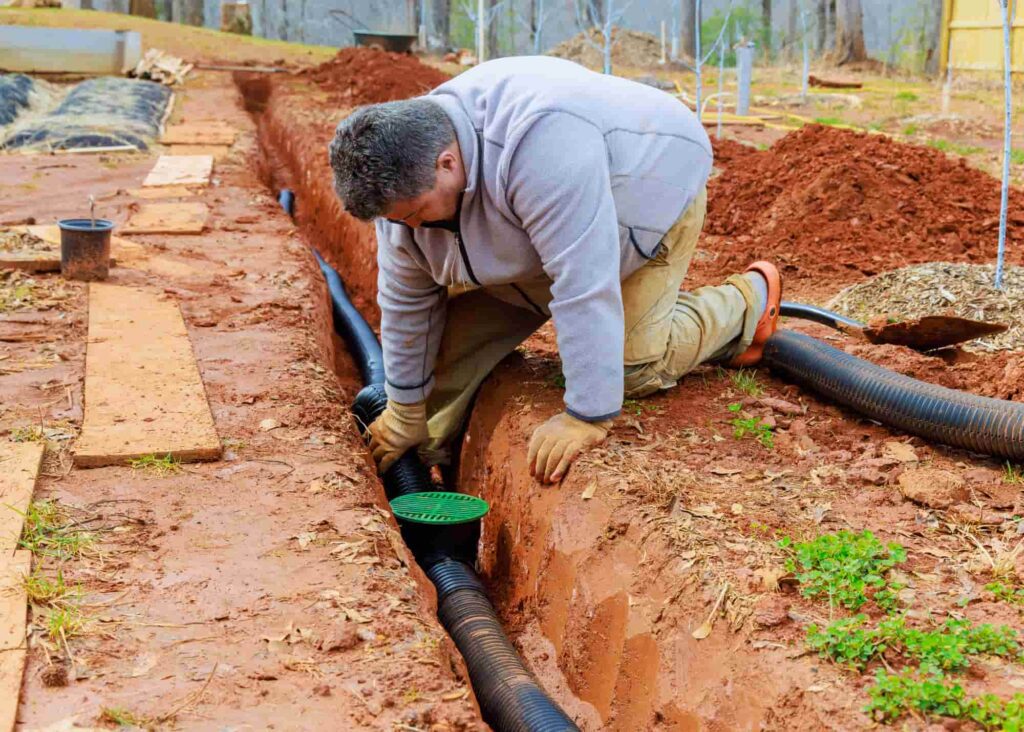


Your yard drainage system plays an important role in maintaining a healthy, functional landscape. It helps manage rainwater runoff, reduces the risk of flooding, and protects your lawn from soil erosion. However, without thoughtful landscaping and regular maintenance, a drainage ditch can become an unattractive feature of your property.
The good news is that a drainage ditch does not have to look like an unfinished part of your yard. With the right combination of rocks, plants, decorative edging, and carefully planned landscape features, you can turn it into an attractive part of your outdoor space.
Whether you have a shallow grass-lined swale, a rock-filled drainage channel, or a more structured drainage system, the best approach combines visual appeal with effective water management. Your design should direct water safely, withstand heavy rainfall, and remain easy to maintain throughout the changing seasons in Naperville and the greater Chicago area.
Professional landscaping can help you achieve that balance. Ware Landscaping provides drainage solutions designed around your property’s needs, including options that complement the surrounding landscape.
11 Tips to Make Your Drainage Ditch Look Beautiful
1. Use Your Existing Landscape to Beautify Your Drainage Ditch
One of the simplest ways to improve a drainage ditch is to incorporate materials already present in your landscape design. Existing stones, plants, mulch, and natural borders can help the ditch blend into the rest of your garden instead of appearing as a separate, purely functional feature.
For example, larger rocks can define the edges of a shallow drainage swale, while smaller stones can create a more natural transition between the ditch and the lawn. Native grasses and moisture-tolerant plants can soften the appearance of the surrounding area without requiring an elaborate garden redesign.
However, decorative borders should never interfere with the movement of water. Rocks, edging, mulch, and plants must be positioned so they do not obstruct the channel, create unintended dams, or redirect runoff toward your home or a neighboring property.
Proper yard grading for drainage is equally important. Even an attractive ditch will struggle to perform its purpose if the surrounding ground does not direct water toward it.
2. Use Grates to Cover Suitable Drainage Channels
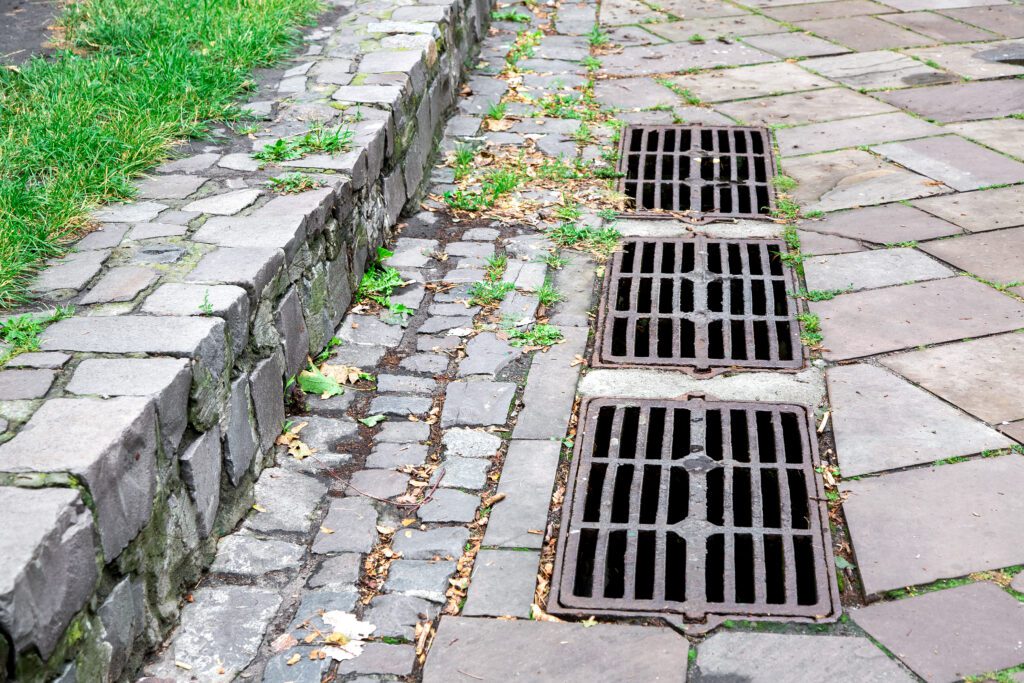
An exposed drainage channel may collect leaves, sediment, and other debris, making the area look neglected. In suitable locations, a properly installed grate can create a cleaner, more finished appearance while allowing surface water to enter the drainage system.
Grates are available in different materials, finishes, and designs. Depending on the surrounding landscape, you could choose a discreet metal grate for a contemporary property or a more decorative design that complements stone paving and garden edging.
Grated trench drains can be particularly useful along driveways, patios, walkways, and other paved surfaces where water collects. They are not, however, a universal solution for every open drainage ditch. A grate must be designed for the channel, expected water flow, loading requirements, and maintenance needs.
Keep access points available for cleaning, and choose a grate that can safely support the loads expected in its location. A cover that is too restrictive or becomes clogged with leaves can prevent water from entering the system efficiently.
Standing water should also be addressed rather than simply concealed. The Illinois Department of Public Health’s mosquito guidance explains why mosquito management matters around residential properties. Eliminating avoidable standing water and maintaining drainage channels can help reduce potential breeding sites.
3. Use River Rocks to Create a Natural Dry Creek Bed
River rocks can transform a plain drainage ditch into a feature that resembles a natural stream or dry creek bed. Their rounded shapes and varied colors create texture, making them a popular choice for landscapes that emphasize a natural appearance.
A dry creek bed can be designed with a mixture of stone sizes. Larger rocks can define selected sections or create visual focal points, while smaller stones fill the channel and create a more consistent surface. Curved lines can make the feature feel organic, particularly when the surrounding planting follows the same shape.
You can also add carefully selected plants along the edges to create a transition between the rock bed and the lawn. Ornamental grasses, suitable native plants, and other species adapted to the site’s moisture conditions can introduce color and seasonal interest.
The most important consideration is choosing stone that works with the drainage design. River rocks are decorative, but their presence does not automatically improve infiltration or prevent flooding. The channel’s dimensions, slope, soil conditions, and expected runoff must determine how it is constructed.
Avoid placing decorative stone in a way that reduces the channel’s capacity or causes water to spill into unwanted areas. In sections carrying fast-moving runoff, the stone size and arrangement should also be suitable for resisting movement and erosion.
4. Build Stone Edging or Retaining Walls Where Appropriate
Stone edging and carefully designed retaining walls can make a drainage area look more intentional. They are particularly useful when a ditch runs beside a driveway, borders a garden bed, or passes through a section of the yard with noticeable changes in elevation.
A low stone border can define the channel and separate it visually from adjacent lawn areas. In a larger landscape, a properly engineered retaining wall may help manage a change in ground level while creating space for additional planting.
You could soften the appearance of the stonework with suitable ornamental grasses, low-growing plants, or carefully placed shrubs. The combination of hard surfaces and greenery can make a drainage feature feel like a natural extension of the landscape.
However, a retaining wall should not be treated as a simple cover for a drainage pipe. Walls can change how water moves through the soil and may require their own drainage provisions, suitable foundations, and erosion protection. Poorly designed walls can trap water or create additional pressure behind the structure.
Before adding a wall near a drainage ditch, consider how the design will affect water flow, access for maintenance, and the stability of the surrounding ground. Ware Landscaping’s hardscaping options can help you consider how structural landscape features fit into a broader outdoor design.

5. Combine Materials for an Eclectic Landscape Design
If you prefer a distinctive outdoor space, combining different landscaping materials can give your drainage ditch a more personalized appearance. An eclectic design can work well in residential gardens and commercial properties where the landscaping is intended to reflect a particular style or brand identity.
Consider combining:
- Small pebbles with larger decorative rocks.
- Natural stone edging with selected planting areas.
- Mulch and garden beds outside the main water channel.
- Ferns and moisture-tolerant ornamental grasses in suitable locations.
- Curved borders or carefully planned geometric shapes.
- Contrasting textures and colors that complement the existing landscape.
The key is to create a coordinated design rather than simply placing different materials together. Repeating a particular stone, plant, or edging material in several areas can help the drainage feature feel connected to the rest of the property.
It is also important to distinguish between the main drainage channel and the surrounding decorative areas. Keep loose mulch, lightweight ornaments, and plants with unsuitable root systems out of places where they could wash into the channel or obstruct the flow of water.
A well-planned design can make a drainage ditch a visual feature while preserving the function that protects your property.

6. Add a Waterfall or Other Water Feature Where Conditions Allow
Water features can create a striking focal point in a landscape. A small waterfall, fountain, or recirculating stream may complement a drainage area, particularly when the design uses natural stone and planting to create a cohesive appearance.
A waterfall can also help disguise an engineered transition in a landscape, provided the water feature and drainage system are designed as separate but compatible elements.
There is an important distinction, however, between a decorative water feature and a stormwater drainage channel. A waterfall does not automatically absorb excess runoff or solve drainage problems. Many decorative fountains and waterfalls use recirculating water, while a drainage ditch must accommodate rainfall and discharge water safely.
If you want to incorporate a waterfall into a drainage area, the design should account for heavy rainfall, changes in water volume, erosion at the discharge point, and safe overflow routes. Avoid creating a feature that sends water toward your foundation, damages neighboring property, or overwhelms the existing drainage system.
For smaller yards, a modest stone feature beside the channel may provide the same visual interest without introducing unnecessary complexity.
7. Create a Japanese-Inspired Garden Around the Drainage Ditch
Japanese-inspired gardens emphasize balance, texture, simplicity, and the relationship between natural and constructed elements. These principles can work well when you want your drainage ditch to blend quietly into the landscape.
You could use carefully arranged stones, restrained planting, a simple path, and a limited palette of materials to create a calm and organized outdoor space. Gravel and decorative stone can define selected areas, while shrubs, ornamental grasses, and small trees provide structure.
The design does not need to imitate a traditional Japanese garden in every detail. Even a few carefully chosen elements can create a more refined appearance around a drainage feature.
Pay attention to how the garden will behave during heavy rainfall. Fine gravel and loose decorative materials can move when exposed to fast-flowing water, while dense planting can obstruct maintenance access if placed too close to the channel. Use stable materials in areas that carry runoff and keep the main flow path clear.
Concrete or stone edging may help define the garden, but it should not prevent water from entering the drainage channel or create a barrier that traps runoff. Where grading problems already exist, address them before investing in decorative improvements or you may still need flooded yard repair.
8. Use Potted Plants to Add Color and Flexibility
Potted plants offer a straightforward way to improve the appearance of the area around a drainage ditch without making permanent changes to the ground. They are especially useful for patios, compact gardens, and properties where the planting arrangement may need to change over time.
Choose containers that complement your landscape and plants suited to the amount of sunlight and moisture available. Seasonal flowers can provide changing color, while ornamental grasses and compact shrubs can offer structure throughout much of the year.
Containers also make it easier to move plants when maintenance work is required. You can reposition them to suit the season or remove them temporarily when cleaning the drainage channel.
Placement matters. Keep pots away from the main flow path, channel openings, inspection points, and areas where fast-moving water could knock them over. Heavy containers may be suitable in stable areas, but they should not be used to block water or conceal a drainage problem.
For a coordinated look, repeat two or three container styles or plant varieties along the surrounding garden rather than crowding the ditch with too many unrelated arrangements.
9. Add a Small Bridge or Walkway
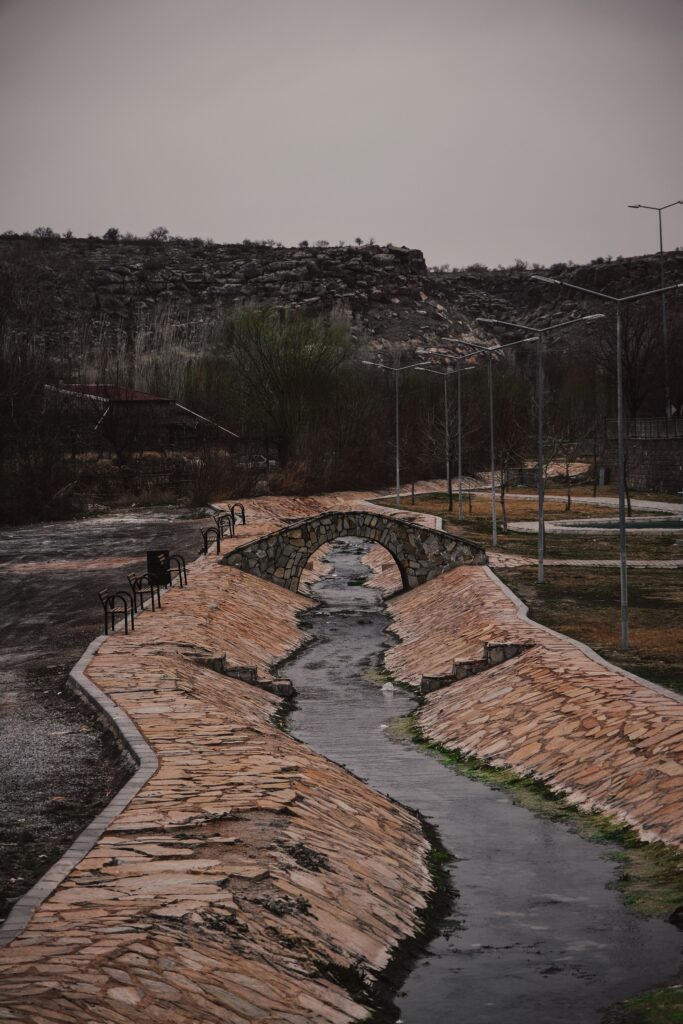
A bridge or walkway can turn a drainage ditch into an intentional landscape feature while improving access across the yard. This approach is particularly suitable for larger gardens where the drainage channel separates different lawn areas or connects distinct planting zones.
A simple timber bridge can complement a rustic landscape, while stone pavers or a more contemporary walkway may suit a modern property. Decorative railings, coordinated edging, and carefully positioned planting can complete the design.
Before installing a bridge, assess the ditch’s width, depth, expected water flow, and maintenance requirements. The structure must provide safe passage without restricting the channel or creating a barrier that catches branches and debris during heavy rainfall.
A bridge should also be properly supported and constructed from materials suitable for outdoor conditions. If the channel carries substantial runoff, professional design may be needed to ensure the crossing does not create a bottleneck or cause water to back up.
For a smaller ditch, a stepping-stone path outside the main flow channel may provide a simpler alternative. The aim is to improve access and visual appeal without compromising drainage performance.
10. Attract Wildlife With Bird Feeders and Pollinator-Friendly Plants
A drainage ditch can become part of a wildlife-friendly garden when the surrounding landscape includes suitable plants, water management, and carefully positioned feeders.
Bird feeders can attract species commonly found in the Chicago area, while native flowering plants can provide food and habitat for pollinators. A butterfly-friendly planting area can also introduce seasonal color and create an enjoyable outdoor feature for families.
Select plants based on local growing conditions, sunlight, soil moisture, and mature size. Native species adapted to the site are often useful choices because they can support local wildlife while fitting naturally into the surrounding landscape.
Bird feeders and birdbaths should be placed away from the main drainage channel so they do not obstruct water flow or become unstable during storms. Clean feeders regularly, and maintain birdbaths so the water does not become stagnant.
Avoid attracting wildlife with food placed directly in the ditch, and do not assume that every wet area should become a pond or wildlife water feature. The drainage system still needs to move stormwater safely, particularly during intense rainfall.
A well-designed pollinator garden beside the ditch can provide much of the visual and environmental benefit without interfering with its primary function.
11. Install Rain Barrels to Add Interest and Collect Water
Rain barrels can provide a practical and attractive addition to a drainage-focused landscape. Positioned beneath suitable downspouts, they collect a portion of the rainwater coming off your roof, which can later be used to water ornamental plants and garden beds.
A well-chosen barrel can complement the style of your home or garden. Some designs have a traditional appearance, while others use clean lines and finishes that suit contemporary outdoor spaces.
Rain barrels should be installed on a stable, level base and fitted with suitable overflow arrangements. When a barrel fills during heavy rainfall, excess water must be directed to a safe discharge area rather than toward the foundation or a neighboring property.
They also need regular maintenance. Keep screens clear, inspect outlets and connections, and follow local guidance for managing stored water. If mosquitoes are a concern, use a properly fitted cover and screened openings.
Rain barrels reduce the amount of roof runoff entering the drainage system only to the extent that they have available storage capacity. They are useful as part of a broader water-management plan, but they should not be treated as a substitute for adequate yard drainage.
How to Choose the Right Landscaping for Your Drainage Ditch
The best design depends on the ditch’s purpose, the amount of runoff it handles, the available space, and the style of your property. Before choosing decorative materials, consider the following factors.
Water flow and drainage capacity: Determine where the water comes from, how much runoff the ditch must carry, and where it discharges. Decorative improvements should not reduce the channel’s capacity or redirect water toward structures.
Soil and erosion conditions: Loose soil, steep slopes, and fast-moving water may require stable stone, appropriate vegetation, or other erosion-control measures. The materials that look attractive in a dry garden may not remain in place during a heavy storm.
Plant selection: Choose plants based on sunlight, soil conditions, moisture levels, and their mature size. Keep the main flow path clear and avoid species that could obstruct drainage or make inspections difficult.
Maintenance access: Every drainage system needs periodic inspection and cleaning. Leave access to grates, outlets, pipes, and other important components so that maintenance does not require dismantling the landscape.
Local rules and discharge requirements: Some ditches form part of a public stormwater system or are affected by drainage easements. Check applicable local requirements before changing the ditch’s shape, installing a structure, or redirecting runoff.
Seasonal conditions: In the Chicago area, freeze-thaw cycles, falling leaves, snowmelt, and heavy spring rainfall can affect drainage performance. Choose materials and planting arrangements that remain practical throughout the year.
Drainage Ditch Landscaping Ideas at a Glance
| Landscaping idea | Best suited for | Important consideration |
| Existing rocks and plants | Gardens with established landscaping | Keep the water channel clear |
| Decorative grates | Suitable surface-drainage channels | Match the grate to the channel and expected loads |
| River rocks | Natural-looking dry creek beds | Use stable stone suited to the flow |
| Stone edging or walls | Slopes and defined garden borders | Account for water pressure, stability, and drainage |
| Mixed materials | Personalized residential or commercial landscapes | Coordinate materials without obstructing runoff |
| Water features | Landscapes with suitable space and design | Separate decorative circulation from stormwater drainage |
| Japanese-inspired gardens | Minimalist, structured landscapes | Use stable materials and preserve maintenance access |
| Potted plants | Patios and flexible planting areas | Keep containers clear of flow paths |
| Bridges and walkways | Larger yards with crossing points | Avoid restricting water movement |
| Wildlife-friendly planting | Gardens designed to support pollinators and birds | Keep feeders and planting away from critical drainage areas |
| Rain barrels | Properties with suitable roof drainage | Provide safe overflow and regular maintenance |
Contact Ware Landscaping for Drainage Ditch Help
At Ware Landscaping, we understand that an attractive yard should also function properly. Our clients in Naperville and the greater Chicago area need outdoor spaces that look good while managing rainwater, protecting the surrounding landscape, and remaining practical to maintain.
Whether you are planning a rock-lined drainage channel, improving an existing yard, or addressing persistent water problems, the right solution begins with understanding your property’s drainage needs. Our drainage services can help you consider options that complement your landscape while preserving effective water flow.
We can also help you think through the relationship between drainage, grading, planting, and other landscape features so that decorative improvements support the overall design.
If your drainage ditch needs attention, contact Ware Landscaping to discuss your property and potential landscaping solutions. You can also browse our portfolio for examples of landscaping work.
Common Drainage Ditch Landscaping Questions
Are drainage ditches public property?
Drainage ditches can be publicly or privately owned, depending on their location, purpose, and applicable property records. A roadside ditch may form part of a public road or stormwater system, while a ditch within a residential property may be privately maintained.
Ownership and maintenance responsibilities are not always the same. A ditch located on private land may be subject to a public drainage easement or other restrictions that allow access for inspection and maintenance.
Before changing the ditch’s shape, installing a bridge, building a retaining wall, or adding permanent landscaping, check your property documents and applicable local requirements. If the ditch is near a public road or forms part of a shared drainage system, contact the relevant local authority to clarify what work is permitted.
What’s better, a French drain or a trench drain?
A French drain is generally used to collect and redirect subsurface water. It commonly consists of a perforated pipe surrounded by suitable drainage aggregate, often with geotextile where appropriate to help manage soil migration. French drains can help address certain wet-yard and foundation-drainage problems when they are correctly designed and connected to a suitable outlet.
A trench drain, by comparison, is typically a surface-water collection channel covered by a grate. It is often used along driveways, patios, walkways, and other paved areas where rainwater needs to be collected quickly.
Neither system is automatically better in every situation. The right choice depends on where the water is accumulating and how it needs to be collected and discharged. In some landscapes, both systems may be useful as part of a coordinated drainage plan.
For more detail, compare the design considerations in Ware Landscaping’s guide to French drains versus trench drains, or review the available drainage services.