
Most residential yard drainage installations take one to three working days once construction begins. Smaller projects, such as burying a downspout or installing a short drainage line, may be completed in a single day. Larger projects involving French drains, multiple downspout connections, sump pump discharge lines, extensive grading, or new sod may take three to five days or longer.
However, the installation itself is only one part of the project. From the initial property evaluation to final lawn restoration, the complete process may span one to four weeks, depending on scheduling, weather, project complexity, material availability, and any necessary utility marking or approvals.
Here is what homeowners can expect during each stage.
Stage 1: Property Evaluation and Drainage Design
Typical time: One site visit, followed by several days for planning
A successful drainage project begins with identifying why water is collecting in the yard. During the evaluation, the contractor should inspect low spots, soil saturation, yard slope, downspouts, sump pump discharge points, foundation areas, patios, driveways, and neighboring runoff.
The visit itself may take less than two hours, but complicated properties can require a more detailed assessment. Measurements and elevation readings may also be needed to determine whether water can move through gravity or requires a pump-assisted system.
After the inspection, the contractor develops a customized plan. Possible yard drainage solutions include French drains, catch basins, buried downspouts, sump pump connections, regrading, dry wells, underground pipes, or pump-assisted systems.
Homeowners should confirm that the proposal explains where water will be collected, how it will travel, and where it will safely discharge. Following a guide for choosing a drainage company can help you evaluate the contractor before work begins.
Stage 2: Estimate, Approval and Scheduling
Typical time: A few days to several weeks
Once the drainage plan is complete, the contractor prepares an estimate. The proposal should clearly describe the system, materials, drainage route, restoration work, warranty coverage, and total price.
Project cost and duration are closely connected. A short French drain will usually require less labor than a system that includes several collection basins, multiple downspouts, regrading, and sod replacement. Homeowners comparing proposals can review the company’s yard drainage cost guide to understand how the size and complexity of a system affect pricing.
After you approve the estimate, the project is added to the installation schedule. The waiting period depends on contractor availability and seasonal demand. Spring and summer are often busy because drainage problems become more noticeable after heavy rain.
Stage 3: Utility Marking and Site Preparation
Typical time: Several days before installation
Before excavation begins, underground utilities must be identified. Gas, electrical, communication, and other buried lines can affect the drainage route and must be considered before digging.
Homeowners should also remove toys, furniture, garden decorations, hoses, and other movable objects from the work area. Gates should be unlocked, pets kept indoors, and workers given access to outdoor electrical outlets or water sources when necessary.
If standing water is reaching the home, the design may need to address larger foundation drainage problems, not just visible puddles in the lawn. Discovering additional issues during preparation can extend the timeline, but correcting the full problem is better than installing an incomplete system.
Stage 4: Excavation
Typical time: Several hours to one full day
Installation usually begins by marking the planned drainage route and removing grass from the work area. The crew then excavates trenches for pipes, French drains, or downspout connections.
Excavation time depends on the length and depth of the system, soil conditions, access, and the number of obstacles. Clay soil, tree roots, buried debris, fences, narrow gates, patios, and existing landscaping can slow progress.
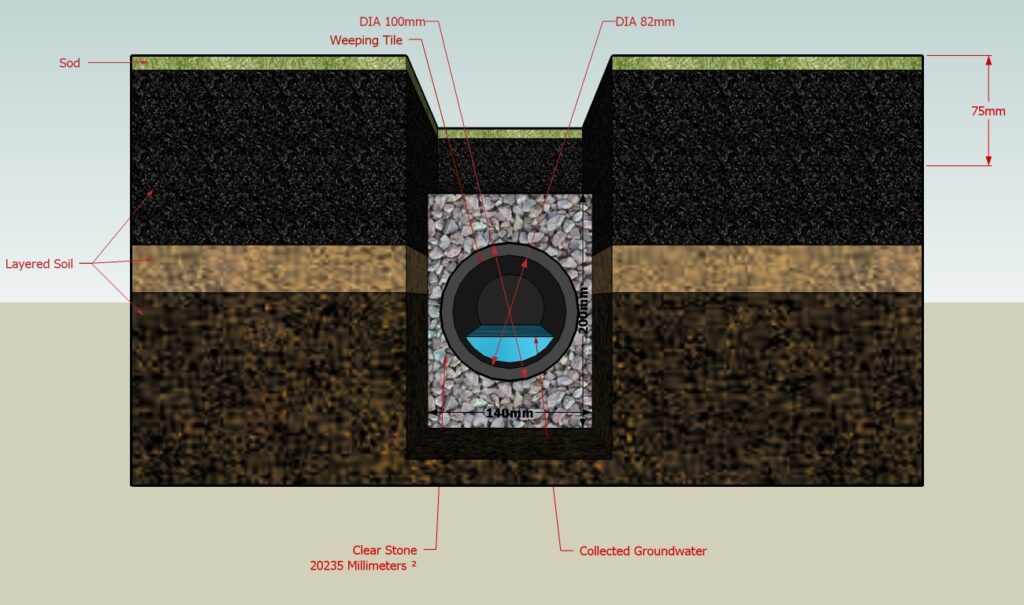
French drains generally require more excavation than a simple solid-pipe downspout extension because the trench must accommodate drainage stone, filter fabric, perforated pipe, and the correct slope. Homeowners considering this solution can learn more about project variables in the French drain costs guide.
Stage 5: Drainage System Installation
Typical time: One to two days
Once excavation is complete, the crew installs the required pipes, basins, gravel, filter fabric, fittings, emitters, or pump components. Downspouts and sump pump discharge lines may also be connected to move roof and groundwater away from the house.
Correct elevation is essential. A gravity-based system needs enough pitch to keep water moving toward the discharge point. If the yard is too low or flat, a well and pump-assisted system may be required.
Projects designed to prevent water from entering the home may require additional connections and testing. If water is already reaching the basement, homeowners should explore professional flooded basement repair solutions alongside exterior drainage improvements.
Stage 6: Grading and Lawn Restoration
Typical time: Half a day to two days
Installing the underground system does not complete the project. The surrounding ground may need to be graded so surface water flows toward the drains and away from the foundation.
After grading, the crew replaces soil and restores the disturbed lawn. The restoration method may involve reinstalling saved grass, laying new sod, or applying grass seed. New sod provides an immediate finished appearance, while seed usually requires more time and homeowner care before the area is fully established.
The amount of restoration can significantly affect the schedule. A narrow trench may be repaired quickly, while extensive regrading may require a broader sod installation project.
Stage 7: Testing and Final Walkthrough
Typical time: Several hours
Before leaving, the contractor should test the system to confirm that water enters the collection points, moves through the pipes, and reaches the intended outlet. Pump-assisted systems should also be checked under operating conditions.
During the final walkthrough, ask where the system runs, how the basins should be cleaned, what maintenance is required, and which parts are covered by warranty. Ware Landscaping supports qualifying projects with a 10-year drainage guarantee, giving homeowners added confidence in the completed system.
What Can Delay a Yard Drainage Project?
Several conditions can extend the installation timeline:
- Heavy rain or saturated soil that makes excavation unsafe or ineffective
- Unexpected utilities, tree roots, rocks, or buried construction debris
- Limited equipment access through narrow gates or fenced areas
- Extensive grading or removal of large amounts of soil
- Multiple sump pump and downspout connections
- Pump-assisted systems requiring deeper excavation
- Large sod or landscape restoration areas
- Changes to the drainage plan after work begins
A reliable contractor should explain potential delays before installation and communicate promptly if site conditions change.
Plan Your Yard Drainage Installation
Although many yard drainage systems can be installed within one to three working days, every property is different. The most reliable timeline comes from an on-site evaluation that considers the yard’s slope, soil, access, water volume, drainage outlet, and restoration needs.
If standing water, muddy grass, overflowing downspouts, or foundation moisture is affecting your property, request a free quote from Ware Landscaping. A customized evaluation will help determine the right solution, expected installation time, and next steps for keeping your yard dry.