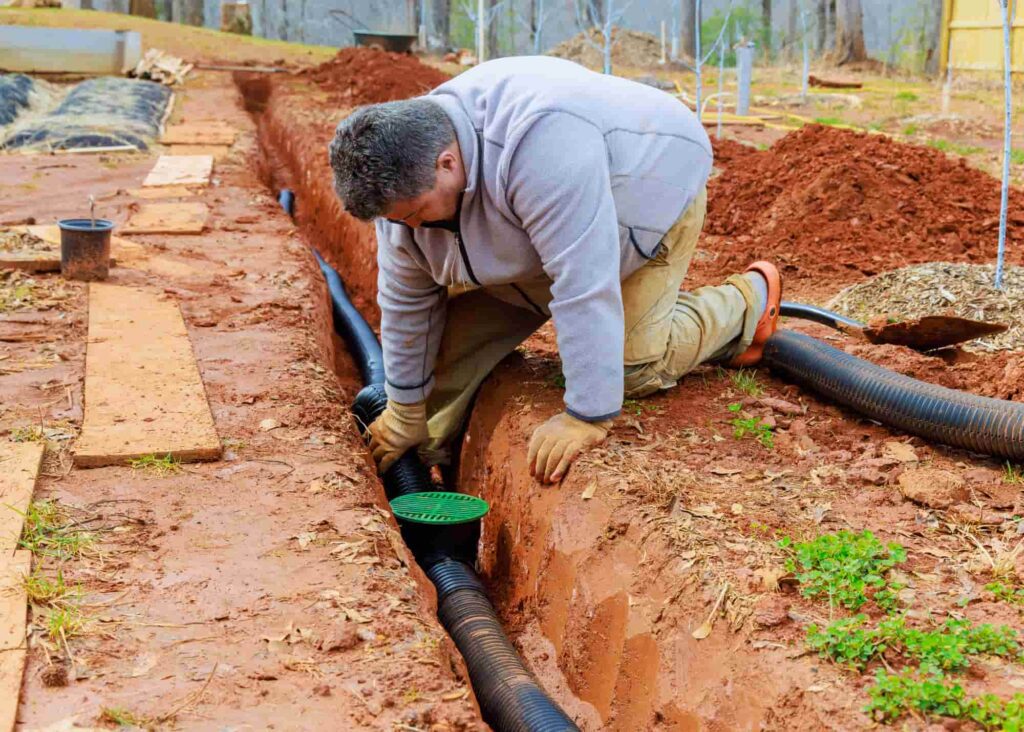


A French drain is one of the most reliable ways to keep a Chicagoland yard from flooding, but winter raises a fair question: can a French drain freeze, and if it does, will your yard or basement flood when the snow melts? The short answer is that a properly designed and installed French drain rarely freezes solid. When winter problems do happen, they almost always come from a few specific weak points, usually the outlet, flat or sagging pipe, and debris that slows the flow.
This updated 2026 guide explains how French drains behave in freezing weather, the warning signs that yours is frozen or blocked, and the practical steps that keep it working through northern Illinois winters, including the freeze-thaw cycles and heavy spring melt that put the most stress on a drainage system.
Quick Answer: Do French Drains Freeze?
A French drain can freeze, but it usually does not when it is built correctly. Water in a well-sloped drain moves through and leaves the pipe between storms, so there is little standing water to turn to ice. The stone surrounding the pipe keeps open pathways even when the soil around it is frozen.
Freezing problems typically come from:
- Outlets that ice over or get buried by snow and plow piles.
- Low spots in the pipe that hold water and freeze into plugs.
- Clogged pipe or stone that slows drainage so water lingers.
- Constant flow from sump pumps that refreezes at the discharge point.
- Shallow pipe sections near the outlet with very little soil cover.
Fix those and most French drains work all winter.
How Winter Affects a French Drain
Frozen soil above, open stone below
In a typical winter, the top layer of soil freezes first. The clean, angular stone around the drain pipe has large gaps between pieces, so even when the stone itself is cold, water can still move through those voids. As long as water can reach the stone and leave through the outlet, the system keeps working.
Freeze-thaw cycles
Northern Illinois swings above and below freezing dozens of times each winter. Snow melts in the afternoon sun and refreezes at night. Those cycles send meltwater into the soil repeatedly, which is exactly when a working drain proves its value. A drain that is slow or partially blocked can hold water that then freezes overnight.
Frost depth
Frost can reach roughly 3 to 4 feet deep in a cold Chicagoland winter, and the City of Chicago uses 42 inches as its frost depth for foundations. Most yard French drains are installed 18 to 24 inches deep, which is above that line. That is normal and generally fine, because a well-sloped drain empties between storms. It does mean the design has to avoid low spots and protect the outlet. See our guide on how deep a French drain should be for more on depth.
Spring melt
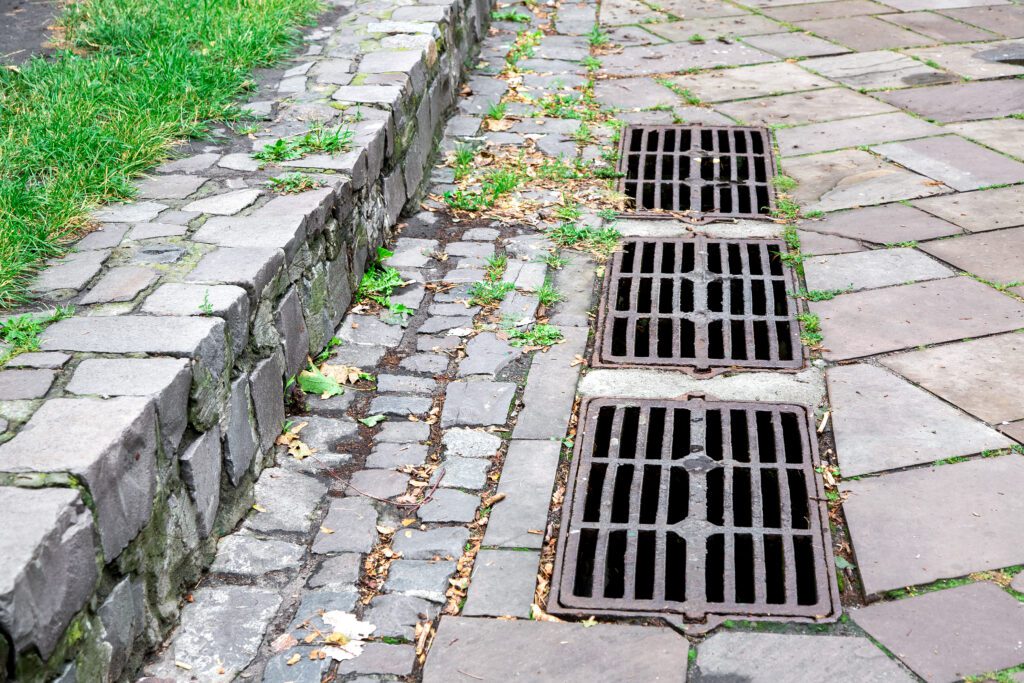
The biggest test of a drainage system in Illinois often comes in late winter and early spring, when snowpack melts quickly over ground that is still frozen. Water cannot soak in, so it runs across the surface to the lowest points. Catch basins and surface inlets connected to the drain help capture that water while the soil is still frozen.
Signs Your French Drain Is Frozen or Blocked
Check your system during and after thaws. Warning signs include:
- No flow at the outlet during a melt or rain when you would expect water to be coming out.
- Ice built up at the outlet, pop-up emitter or discharge pipe.
- Standing water or ice sheets over the drain line or in the area it is supposed to keep dry.
- Water backing up at catch basins or downspout connections.
- New dampness in the basement or along foundation walls during thaw periods.
- A sump pump running constantly or a discharge line that is iced shut.
If you see these signs, start at the outlet. It is the most common freezing point and the easiest to check.

How to Keep a French Drain From Freezing: 8 Practical Tips
1. Keep a continuous slope
Water should never sit in the pipe. A drain needs a steady fall toward the outlet, commonly at least 1% (about 1/8 inch per foot). Low spots and sags hold water that freezes into plugs. Professionals use laser levels to set grade rather than following the lawn surface.
2. Protect the outlet
The outlet is the most vulnerable part of any drainage system in winter.
- Locate outlets where plowed snow will not be piled on them.
- Mark pop-up emitters and outlets with a stake so they can be found and kept clear.
- Use solid pipe for the final run to the outlet so water does not leak back into the soil.
- Fit animal guards or grates so debris and critters do not block the end of the pipe.
3. Clear snow and ice off outlets after storms
After heavy snow, take a minute to clear outlets and pop-up emitters. A buried outlet is effectively closed, and water will back up in the line.
4. Keep debris out
Leaves, mulch and grass clippings are the biggest source of clogs. Clean catch basin grates and emitters in late fall. Non-woven filter fabric around the stone keeps soil fines from migrating into the drain and slowing it over time.
5. Do not connect gutters directly into the perforated drain
Roof water can carry leaves and shingle grit and arrives in large surges. Route downspouts through solid pipe to their own outlet, or into a properly designed collection system with cleanouts, rather than straight into a perforated French drain. Keep gutters clean so overflow does not dump onto the drain area.
6. Manage sump pump discharge
Sump pumps can run all winter, and their discharge lines are prone to freezing at the end. Make sure the discharge line slopes so it drains completely between cycles, ends at an outlet that will not ice over, and has a freeze-relief fitting where appropriate so water can escape if the line freezes. Test your sump before winter.
7. Add cover or insulation where pipe is shallow
Near outlets the pipe often comes close to the surface. Adding soil cover, or using rigid foam insulation over shallow runs, reduces the chance of freezing in those sections.
8. Inspect before and after winter
In fall, run a hose into the high end of the system and confirm water flows freely out the outlet. Clean catch basins and emitters. In spring, check again for sediment, settling or new wet spots.
Fall French Drain Winterization Checklist
Before the first hard freeze, usually by mid-November in the Chicago suburbs, run through this list:
- Flush the system with a garden hose at the high end and confirm a strong, steady flow at the outlet.
- Remove leaves and mulch from catch basin grates, pop-up emitters and the outlet.
- Check that pop-up emitter caps open and close freely and are not cracked.
- Look for sunken areas along the drain line that may signal settling or a sag in the pipe.
- Clean gutters so overflow does not pour onto the drain area during thaws.
- Confirm downspout extensions and buried lines are connected and not crushed.
- Test the sump pump by filling the pit with water and watching it cycle and discharge.
- Mark outlets and emitters with stakes or reflective markers so snow crews avoid them.
- Tell your snow removal contractor where not to pile snow.
Fifteen minutes of checks in fall prevents most of the winter calls we get about frozen or backed-up drains.
What to Do If Your French Drain Freezes
- Start at the outlet. Clear snow and ice from the discharge point or pop-up emitter. Often this alone restores flow.
- Check catch basins. Remove ice and debris from grates so surface water can enter the system.
- Be patient with thaws. Ice plugs in the pipe usually clear as temperatures rise. Running warm (not boiling) water into a catch basin can help free an ice-blocked outlet, but avoid flooding areas that will refreeze.
- Do not use torches or open flame on pipes or outlets. Plastic pipe and fittings can be damaged easily.
- Protect the basement. Make sure the sump pump is working and its discharge is not frozen.
- Call a professional if the system repeatedly freezes, water backs up into the yard or basement, or you suspect a collapsed or clogged pipe. A camera inspection can locate the problem without digging up the whole system.
Can You Install a French Drain in Winter?
It is possible but not ideal. Frozen ground is harder to excavate and restore, and the lawn cannot be re-established until spring. Most homeowners are better served by planning drainage work in fall, before the ground freezes, so the system is ready for snowmelt. If a winter installation is unavoidable, the site may need temporary surface restoration with final grading and seeding or sod in spring. Read more about why you should fix yard drainage problems before winter.
French Drain vs. Dry Well in Cold Climates
Dry wells, which are buried chambers or stone pits that let water soak into the ground, are sometimes suggested as a freeze-proof outlet. They can work in sandy soils, but in the heavy clay common around Naperville, Wheaton and Downers Grove, water soaks out of a dry well slowly, and the pit can stay full for long periods, especially when the surrounding soil is saturated or frozen. Where possible, we prefer a gravity outlet to a lower area, swale or approved storm connection. Ware Landscaping’s video on why a French drain is better than a dry well explains the trade-offs.

Common Winter French Drain Myths
- “Frozen ground does not need drainage.” Snowmelt on frozen ground cannot soak in, which is exactly why surface collection and working drains matter in late winter.
- “The gravel freezes solid.” The stone gets cold, but the large voids between stones keep water moving as long as the outlet is open.
- “A French drain must be below the frost line.” Most yard drains are not, and they work well because they are sloped and empty between storms.
- “More pipe means better winter performance.” A bigger system with poor slope or a blocked outlet will still fail. Design matters more than size.
Frequently Asked Questions
Will a French drain work in winter?
Yes. A properly sloped French drain with a protected outlet continues to work through most of the winter, and it is especially valuable during thaws and spring melt.
How do I unfreeze a French drain?
Clear snow and ice from the outlet first, then from catch basins. Ice plugs usually clear as temperatures rise. Avoid open flame and boiling water. If it keeps freezing, have the slope and outlet inspected.
Should a French drain be insulated?
Insulation is usually only needed where pipe is shallow, typically near outlets. The main pipe run is protected by soil cover and the fact that it drains between storms.
Why does my French drain outlet freeze?
Outlets freeze when they are buried by snow, sit in a low spot where water pools, or receive constant small flows (often from a sump pump) that freeze before they can drain away. Relocating, raising or protecting the outlet solves most cases.
Can a frozen French drain cause basement flooding?
It can contribute if the drain is meant to keep water away from the foundation. Make sure outlets are clear before thaws and that your sump pump and its discharge line are working.
When is the best time to install a French drain in Illinois?
Late summer and fall are ideal. The ground is workable, and the system is in place before winter snow and spring melt.
Keep Your Drainage Working All Year
French drains are well suited to northern Illinois winters when they are designed with steady slope, clean stone wrapped in fabric, and outlets that will not freeze shut or get buried. A few minutes of fall maintenance and keeping outlets clear after storms prevents most winter problems.
If your French drain freezes, backs up or no longer keeps the yard dry, Ware Landscaping’s drainage team can diagnose and fix it, and qualifying systems we install come with a 10-year drainage guarantee. Contact us for a free quote.