
For many homeowners, a heavy rainstorm brings more than just gloomy weather, it brings anxiety. Instead of looking out at a refreshed lawn, you’re faced with a backyard that looks more like a swamp, muddy puddles that refuse to drain, or, worst of all, water creeping dangerously close to your foundation.
Backyard drainage issues are a widespread concern across the United States. Whether you are dealing with the clay-heavy soils of the Midwest or the intense storm surges of the Southeast, improper drainage can turn your property into a liability. According to the American Society of Landscape Architects (ASLA), poor drainage contributes to billions of dollars in property repair costs annually.
At Ware Landscaping, we believe your yard should be a sanctuary, not a stressor. In this guide, we will break down the signs of drainage problems, uncover their root causes, and explore practical solutions ranging from simple DIY fixes to professional engineered systems.
Identifying the Problem: More Than Just Puddles
Drainage issues aren’t always as obvious as a flooded basement. Often, the signs are subtle indicators that the natural flow of water on your property has been disrupted. Ideally, rainwater should permeate the soil or flow harmlessly away from structures. When this process fails, you might notice:
- Ponding or Pooling: Standing water that remains for days after a rain event, drowning grass and creating breeding grounds for mosquitoes (a known health risk for West Nile virus, per the CDC).
- Soil Erosion: Runoff that strips away topsoil, exposing tree roots or creating unsightly gullies in your landscape.
- Foundation Issues: This is the most critical red flag. Water marks on your basement walls, musty odors, or sticking doors can indicate that hydrostatic pressure is building up against your home.
- Plant Death: Yellowing grass or dying shrubs often signal that roots are suffocating in oversaturated soil.
The Root Causes: Why Is My Yard Wet?
Understanding why your yard isn’t draining is the first step toward fixing it. While every property is unique, most issues stem from a combination of three factors: soil, grading, and infrastructure.
1. Soil Composition
Your soil type dictates how quickly water is absorbed. Clay-heavy soils, common in many parts of the U.S., act like a barrier, holding water on the surface rather than letting it filter down. Conversely, sandy soils can drain too quickly, leading to instability.
2. Improper Grading
Gravity is the engine of drainage. If your yard doesn’t slope away from your home, water has nowhere to go. Industry standards typically recommend a slope of 2% to 5% away from the foundation. Unfortunately, settling over time or poor initial construction can reverse this slope, directing water right back toward your house.
3. Environmental and Structural Factors
Sometimes, the issue is man-made. Hardscaping features like patios, driveways, or walkways create “impervious surfaces” that prevent absorption. Clogged gutters or downspouts that dump water too close to the house can also overwhelm your yard’s natural capacity to handle rainfall.
Solutions: DIY Tweaks to Professional Systems
Solving drainage problems isn’t one-size-fits-all. The right solution depends on the severity of the issue and your specific landscape.
Simple Maintenance and DIY Fixes
For minor issues, proactive maintenance can make a surprising difference.
- Extend Your Downspouts: One of the most common causes of wet foundations is roof runoff. Installing extensions that divert water 6 to 10 feet away from the house can solve minor pooling issues immediately.
- Aerate Your Lawn: If your soil is compacted, it can’t absorb water. Aerating—poking holes in the lawn to allow air and water to penetrate—can improve drainage in minor cases.
- Regrading: For small low spots, you can add topsoil to encourage water to flow away. However, be careful not to simply move the problem to a neighbor’s yard.
Advanced and Professional Solutions
When surface tweaks aren’t enough, you need engineered systems to manage the water volume.
1. French Drains
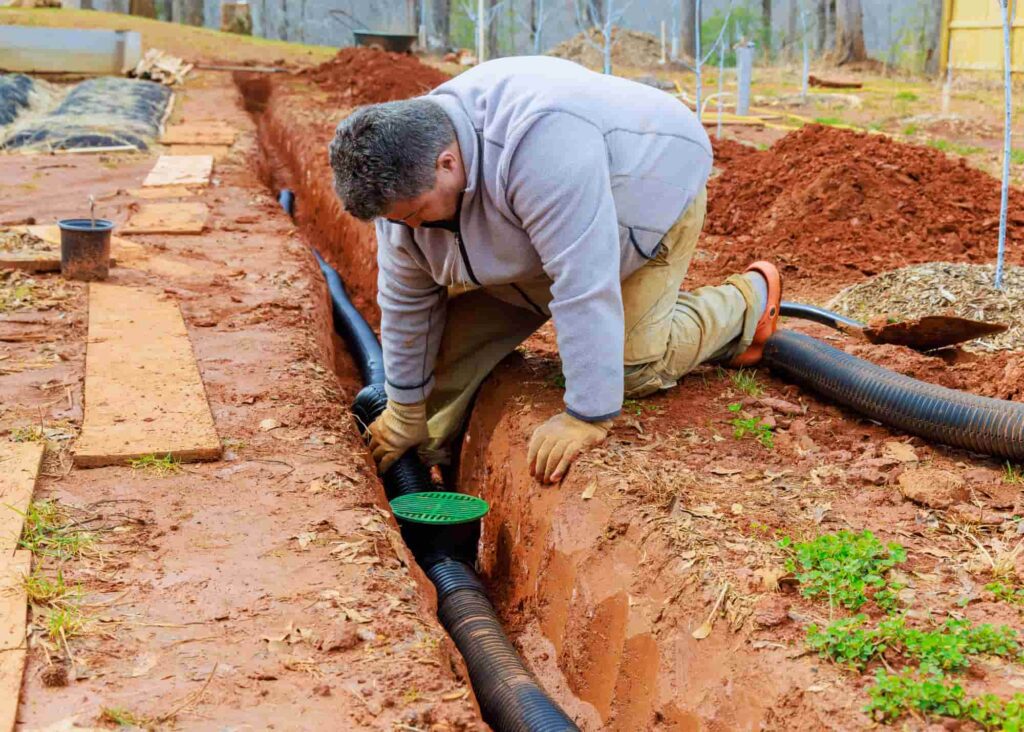
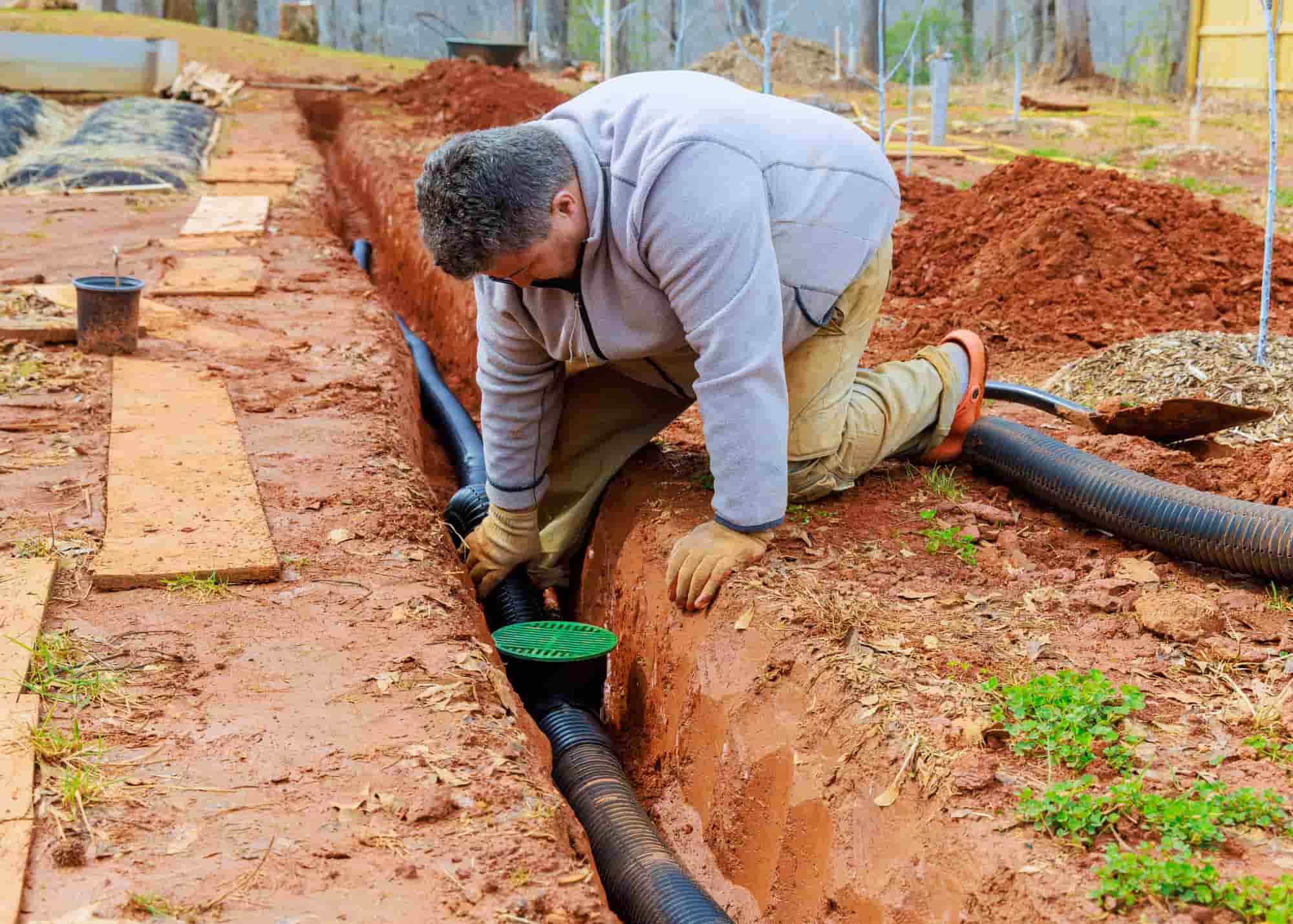
A French drain is a classic, highly effective solution for managing groundwater. It involves digging a trench (typically 18–24 inches deep), lining it with geotextile fabric, and installing a perforated pipe surrounded by gravel. The system captures water from the soil and uses gravity to redirect it to a safe discharge point. This is often the best defense for wet basements and soggy perimeters.
2. Dry Wells
If your yard is flat and has nowhere to send the water, a dry well may be the answer. These are large underground tanks or pits filled with gravel that collect excess water and slowly release it back into the ground. They are excellent for managing roof runoff in areas where storm drains are inaccessible.
3. Rain Gardens
For an eco-friendly approach, rain gardens utilize native plants with deep root systems to absorb excess water. The EPA’s “Soak Up the Rain” initiative highlights how these features can reduce runoff by up to 50% while adding beauty to your landscape. They are particularly effective in the Pacific Northwest and Northeast.
The Cost of Waiting vs. The Value of Action
We understand that drainage improvements are an investment. National averages for professional drainage solutions can range from $2,000 to over $6,000 depending on the complexity of the system, such as a full French drain installation.
However, the cost of inaction is almost always higher. The Insurance Information Institute reports that foundation damage affects 1 in 50 insured homes annually. Repairing a cracked foundation or remediating mold can easily cost tens of thousands of dollars—far exceeding the price of a preventative drainage system.
Furthermore, a dry, usable yard increases your property value. Whether you are looking to sell or simply want to enjoy your outdoor space without wearing rubber boots, proper drainage is a critical asset.
Don’t Let Water Wash Away Your Investment
Drainage issues don’t fix themselves. In fact, with climate data from NOAA predicting more intense rainfall events in the coming decades, these problems are likely to worsen if left unaddressed.
Whether you need a simple regrading, a robust French drain, or a comprehensive stormwater management plan, you need a partner who understands local soil conditions and engineering principles.
At Ware Landscaping, we combine professional expertise with local knowledge to keep your property dry, safe, and beautiful. We assess your unique situation to recommend the most effective, long-lasting solution so you can stop worrying about the rain and start enjoying your yard.
Is your yard bogging you down?
Contact Ware Landscaping today for a professional drainage consultation. Let’s protect your home’s foundation and reclaim your outdoor living space.