
We believe that professional property care should do more than just look good it should work for you and the environment. As homeowners and commercial property managers face increasing challenges with heavy storms and runoff, sustainable landscaping solutions have moved from “nice-to-have” to “essential.”
One of the most effective tools in our arsenal is a strategic rainwater garden design. These engineered landscapes are designed to turn a drainage problem into a beautiful, functional asset. In this guide, we will explore how rain gardens work, why they are a smart investment, and how you can implement a professional-grade rainwater garden design to protect your property.
What is a Rainwater Garden?
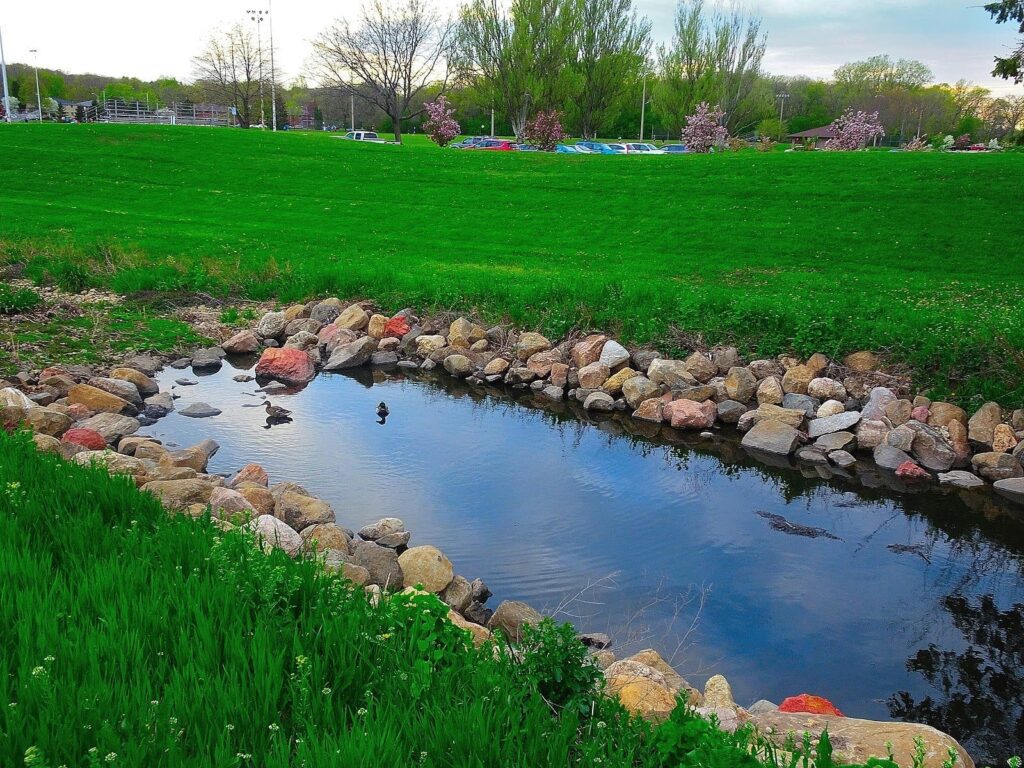
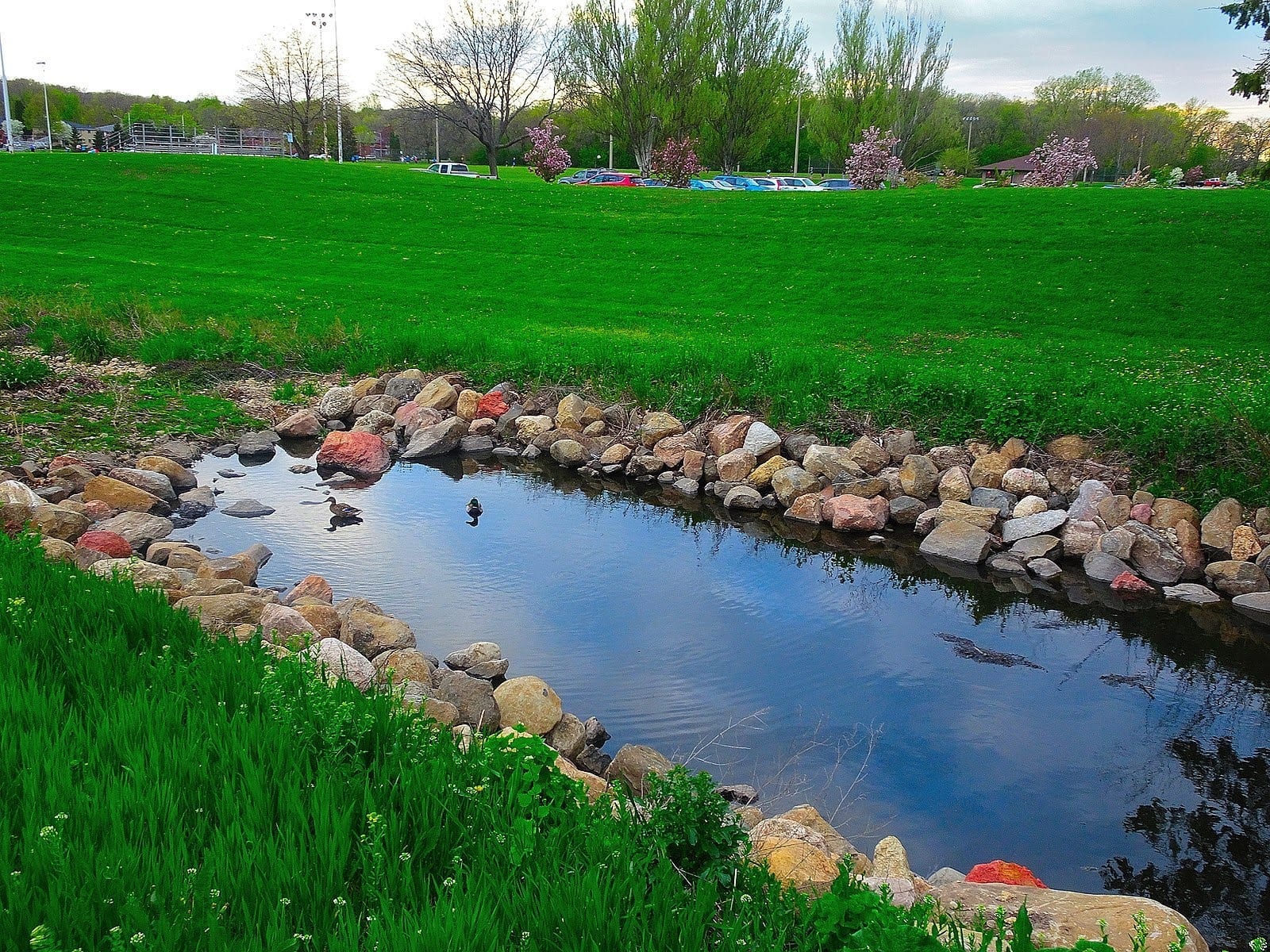
A rainwater garden is a shallow, engineered basin typically 4 to 12 inches deepplanted with deep-rooted vegetation. Its primary purpose is to capture, filter, and infiltrate stormwater runoff from “impervious” surfaces like your roof, driveway, or patio.
Unlike a pond, a rain garden is not meant to hold water permanently. It is designed to drain completely within 12 to 48 hours. By mimicking natural depressions in the landscape, these gardens act as “bioretention cells,” promoting eco-friendly stormwater control and preventing excess water from reaching our overtaxed sewer systems. The core of a successful project lies in a thoughtful rainwater garden design that balances aesthetics with hydrologic performance.
The Multi-Faceted Benefits of Rainwater Garden Design
Investing in a rainwater garden design offers advantages that go far beyond basic water management. Here is why many Ware Landscaping clients are choosing this LID (Low-Impact Development) strategy:
- Flood Mitigation: A well-designed rain garden can absorb up to 1,000 gallons of water per 200 square feet during a storm. For urban yards, this can reduce the risk of basement flooding by as much as 30% to 50%.
- Pollution Reduction: Runoff often carries oils, salts, and chemicals. The roots and soil microbes in a rain garden act as a natural filter, trapping 70-90% of sediments and 50-80% of heavy metals before they reach the groundwater.
- Ecosystem Support: By using native plants in your rainwater garden design, you create a sanctuary for pollinators. These gardens can support over 20 species of butterflies and birds, increasing local biodiversity by 2x to 3x compared to a standard lawn.
- Economic Savings: Many municipalities offer reduced stormwater fees for properties with bioretention features. Furthermore, a professionally installed rainwater garden design can add a 5% to 10% premium to your property value.
- Aesthetic Appeal and Cooling: Beyond functionality, these designs provide year-round interest with varied textures and blooms. They also help combat the “urban heat island” effect, cooling the immediate area by 5 to 10 degrees.
Choosing the Ideal Site for Your Rainwater Garden Design
Functionality begins with proper siting. At Ware Landscaping, we follow a strict set of criteria to ensure your rainwater garden design performs as intended:
- Safety and Foundation Distance: Gardens must be placed at least 10 to 20 feet away from house foundations and septic systems to prevent water from undermining your structure.
- Sunlight Requirements: Full to partial sun (at least 4 to 6 hours) is ideal for the deep-rooted plants required for infiltration.
- The “Perc” Test: Before finalizing your rainwater garden design, we test the soil’s percolation rate. We dig a 12-inch hole, fill it with water, and time the drainage. An ideal rate is between 0.5 and 2 inches per hour.
- Utility Safety: Always use 911 locator services before any excavation. We ensure all gas, water, and electrical lines are clearly marked before we break ground.
Precise Sizing and Soil Recipes for Your Design
A rain garden that is too small will overflow; one that is too large may be an unnecessary expense. We use specific formulas to ensure the rainwater garden design can handle a “1-inch storm” (the common environmental standard).
The Sizing Formula: Garden Area = (Impervious Area × Rainfall in Feet) / Infiltration Rate Adjustment
For example, a 1,000 sq. ft. roof requiring 1 inch (0.083 ft) of drainage usually requires a garden of approximately 140 sq. ft. If your site has heavy clay soil, we multiply that size by 1.5x to 2x to account for slower drainage.
The Soil Mix for High Infiltration
Standard garden soil is often too compacted for an effective rainwater garden design. We recommend a custom blend to ensure high performance:
- 60% Coarse Sand
- 20% Topsoil/Loam
- 20% Organic Compost
This mix ensures that a pint of water can drain within 48 hours while maintaining a healthy pH level between 6.0 and 7.5.
Step-By-Step Build Guide
If you are a DIY enthusiast, a basic rainwater garden design can be a rewarding weekend project. For larger commercial or complex residential properties, Ware Landscaping provides full-service installation. Here is our process:
- Plan and Mark: Outline the area with spray paint. We recommend an elongated shape to fit the natural flow of runoff.
- Excavate and Shape: Dig the center 6 to 12 inches deep. Keep the slopes gentle (a 4:1 ratio) and use the removed soil to create a “berm” , a ridge around the perimeter to hold the water.
- Install Inlets and Outlets: Create a rock-lined inlet where water enters. A professional rainwater garden design also includes an overflow spillway at the lowest end of the berm to direct excess water safely away during extreme storms.
- Backfill and Mulch: Layer your soil mix and add 2 to 3 inches of shredded hardwood mulch. Avoid fresh woodchips, as they tend to float away.
- Planting Strategy: Install your plants in clusters. We recommend using odd numbers (3, 5, or 7) for a more natural look.
Selecting Plants for Your Rainwater Garden Design
Rain gardens are divided into three “hydrologic zones” based on how much water they receive. Selecting the right plant for the right zone is the secret to a maintenance-free rainwater garden design.
| Hydrologic Zone | Characteristics | Sample Plants | Bloom Time |
| Wet Core | Center area; handles most water | Blue Flag Iris, Lobelia Cardinalis | Summer |
| Moist Mid | Saturated soil; sides of the basin | Joe Pye Weed, Swamp Milkweed | Late Summer |
| Dry Edges | Occasional wetness; drought-tolerant | Coneflower, Black-Eyed Susan | Summer-Fall |
| Structural | Adds height and privacy | Inkberry Holly, Buttonbush | July-August |
Maintenance and Long-Term Care
One of the best things about a professional rainwater garden design is that it requires less maintenance than a traditional lawn once established.
- Establishment Period: Water weekly during dry spells in the first year to help roots establish.
- Seasonal Pruning: Prune dead growth in the spring and refresh mulch annually to keep weeds at bay.
- Post-Storm Inspection: After heavy rain, check the inlets for debris like leaves or trash that might block the flow.
- Fertilizer Warning: Do not use fertilizers. Your rainwater garden design is intended to “eat” the nutrients in the runoff; adding more can actually harm the water quality.
Investment and ROI
How much does a professional rainwater garden design cost?
- DIY Approach: You can expect to spend between $1,000 and $3,000 on materials for a 200 sq. ft. garden.
- Professional Installation: Ware Landscaping’s professional service ranges from $15 to $25 per square foot. This includes expert site analysis, custom design, excavation, specialized soil, and high-quality native plants.
Many of our clients find that the reduction in erosion repair costs and the boost in property aesthetics make this one of the most cost-effective upgrades they can perform.
Partner with Ware Landscaping for Your Rainwater Garden Design
Managing water on your property shouldn’t be a source of stress. Whether you are looking to solve a nagging drainage issue or simply want to improve your property’s ecological footprint, a customized rainwater garden design is a sophisticated, reliable choice.
Ware Landscaping has the equipment, the expertise, and the local knowledge to design a system that works for your specific soil type and rainfall patterns. Let’s turn your runoff into a resource.
Contact Ware Landscaping today for a consultation on your next rainwater garden design or hardscape project. Our team is ready to help you build a landscape that is as resilient as it is beautiful.