
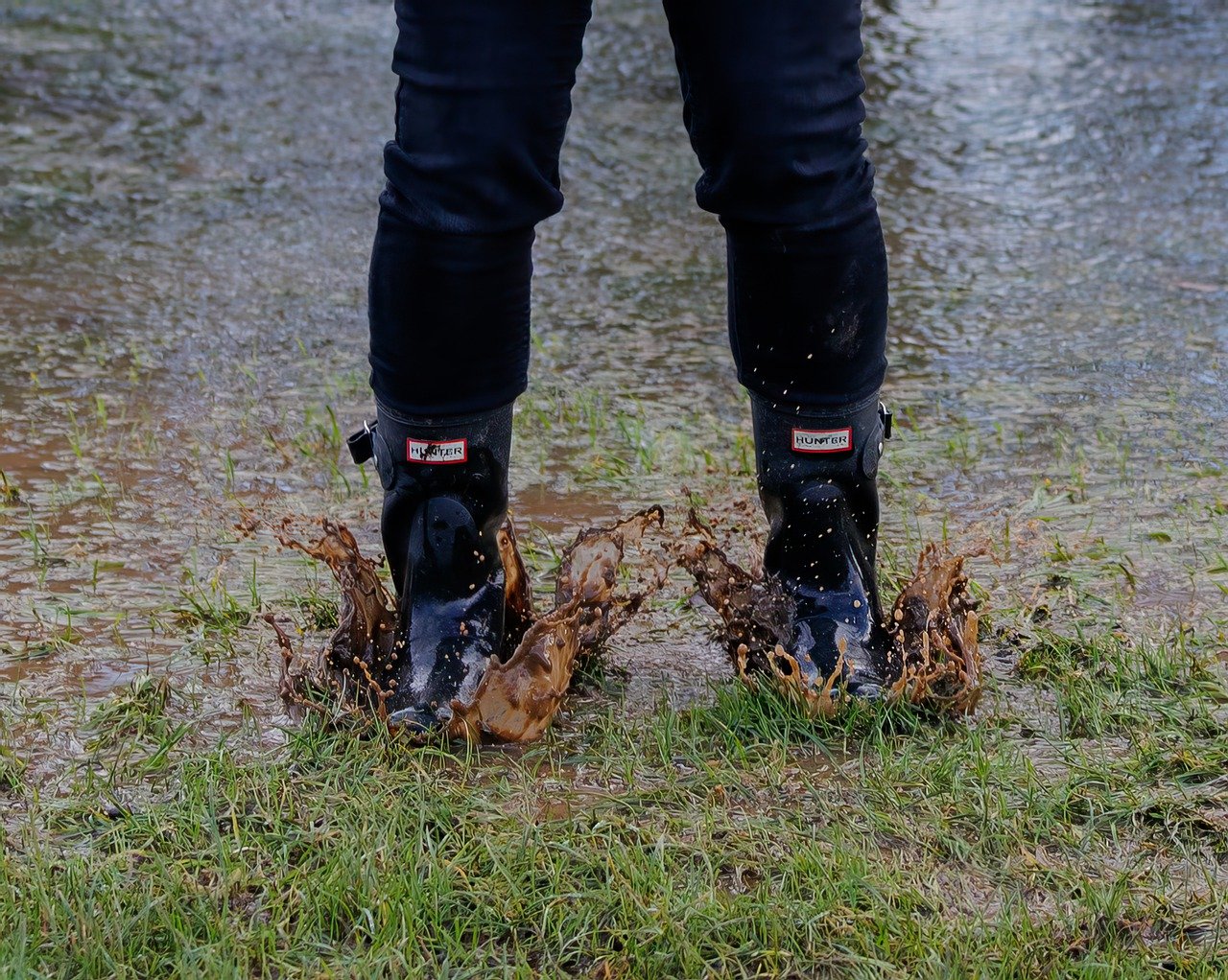
If you have ever stepped out onto your lawn after a spring rain only to have your shoe disappear into a muddy abyss, you are not alone. For millions of homeowners across the United States, a “sponge-like” yard is more than just a nuisance; it is a ticking financial time bomb.
At Ware Landscaping, we see the consequences of poor drainage every day. It isn’t just about dying grass or mosquito breeding grounds; it’s about the lateral pressure of water threatening your home’s foundation. As we move into the 2025–2026 season, climate-driven rainfall patterns are making robust underground drainage systems a necessity rather than a luxury.
In this guide, we will break down the “nitty-gritty” of underground drainage, from the physics of soil compaction to the return on investment (ROI) of a professional installation.
The Science of the “Soggy Yard”
Why does your neighbor’s yard dry in an hour while yours stays wet for three days? The answer usually lies in the soil.
In regions like the Southeast, Midwest, and parts of the Northeast, clay-heavy soils are the primary culprit. Clay particles are microscopic and flat; they pack together so tightly that water cannot easily pass through. While undisturbed forest soil might absorb 12 inches of water per hour, compacted residential clay often manages less than 0.5 inches.
Stop Your Yard From Becoming a Retention Pond
A soggy lawn is a sign of a failing landscape. Don’t settle for a swampy yard that breeds mosquitoes and kills your grass—get a professional drainage system engineered to keep your property bone-dry.
Get a Free QuoteWhen you add the “hard pan” created by heavy construction equipment and foot traffic, your lawn essentially becomes a swimming pool with a thin layer of turf on top. Left unmanaged, this water leads to hydrostatic pressure, which can cause foundation cracks and basement leaks. In fact, industry data suggests that approximately 60% of foundation issues are directly linked to poor surface water management.
Underground Solutions: Which System Wins?
There is no “one-size-fits-all” fix for drainage. The right system depends on your soil type, slope, and specific problem.
1. The French Drain: The Subsurface Workhorse
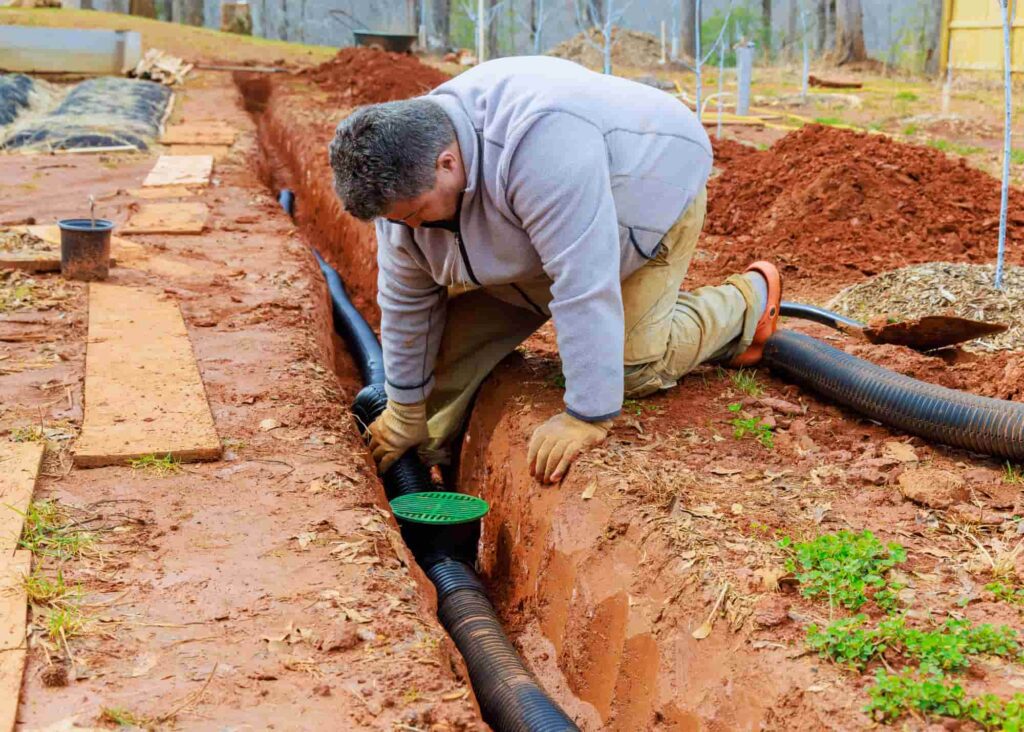
A French drain is a trench filled with perforated pipe and gravel. It acts as a “path of least resistance” for groundwater.
- Best For: Clay soils, protecting foundations, and managing high water tables.
- The Secret Sauce: At Ware Landscaping, we emphasize the use of non-woven geotextile filter fabric. Without this “envelope,” silt and clay will clog the pipe within a few years.
- 2025 Cost: Typically ranges from $20 to $60 per linear foot.
2. Dry Wells: The Eco-Friendly Infiltrator
A dry well is an underground chamber (either a pre-fab plastic tank or a large rock pit) that collects water and allows it to slowly percolate back into the aquifer.
- Best For: Sandy or permeable soils and “point source” issues like downspout runoff.
- The Benefit: It aligns with EPA “Green Infrastructure” goals by recharging groundwater onsite rather than sending it into the municipal storm sewer.
- 2026 Cost: $1,000 to $4,000 per unit.
3. Catch Basins and Catchment Systems
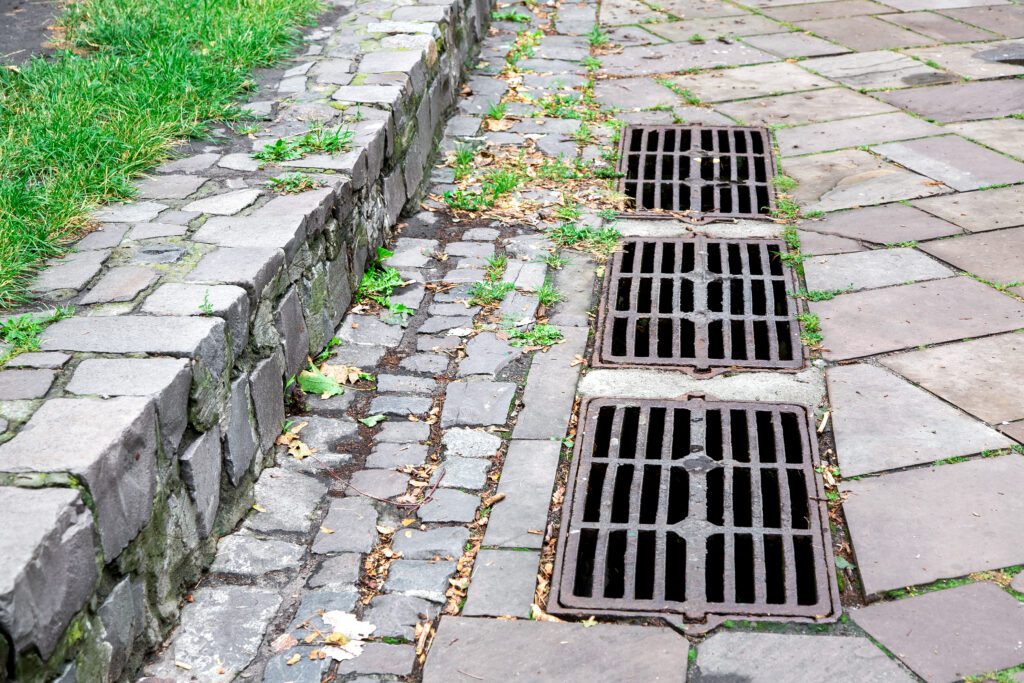
These are the grates you see at the low points of a driveway or lawn. They capture surface runoff immediately and pipe it away.
- Best For: Sudden pooling or “rivering” across hardscapes.
The “Perc Test”: A DIY Diagnostic
Before you dig, you need to know if your soil can handle a dry well or if you need a French drain to move water elsewhere. You can perform a Percolation (Perc) Test yourself:
- Dig a hole 12 inches wide and 12 inches deep.
- Fill it with water and let it drain completely (this saturates the soil).
- Refill the hole and measure how fast the water level drops.
Interpretation: If the water stands for more than a few hours or overnight, you have a drainage emergency that requires a professional underground system.
ROI: Is It Worth the Investment?
Homeowners often hesitate at the price tag of professional drainage, but the numbers tell a clear story.
As of 2026, the average professional drainage installation costs around $4,630. While this may seem high, consider the alternative:
- Foundation Repair: $5,000 to $50,000+.
- Basement Flood Cleanup: Average of $10,000 per incident.
- Property Value: A yard with chronic drainage issues can devalue a home by 5% to 15%. On a $700,000 home, that is a loss of up to $105,000.
Investing in a drainage system isn’t just about a prettier lawn; it’s about asset protection. As highlighted in our Ware Landscaping Work Portfolio.pdf, we specialize in these high-impact technical solutions that preserve both the beauty and the structural integrity of your property.
Professional vs. DIY: The Risks of the “Quick Fix”
While big-box stores sell “EZ-Flow” pipes and DIY kits, drainage is a game of inches. A mistake in the slope (minimum 1% or ⅛ inch per foot) or a failure to use the correct grade of washed gravel can lead to a system failure within one season.
A professional installation by Ware Landscaping includes:
- Utility Marking: We always call 811 to protect your underground lines.
- Laser-Leveling: Ensuring the water actually flows where it is supposed to go.
- Heavy Equipment: Minimizing the time your yard is “under construction.”
- Warranties: Most professional systems are designed to last 30 to 50 years.
Maintenance: Keeping the Water Flowing
Even the best system requires a little love. To ensure a 50 year lifespan:
- Annual Outlet Check: Ensure the “daylight” end of your pipe isn’t blocked by leaves, mulch, or rodent nests.
- Gutter Maintenance: Keep your gutters clean. If your gutters overflow, they dump thousands of gallons of water directly against your foundation, overwhelming even the best French drain.
- Professional Flushing: Every 3 to 5 years, have your lines hydro-jetted to remove any accumulated sediment.
Final Thoughts from Ware Landscaping
Your yard should be a place for relaxation and play, not a source of stress every time the clouds turn grey. By addressing drainage issues at the source below the ground you can reclaim your outdoor space and protect your home’s value for decades.
Stop Your Yard From Becoming a Retention Pond
A soggy lawn is a sign of a failing landscape. Don’t settle for a swampy yard that breeds mosquitoes and kills your grass—get a professional drainage system engineered to keep your property bone-dry.
Get a Free QuoteReady to stop the flooding? Contact Ware Landscaping today for a professional site assessment. Let’s design a custom-engineered solution that keeps your yard dry and your foundation safe.