
If you own a home with a basement or crawlspace in the United States, you are likely living above a ticking clock. Statistics suggest that approximately 98% of U.S. basements will experience some form of water damage during their lifespan. Whether it is a slow, musty seep or a sudden, catastrophic flood during a spring thaw, water is the primary enemy of structural integrity.
At Ware Landscaping, we believe the best defense is a proactive one. That defense is the Perimeter Drain System. Often referred to by various namesfoundation drains, footing drains, weeping tiles, or perimeter French drains, this system is the most critical component of residential waterproofing.
In this deep dive, we will explore the technical “nitty-gritty” of these systems, from International Residential Code (IRC) requirements to the 2025–2026 cost landscape, ensuring you have the knowledge to keep your home dry for decades.
What Exactly is a Perimeter Drain System?
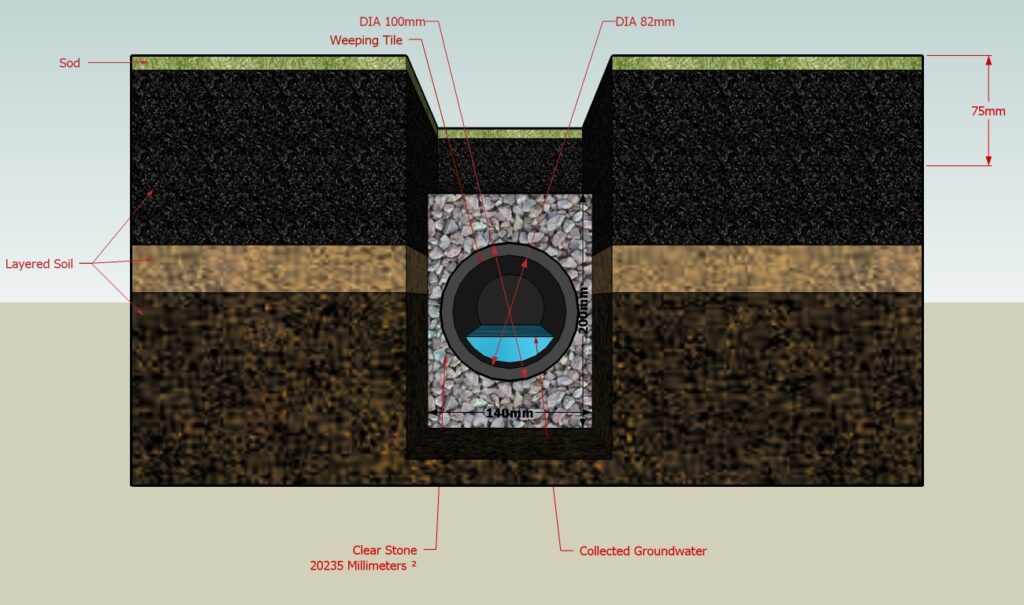
At its core, a perimeter drain is a high-permeability “path of least resistance.” It is a network of perforated pipes, typically 4-inch PVC or flexible corrugated tile, installed around the base of your home’s foundation.
The system doesn’t just sit in the dirt. It is nestled in a bed of clean, washed gravel (usually 1/2 to 3/4 inch in size) and wrapped in a non-woven geotextile filter fabric. This “envelope” ensures that water can reach the pipe, but silt and soil stay out.
Don't Gamble With Your Home's Foundation
A failing perimeter drain is the #1 cause of catastrophic basement floods and cracked foundations. Whether you need an exterior system to stop leaks or a heavy-duty interior solution, get an engineered installation that is guaranteed to keep your home bone-dry for decades.
Get a Free QuoteHow it works:
The system relies on basic physics. As groundwater rises or surface water infiltrates the soil, it creates hydrostatic pressure against your foundation walls. The perimeter drain intercepts this water before it touches your concrete. The water enters the perforations in the pipe and is carried away by gravity ideally at a slope of at least 1/4 inch per foot to a safe discharge point, such as a sump pit or a downhill “daylight” exit.
Why It Matters: The High Stakes of Water Management
In the landscaping and drainage industry, we see the aftermath of failed or non-existent drainage every day. Without a functional perimeter drain, water exploits every tiny crack or “cold joint” in your foundation. This leads to:
- Structural Damage: Hydrostatic pressure can bow or crack foundation walls.
- Mold and Air Quality: Constant moisture in crawlspaces is a breeding ground for allergens.
- Property Value: A wet basement is one of the biggest “red flags” during a home inspection.
The IRC Standards
According to the 2024 International Residential Code (Section R405.1), drains are mandatory for foundations that retain earth and enclose habitable space. The code is strict: gravel must extend at least 1 foot beyond the outside edge of the footing and 6 inches above the top. Unless you are building on well-drained, “Group I” soils (verified by an engineer), a perimeter drain isn’t just a good idea, it’s the law.
Interior vs. Exterior: Which Strategy Wins?
When homeowners realize they have a drainage issue, the first question is usually: “Do we fix it from the outside or the inside?”
1. Exterior Perimeter Drains (The Gold Standard for New Construction)
This involves excavating the soil all the way down to the footing.
- The Pros: It stops water before it ever touches your wall, reducing hydrostatic pressure significantly.
- The Cons: As a retrofit for an existing home, it is highly disruptive. It requires digging up your landscaping, decks, and walkways, often reaching depths of 7 to 10 feet.
2. Interior Perimeter Drains (The Retrofit Favorite)
For existing homes, this is often the most practical solution. We remove a 12 to 18 -inch strip of the concrete slab inside the basement, install the pipe and gravel along the footer, and then patch the floor.
- The Pros: It is faster (1 to 3 days), weather-independent, and significantly less expensive than full-scale excavation.
- The Cons: It doesn’t technically reduce the pressure on the outside of the wall; it simply manages the water once it arrives.
Best Practices for 2025
If you are hiring a professional or overseeing a build, ensure these “Best Practices” are followed to guarantee a 30 to 50 -year lifespan for your system:
- Perforations Down: Contrary to common sense, the holes in the drain pipe should generally face downward. This allows the water table to rise into the pipe from below, ensuring the pipe stays clear of debris that might settle from above.
- Filter Membranes: A “pipe sock” or a full fabric wrap around the gravel bed is non-negotiable. Without it, your system will likely clog with silt within a decade.
- Cleanouts: Always install access points (cleanouts) so the system can be hydro-jetted or inspected with a camera every few years.
- Integrated Radon Mitigation: In many regions, the perimeter drain can be paired with radon collection systems (like Form-A-Drain), solving two problems with one installation.
Cost Analysis: What to Expect in 2025–2026
Budgeting for drainage is essential for long-term home maintenance. Based on current U.S. averages, here is the breakdown:
| System Type | Average Cost Range | Typical “Middle Ground” |
| Interior Basement Drain | ||
| Exterior Retrofit | ||
| Sump Pump + Backup | ||
| Annual Maintenance |
Note: Costs vary based on soil type (clay is more expensive to excavate) and regional labor rates.
Maintenance: The Secret to Longevity
A perimeter drain is not “set it and forget it.” To ensure your system reaches its 50 year potential, follow this checklist:
- Annual Sump Test: Pour water into your sump pit to ensure the pump triggers and the discharge line is clear of snow or debris.
- Gutter Check: Ensure your downspouts extend at least 5 feet away from the foundation. The best perimeter drain in the world can be overwhelmed by a waterfall from a clogged gutter.
- Professional Flushing: Every 3 to 5 years, have a professional camera-inspect the lines. If sediment is building up, hydro-jetting can restore the system to like-new performance.
Final Thoughts from Ware Landscaping
Your foundation is the most expensive part of your home to repair. Investing in a robust perimeter drain system is an investment in peace of mind. Whether you are dealing with a damp crawlspace or planning a new build, understanding the flow of water is the key to a healthy home.
Don't Gamble With Your Home's Foundation
A failing perimeter drain is the #1 cause of catastrophic basement floods and cracked foundations. Whether you need an exterior system to stop leaks or a heavy-duty interior solution, get an engineered installation that is guaranteed to keep your home bone-dry for decades.
Get a Free QuoteAre you noticing musty odors or damp spots in your basement? Don’t wait for the next heavy rain. Contact Ware Landscaping today for a professional drainage assessment. We specialize in custom-engineered solutions that keep the water out and your property value up.