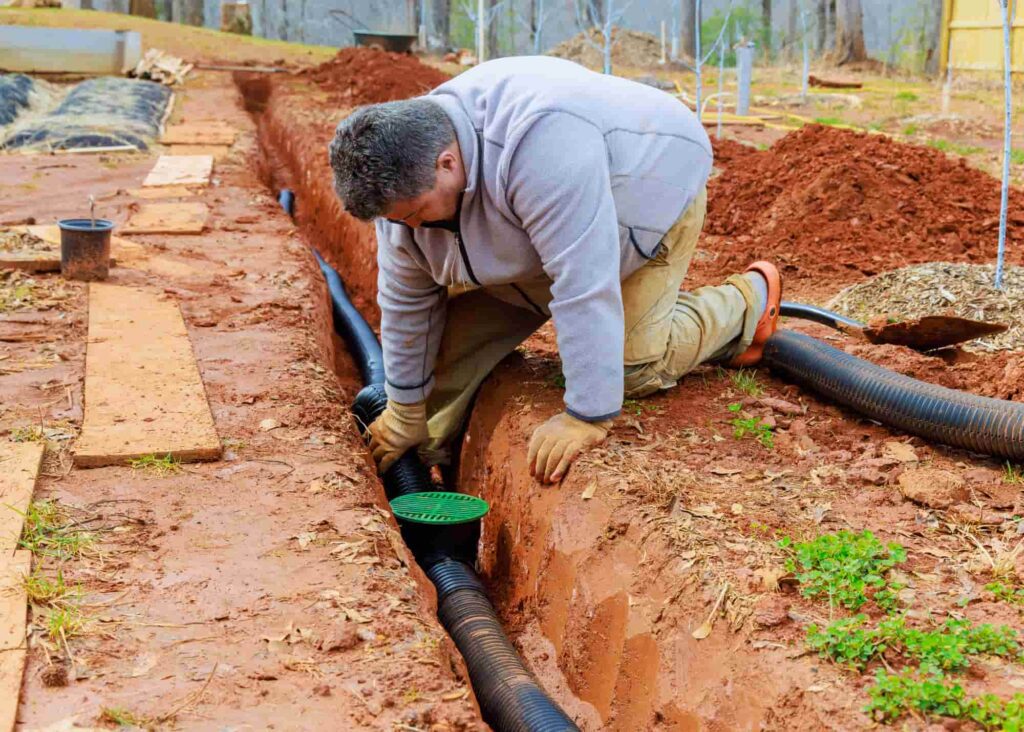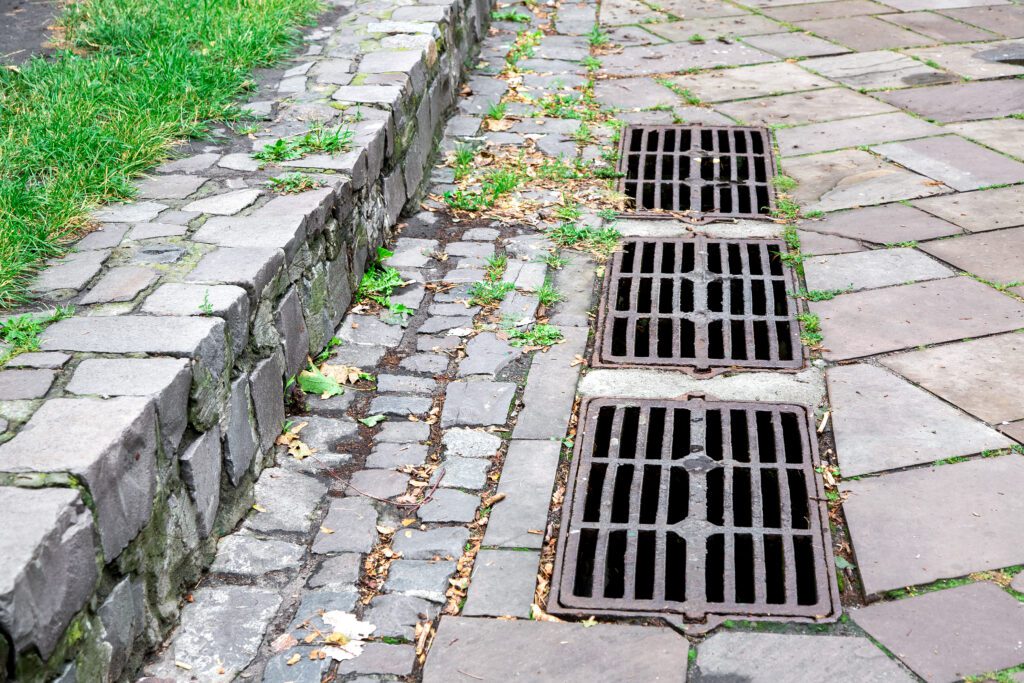


Gravel can help manage excess water around your home, improve drainage in garden beds, and support systems designed to move runoff away from vulnerable areas. However, choosing the right stone matters. Some gravel is better suited to decorative landscaping, while other types are designed to maintain open drainage channels underground or provide a stable base for driveways and patios.
The best gravel for drainage depends on where you plan to use it, how much water the area receives, whether the stone needs to support weight, and where the water will go after passing through it.
For example, pea gravel can work well in decorative borders and light-use areas, but clean, washed angular crushed stone is often a better starting point for a French drain. A driveway may require a compactable stone base, while a dry creek bed may benefit from larger river rock.
For homeowners in Chicago, Naperville, and surrounding Illinois communities, selecting the right aggregate is one part of effective drainage planning. Proper grading, suitable soil conditions, and a safe drainage outlet are equally important.
This guide compares the main types of drainage gravel, explains when to use pea gravel versus washed #57 stone, and shows how gravel fits into common residential drainage projects.
What Makes Gravel Good for Drainage?
Good drainage gravel allows water to move through the spaces between individual stones without those spaces becoming filled with fine particles. However, water movement is only one consideration. The material must also suit the demands of the installation.
Three factors matter most.
Stone size and gradation: Gravel needs enough connected space between particles to allow water to pass through. The appropriate size depends on the drainage system, pipe dimensions, soil conditions, and intended use.
Stone shape and stability: Angular crushed stone generally interlocks better than smooth, rounded gravel. This makes it useful in buried drainage systems and construction bases where maintaining the material’s position matters.
Cleanliness: Gravel containing substantial amounts of sand, silt, stone dust, or other fines may lose the open spaces needed for drainage. For a drainage trench, ask for clean, washed stone intended for drainage rather than a compactable driveway-base mixture.
The distinction is important because a material sold as crushed stone is not automatically suitable for drainage. Some crushed-stone products contain fines specifically so they compact tightly. That is useful for certain bases but usually undesirable around a French drain pipe.

Pea Gravel vs. Washed #57 Stone: Which Is Better for Drainage?
Pea gravel and washed #57 crushed stone are both used in landscaping, but they serve different purposes.
Pea gravel consists of small, smooth, rounded stones. It allows water to pass through when clean and loosely placed, and its appearance makes it popular for decorative landscaping.
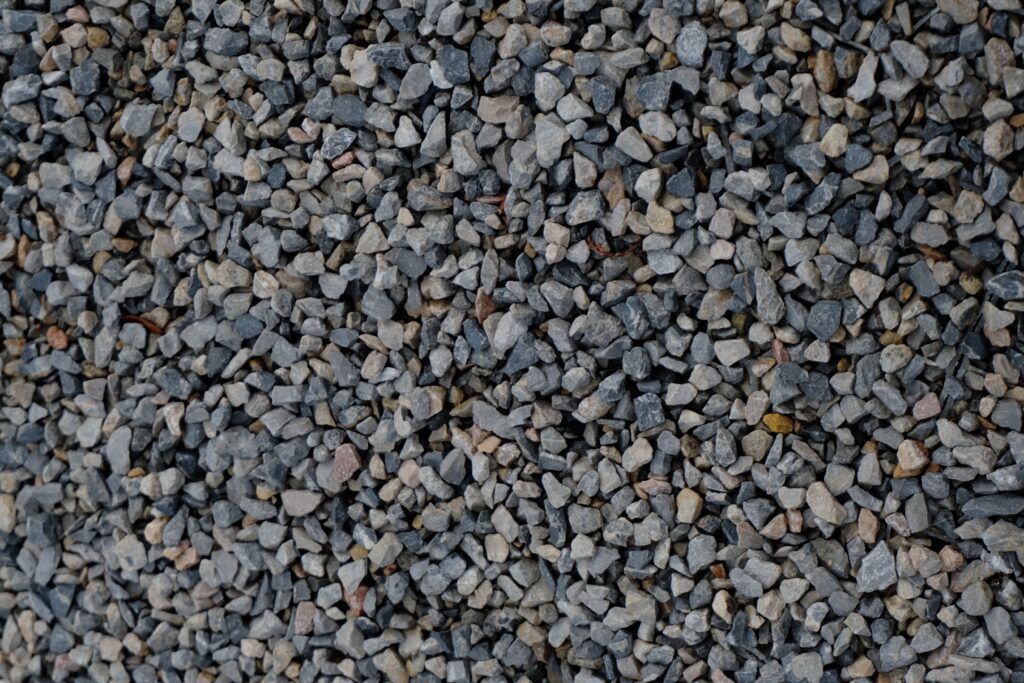
Washed #57 stone is an angular crushed aggregate commonly used in drainage and construction. Its open structure allows water to pass through, while the angular pieces provide more interlock than rounded pea gravel.
For many functional underground drainage projects, washed, open-graded #57 stone is the better starting point. Pea gravel remains useful for decorative surfaces and selected light-duty applications where its movement and stability are not major concerns.
Neither material is automatically suitable for every project. Confirm the actual size range, cleanliness, and product specification with your supplier because aggregate labels can vary by quarry and region.
When Pea Gravel Is a Good Choice
Pea gravel is most useful when appearance and a comfortable, loose surface are priorities.
It can work well for:
- Decorative garden borders and selected planting beds.
- Light-use garden paths with appropriate edging.
- Visible gravel areas where smooth stones suit the landscape design.
- Decorative covers over a properly designed drainage installation, provided the layers are separated appropriately.
- Selected low-load areas where a stable, compacted surface is not required.
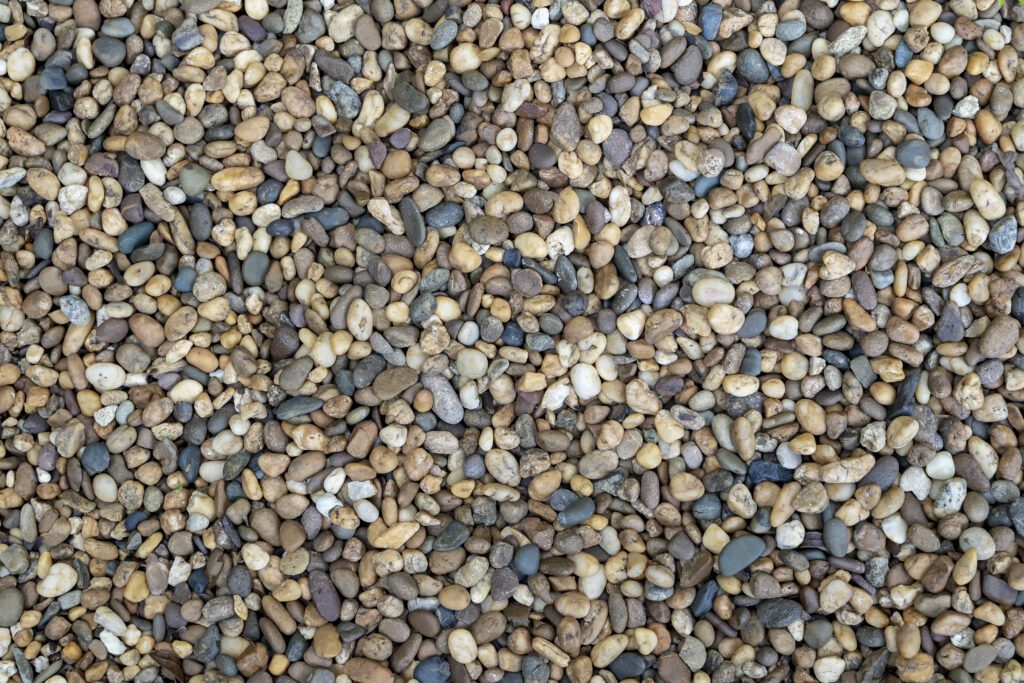
Its rounded shape makes it easy to spread but also means it can shift underfoot, migrate during heavy runoff, and be difficult to keep level on slopes.
Pea gravel should not be treated as the automatic first choice for a French drain, foundation drainage system, or load-bearing base. In these applications, the material must meet the requirements of the entire installation, not simply allow water to pass through.
When Washed #57 Stone Is a Better Choice
Washed #57 stone is often appropriate where drainage performance and stability matter more than a smooth decorative finish.
Common applications include:
- French drains and other subsurface drainage trenches.
- Dry wells and selected infiltration systems, where the design calls for this aggregate.
- Drainage layers behind retaining walls.
- Downspout drainage installations.
- Drainage trenches along lawn or driveway edges.
- Certain open-graded construction bases designed to allow water movement.

The stone should be clean and appropriately graded, with minimal fines. A compactable product sold as crusher run, road base, or stone dust is not an interchangeable substitute.
For a typical residential French drain, washed #57 crushed stone is a practical starting point, but trench dimensions, soil conditions, the selected pipe, and the outlet must all be considered.
Gravel Selection Decision Table
Use this table as a starting point when choosing gravel for a residential project. The final selection should match the installation’s design and the product actually supplied.
| Application | Recommended starting material | Why it fits | Important consideration |
| French drain | Washed, angular #57 crushed stone | Maintains open spaces around the perforated pipe | Confirm gradation, pipe compatibility, fabric design, and outlet. |
| Dry well or infiltration pit | Clean, washed drainage stone specified for the system | Provides void space for temporary water storage and infiltration | Soil infiltration and local requirements determine whether the system will work. |
| Behind a retaining wall | Clean, free-draining angular aggregate | Allows water to move toward the designed drainage outlet | Wall design, filter material, and drainage outlet are essential |
| Downspout splash area | Crushed stone or decorative river rock | Helps protect exposed soil from concentrated runoff | A small gravel bed cannot replace proper downspout routing or grading. |
| Decorative garden border | Pea gravel or decorative river rock | Offers a finished appearance and allows water to pass through | Use edging and prevent soil or mulch from washing into the stones. |
| Light-use gravel path | Pea gravel, with suitable containment | Comfortable and visually appealing | Loose stones can shift; provide edging and consider accessibility. |
| Driveway base | Properly graded compactable crushed-stone base | Interlocks and supports vehicle loads when installed and compacted correctly | Base material is different from clean drainage stone. |
| Paver patio base | Specified compactable aggregate or an engineered open-graded base | Provides a stable base suited to the paver system | Follow the paver system’s base, bedding, drainage, and compaction requirements |
| Dry creek bed | A combination of appropriately sized river rock and smaller stone | Creates a natural-looking route for visible runoff | The channel must have a suitable slope, capacity, and safe outlet. |
| Planting bed | Pea gravel or another decorative aggregate, where suitable | Provides a finished surface around selected plants | Check plant needs, soil conditions, heat exposure, and water movement. |
The main rule is to choose gravel according to the job. A decorative stone that looks attractive on the surface may not provide the stability needed around a buried pipe. Likewise, a stone that drains well may not provide the compacted support needed beneath a driveway.
Other Types of Gravel and Stone for Drainage
Pea gravel and washed #57 stone are not the only options. Other materials can be useful when selected for the correct application.
1. Decomposed Granite
Decomposed granite consists of weathered granite particles that range from coarse grains to fine material. It is often used for paths, garden areas, and selected driveway applications.
Its drainage performance depends on the particle size distribution and whether the material contains fines or stabilizers. Loose decomposed granite may allow water to infiltrate, but finer particles can settle and compact over time. Stabilized products may offer better surface stability, although the stabilizer can affect permeability.

Use decomposed granite when its appearance and surface characteristics suit the project. For a French drain or another installation that requires a reliably open drainage layer, specify an appropriate clean drainage aggregate instead.
2. River Rock
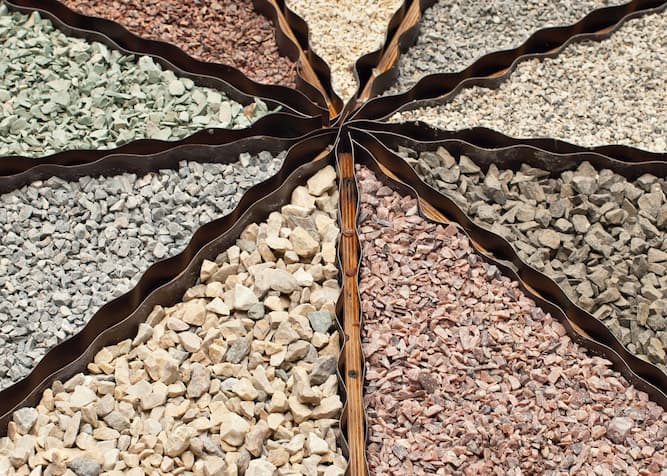
River rock consists of naturally rounded stones that come in a wide range of sizes and colours.
Its appearance makes it popular for dry creek beds, decorative borders, and visible drainage channels. Larger pieces can help protect soil from erosion where runoff moves across a properly designed channel.
Clean, suitably graded river rock can also be used in selected drainage installations. However, its rounded shape provides less interlock than angular crushed stone, and the broad term river rock does not identify a consistent particle size.
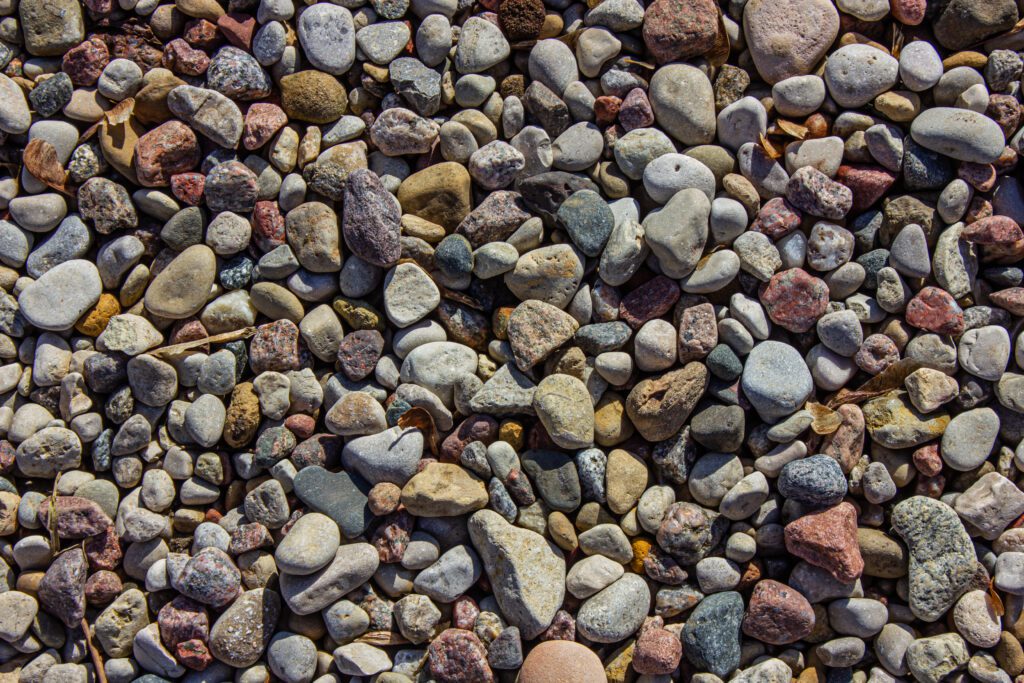
For a buried French drain, do not select river rock based on appearance alone. Check the size, cleanliness, trench dimensions, and pipe arrangement to make sure the stones suit the design.
3. Marble Chips
Marble chips are a decorative landscaping aggregate available in several sizes and colours. They can be used around selected planting beds, along borders, and in other visible landscape features.
Although water can move through the gaps between marble chips, marble itself should not be assumed to provide superior drainage simply because of its material properties. The performance of the finished area depends on the stone size, soil beneath it, grading, and the availability of an outlet.
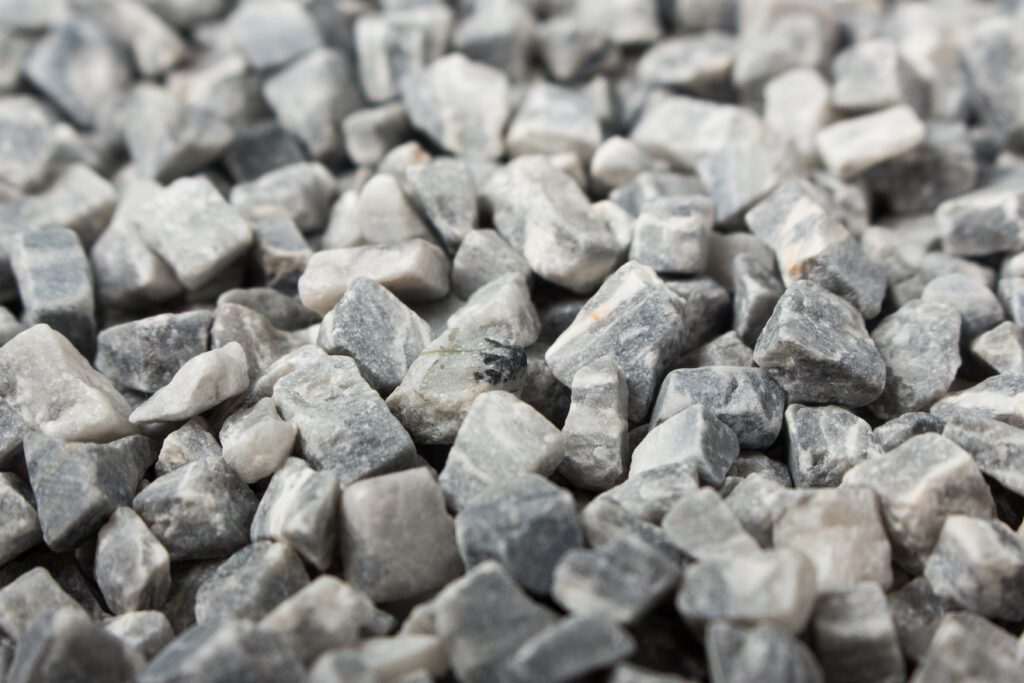
Marble chips are best chosen for their appearance and suitability for the planting area rather than as a substitute for purpose-selected drainage stone.
4. Washed Crushed Stone
Washed crushed stone is made by mechanically breaking larger rock into smaller, angular pieces and removing much of the fine residue during processing.
It is available in different sizes and gradations. The correct option depends on the intended use: some products are designed to remain open for drainage, while others contain fines and are intended to compact.
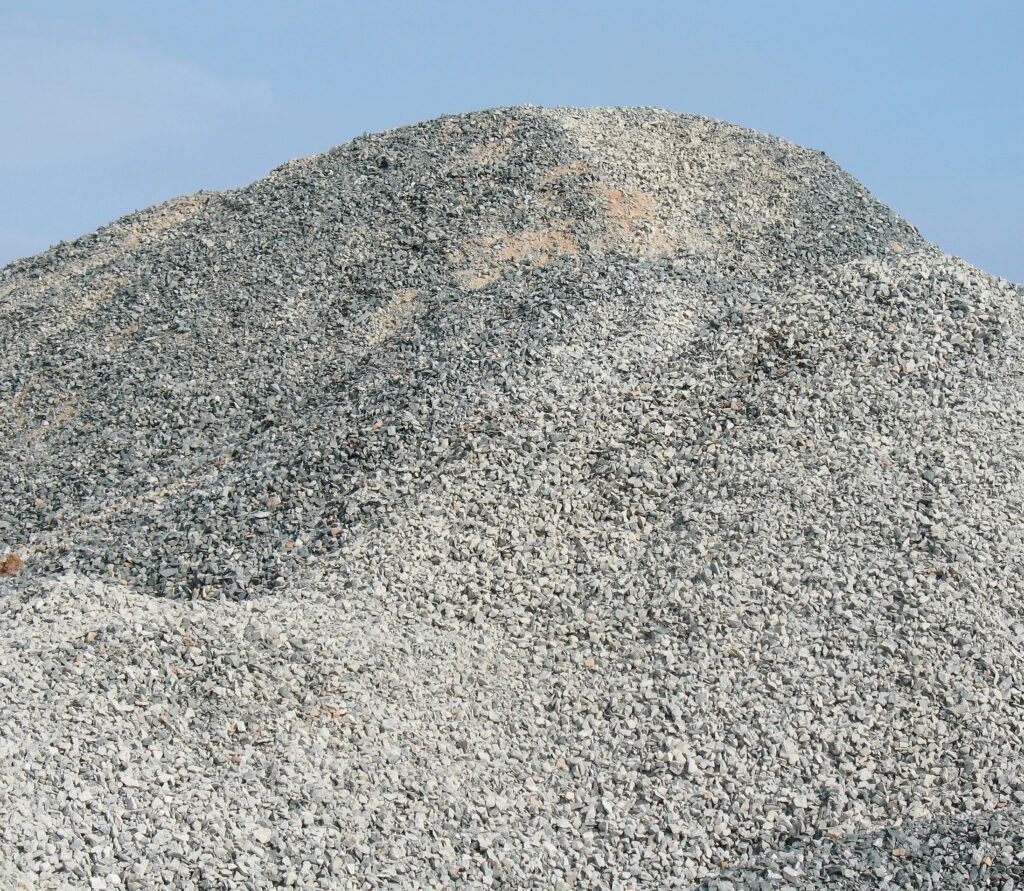
For drainage trenches, ask for a clean, washed, open-graded product suitable for the proposed system. For driveways and paver bases, the appropriate compactable aggregate may be different.
5. #57 Stone
#57 stone is a common crushed-stone gradation used in drainage and construction. It is often approximately three-quarter-inch stone, but the designation describes a grading category rather than a guarantee that every particle is exactly the same size.
Washed #57 stone is widely used as a starting point for conventional residential French drains because it provides a relatively open structure and angular pieces that are easier to keep in place than small rounded gravel.
When ordering, ask the supplier to confirm:
- The actual particle-size range.
- Whether the product is washed.
- Whether it contains substantial fines.
- Whether it is intended for drainage or compaction.
- Whether it is compatible with the proposed pipe and trench dimensions.
The product specification matters more than the number alone.
What Is the Best Gravel Size for Drainage?
There is no single gravel size that works best for every drainage project. The required size depends on the type of system, pipe dimensions, soil, expected water flow, and installation details.
For a conventional residential French drain, clean crushed stone in the approximate three-quarter-inch to one-inch range is a common starting point. Washed #57 stone may suit this purpose, but confirm the supplier’s actual gradation rather than relying only on the product name.
Smaller aggregates may be suitable for particular systems or constrained installations. Larger stone may be specified for other drainage structures where the design requires it.
Avoid assuming that larger stones always provide better drainage. The stone must be compatible with the surrounding soil, filter fabric where used, and drainage pipe. If soil particles migrate into the aggregate, the spaces between stones can gradually clog regardless of the nominal stone size.
For driveways and patios, the required base material is a separate consideration. A compactable aggregate containing a range of particle sizes may be appropriate there, even though it would be a poor choice for the open drainage envelope around a French drain pipe.
Drainage Cross-Section: How Gravel, Fabric, and Pipe Work Together
A French drain is more than a trench filled with stones. It is a system designed to collect water, let it enter the drainage pipe, and carry it to a suitable outlet.
The following simplified cross-section illustrates a typical buried French drain with a perforated pipe. Actual dimensions, fabric placement, pipe orientation, and materials must be selected for the site.
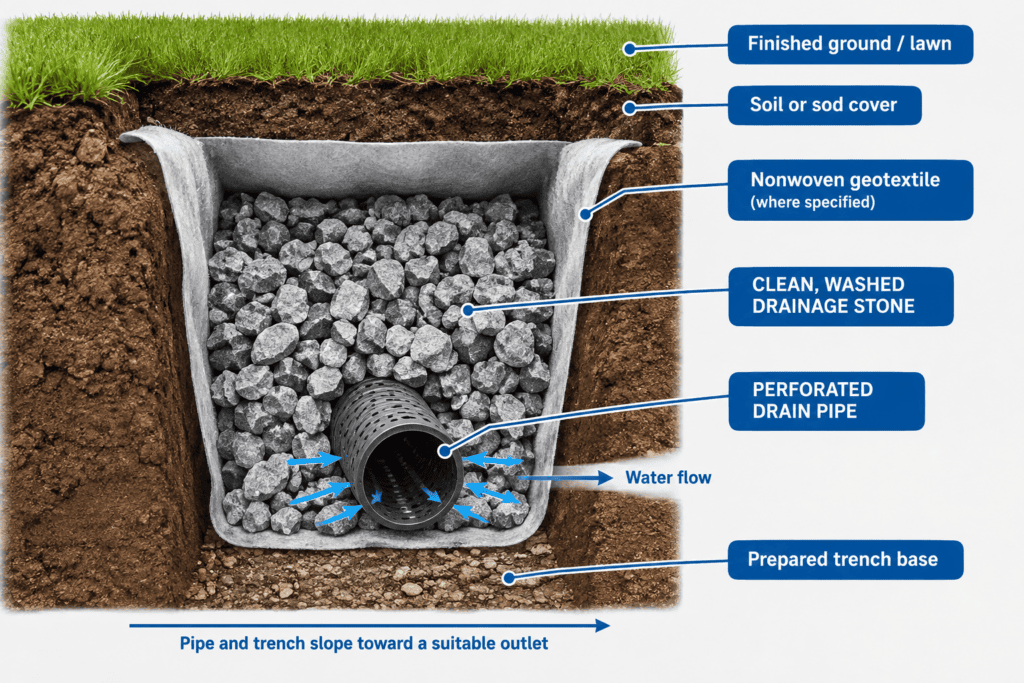
- Finished ground or surface cover
The surface protects the drainage installation and restores the intended appearance of the yard. Soil and sod can conceal a drain, while a decorative stone cap may be used where a visible finish is preferred.
The surface should not direct additional runoff into the foundation or create a low spot above the trench.
- Geotextile filter fabric, where specified
Suitable nonwoven geotextile can help separate soil from the drainage aggregate and reduce the movement of fine particles into the stone.
Fabric should not be treated as a universal layer that can be placed anywhere without considering the design. Its type and position must suit the soil and drainage system. Poorly selected or incorrectly installed fabric can interfere with water movement or fail to prevent sediment migration.
- Clean drainage stone
The aggregate creates connected spaces through which water can move toward the pipe. Washed, open-graded stone is generally preferred for this purpose because substantial fines can fill these spaces.
- Perforated drain pipe
The pipe collects water entering through its perforations and carries it toward the designed outlet. It must be sized and installed with a suitable continuous fall. Follow the pipe manufacturer’s instructions for perforation orientation and connections.
- Prepared trench base and outlet
The trench should support the pipe at the intended grade. The drain also needs somewhere suitable to discharge collected water, such as an approved outlet or appropriately designed infiltration system. Without a workable outlet, a gravel-filled trench may simply store water temporarily rather than resolve the drainage problem.
How to Choose and Install Gravel for Drainage
Choosing suitable stone is only part of the process. The installation must also account for the source of the water, the soil conditions, the slope, and the final destination.
Step 1: Identify the Drainage Problem
Observe where water collects and how it moves across the property after rainfall.
Check whether the problem involves standing water in the lawn, runoff from a downspout, water near the foundation, or saturation behind a retaining wall. These situations may require different solutions.
If water consistently flows toward the house, correcting the slope may be necessary alongside any gravel installation. Ware Landscaping’s guidance on yard drainage and grading can help you understand why the source and direction of runoff matter.
Step 2: Decide Whether You Need Surface Gravel or a Drainage System
A decorative gravel bed can help protect soil from splash and erosion, but it will not necessarily remove standing water.
If water needs to be collected and carried away, a designed drainage system may be required. A French drain can be appropriate for certain subsurface water problems, while surface drains or downspout extensions may be better suited to concentrated runoff.
Do not assume that adding a layer of gravel over a wet patch will solve the underlying problem. If the soil beneath it drains poorly and there is no outlet, water may remain trapped below the stones.
Step 3: Choose the Correct Aggregate
Match the material to the application.
- For a conventional French drain, start by asking for clean, washed, open-graded #57 stone or a locally available equivalent suitable for the pipe and trench.
- For a compacted driveway base, choose a specified compactable aggregate rather than substituting loose pea gravel.
- For decorative paths and borders, pea gravel may be appropriate when the surface is contained and its loose movement is acceptable.
- For visible runoff channels, select river rock or crushed stone according to the expected flow, erosion risk, and desired appearance.
Ask the supplier to confirm the gradation and whether the stone contains fines. This helps prevent a material intended for compaction from being used where open drainage spaces are needed.
Step 4: Prepare the Area and Check the Grade
Before excavation, identify buried utilities and follow local requirements for safe digging.
Establish the route of the proposed drain and confirm where water will discharge. The trench must have a suitable grade toward that outlet, and the surrounding landscape should not direct unwanted water toward the foundation.
For drainage projects close to foundations, retaining walls, or other structures, professional assessment is advisable because incorrect excavation or grading can create additional problems.
Step 5: Install the Filter, Stone, and Pipe as Designed
Where the design calls for geotextile, place the correct fabric to separate the surrounding soil from the drainage aggregate. Add the specified bedding stone, install the pipe at the required grade, and place additional clean stone around and above it.
Keep soil, mulch, and debris out of the drainage aggregate. Follow the system design for wrapping the fabric, completing the backfill, and restoring the surface.
The dimensions and materials should not be chosen from a generic diagram alone. Trench depth, width, pipe diameter, stone size, and fabric arrangement depend on the site and the amount of water the system needs to handle.
Step 6: Check the Outlet and Inspect the Finished Area
Before considering the project complete, confirm that the pipe and outlet are unobstructed and that collected water has a safe destination.
Inspect the area after rainfall where practical. Look for new pooling, erosion, sediment entering the drain, or water being redirected toward another part of the property.
If standing water persists, the issue may involve the outlet, the system’s capacity, soil conditions, or the original diagnosis rather than the gravel alone.
What to Put Under Gravel for Drainage
The material beneath gravel depends on what the installation needs to achieve.
For a French drain, suitable geotextile may be used to separate the drainage aggregate from surrounding soil and limit the movement of fines. Its placement should be determined by the system design and soil conditions.
For decorative gravel beds and garden borders, landscape fabric is sometimes used for separation and weed management, but it does not eliminate weeds or guarantee good drainage. Soil, organic debris, and seeds can accumulate on top of the fabric over time.
For driveways and patios, the underlying layers need to provide the specified stability and support. A compacted base, bedding layer, and drainage provisions should follow the requirements of the chosen hardscape system.
Avoid applying one fabric or base arrangement to every project. The best setup depends on whether the priority is filtration, weed control, load support, or water movement.
Common Gravel Drainage Mistakes to Avoid
Even suitable gravel can perform poorly when the surrounding system is incorrectly designed or installed.
Choosing Pea Gravel for Every Application
Pea gravel is not a universal drainage solution. It may be appropriate for decorative surfaces and light-use areas, but its rounded stones can shift more easily than angular crushed stone.
For many conventional buried drainage systems, clean washed angular stone is a better starting point.
Using Crushed Stone That Contains Too Many Fines
Crusher run and other dense-graded products contain smaller particles that help the material compact. That characteristic is useful for many driveway bases, but it can reduce the open spaces needed in a drainage trench.
Confirm that the aggregate is intended for drainage and is sufficiently clean.
Assuming Gravel Alone Will Fix Standing Water
Gravel can provide a route for water to move, but it cannot correct every drainage problem. Poor grading, high groundwater, low-permeability soil, and blocked outlets may require other measures.
Ignoring the Drainage Outlet
A trench filled with gravel may temporarily hold water, but a pipe-based system needs a suitable outlet. Without one, the water may remain in the trench or return to the surrounding ground.
Installing Gravel Without Considering Soil
Fine soil can migrate into aggregate and gradually reduce its open space. Appropriate filtration, separation, and material selection help reduce this risk.
Redirecting Runoff Toward Another Problem Area
Moving water away from one location is not enough if it causes flooding elsewhere. Plan a safe discharge route that respects property boundaries and local drainage requirements.
Finding the Best Drainage Gravel for Your Home
The right gravel depends on the job. Pea gravel is useful for selected decorative and light-duty applications, while washed, angular #57 stone is often a more suitable starting point for French drains and other functional drainage systems. Compactable crushed-stone products have their own role in driveways and hardscape bases.
The material should always be selected alongside the drainage design. Soil conditions, grading, filtration, pipe dimensions, and the final outlet all affect whether water can move away effectively.
Persistent backyard flooding may require more than a change in gravel. The underlying cause needs to be identified before choosing a repair, particularly when water collects near the foundation or repeatedly saturates the lawn.
Ware Landscaping helps homeowners in Chicago, Naperville, and surrounding communities address landscape drainage problems and select suitable solutions for their properties. Whether your project involves a French drain, a drainage trench, or improvements to the yard’s slope, a proper assessment can help prevent unnecessary work and improve long-term performance.
Get Professional Help With Your Drainage Project
Whether you’re dealing with a soggy lawn, runoff around your foundation, or water collecting in a low area, choosing the right material is only the first step. The drainage system must also be designed and installed to suit your property.
Contact Ware Landscaping to discuss your drainage concerns and find an appropriate solution for your home or landscape.