
For many homeowners across the United States from the sloped properties of the Pacific Northwest to the flat, rain-heavy yards of the South the drainage ditch is a source of constant frustration. Often viewed as a muddy scar on an otherwise beautiful lawn, these ditches are essential for managing stormwater runoff from roofs, driveways, and neighboring streets.
However, a drainage ditch doesn’t have to be a “necessary evil.” At Ware Landscaping, we believe that every functional element of your property is an opportunity for aesthetic enhancement. You can transform that ugly, erosion-prone trench into a stunning landscape features like a dry creek bed, a lush rain garden, or a rock-lined swale without compromising its ability to prevent flooding.
Check Regulations Before You Dig
Before we dive into the creative designs, we must address the most critical step: compliance. In the U.S., drainage ditches on private property are typically the homeowner’s responsibility to maintain, but they often exist within a public or shared easement.
- HOA Covenants: If you live in a subdivision, your Homeowners Association likely has strict rules about what you can and cannot do to the “look” of your drainage areas.
- Local Ordinances: Many municipalities prohibit any modification that could significantly alter the flow of water. Blocking or redirecting water can lead to neighbor disputes and potential legal liability if it causes flooding downstream.
- Environmental Regulations: If your ditch connects to protected wetlands, federal Clean Water Act rules may apply.
Always consult with a professional landscaper or your local county extension office before starting a major project. Once you have the green light, it’s time to start planning.
1. The Dry Creek Bed: The Most Popular Aesthetic Solution
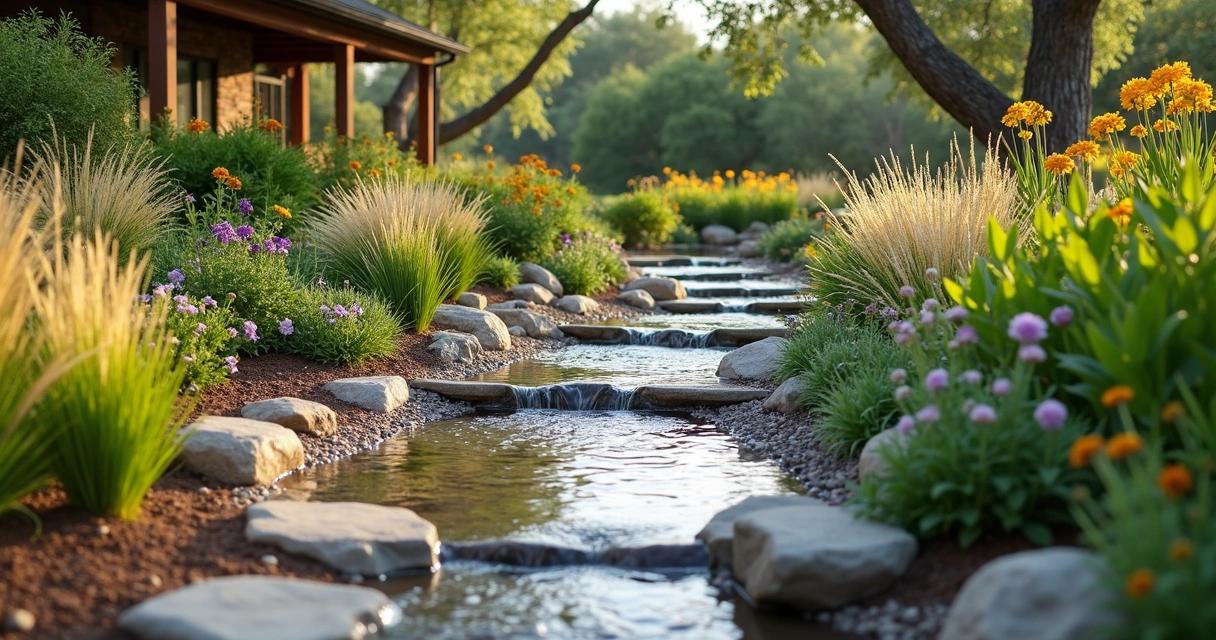
A dry creek bed (also known as a dry stream) is perhaps the most effective way to disguise a ditch. It is designed to look like a natural riverbed that has “run dry,” only coming to life during a rainstorm.
Why It Works
Dry creek beds are masters of erosion control. Instead of water rushing over bare soil and carving out a deeper trench, it flows over a bed of stones. This slows the water down and allows some of it to percolate back into the ground.
Design and Installation
To create a professional-looking dry creek bed, follow these steps:
- Follow the Flow: Stick to the natural path of the ditch. Aim for a “meandering” look with soft curves rather than a straight line.
- Use Filter Fabric: Laying down heavy-duty landscape fabric (filter fabric) is essential to prevent weeds from growing through your rocks and to keep the stones from sinking into the mud over time.
- Vary Your Stone Sizes: This is the secret to a natural look. Use a mix of large boulders for the banks, medium-sized river rocks for the main channel, and small pebbles or pea gravel to fill the gaps.
- Add Vertical Interest: Plant ornamental grasses like Switchgrass or Little Bluestem along the edges to soften the hard edges of the rocks.
2. The Rain Garden: Functional Beauty
If your ditch tends to hold water for a day or two after a storm, a rain garden is an excellent alternative. Unlike a dry creek bed, which is focused on moving water, a rain garden is designed to hold and filter it.
The Benefits
Rain gardens are environmental powerhouses. They filter pollutants from road runoff (like oil and salt) before the water reaches the groundwater table. They also provide vital habitats for local pollinators, including butterflies and bees.
Choosing Your Plants
Success with a rain garden depends on choosing “right plant, right place” based on three moisture zones:
- The Wet Zone (Bottom): These plants need to handle “wet feet.” Consider Swamp Milkweed (a monarch favorite), Cardinal Flower, or Wild Blue Iris.
- The Transition Zone (Slopes): These plants like it damp but can handle drying out. American Beautyberry and Joe-Pye Weed are excellent choices here.
- The Buffer Zone (Top Edges): Use plants that prefer standard garden conditions but provide structure, such as Serviceberry shrubs or Ninebark.
3. The Vegetated Swale: Low Maintenance, High Impact
A vegetated swale is essentially a wide, shallow ditch that uses dense vegetation to slow water down. This is the “low-profile” cousin of the rain garden.
How to Style It
Instead of just grass, which can be difficult to mow on a slope, consider using a “no-mow” groundcover or native sedges.
- Sedges and Rushes: These look like grass but are much hardier in wet conditions.
- Creeping Jenny: This provides a vibrant lime-green carpet that thrives in moist soil (though check if it is invasive in your specific region).
- Ferns: If your ditch is in a shaded area, a carpet of Ostrich Ferns or Cinnamon Ferns can turn a muddy trench into a woodland oasis.
4. Simple Enhancements for Instant Polish
You don’t always need a full renovation to make a difference. If you’re looking for quick wins, try these enhancements:
- Bridges and Walkways: A small wooden garden bridge arching over a dry creek bed adds instant charm and transforms the ditch into a focal point rather than a boundary.
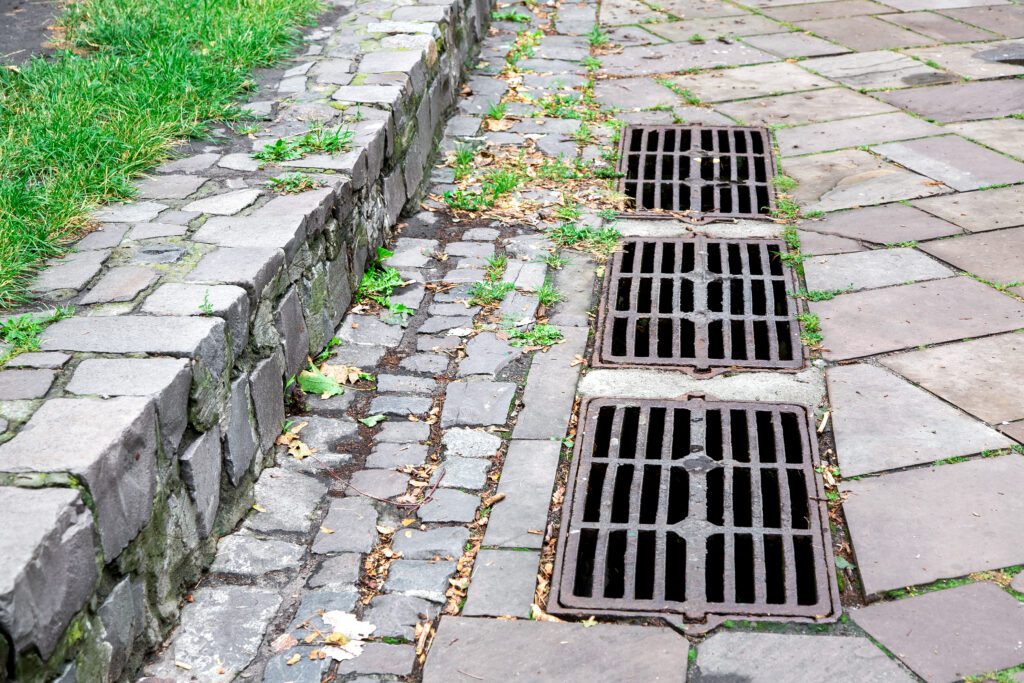
- Decorative Grates: If your ditch involves a culvert pipe, replace the standard plastic or rusted metal grate with a decorative cast-iron version.
- Rain Chains: If a downspout feeds into your ditch, replace the plastic extension with a copper rain chain. It turns the movement of water into a visual and auditory experience.
- Stepping Stones: Large, flat flagstones placed strategically within the ditch allow you to cross easily and add a “secret garden” feel.
Year-Round Maintenance: Keeping It Functional
Even the most beautiful landscape feature will fail if it isn’t maintained. To keep your drainage ditch working and looking its best:
- Clear Debris: After heavy storms, check for fallen branches or leaf build-up that could block the flow.
- Weed Management: Even with fabric, wind-blown seeds will find a home between the rocks. Pull weeds early before their roots take hold.
- Replenish Mulch: If you use mulch in your rain garden, ensure you use “hardwood mulch” that won’t float away during the first heavy rain.
- Inspect for Erosion: If you see soil washing away around your rocks, it may be time to add larger “anchor” boulders to slow the water velocity.
Best Plants for Drainage Ditches in Northern Illinois
Plants do more than soften a ditch visually. Deep roots hold soil in place, slow water and help it soak in. The key is matching plants to the wet bottom and the drier sides of the ditch.
For the wettest zone (the ditch bottom)
- Sedges such as fox sedge and other native Carex species, which tolerate standing water and form dense, soil-holding clumps.
- Blue flag iris, a native iris with striking purple flowers in early summer.
- Swamp milkweed, which supports monarch butterflies and handles wet feet.
- Cardinal flower for bright red late-summer color that attracts hummingbirds.
For the middle slopes
- Joe-Pye weed and blue vervain for tall summer color and pollinators.
- Switchgrass, a native grass with deep roots and winter interest.
- Golden Alexanders for early-season yellow flowers.
For the upper edges (drier)
- Prairie dropseed and little bluestem, tidy native grasses that tolerate drier soil.
- Black-eyed Susan and purple coneflower for long-lasting summer color.
Avoid planting shrubs or trees in the channel itself, where they can block flow and trap debris. Keep woody plants on the banks or beyond the top of the ditch.
Choosing Stone for a Dry Creek Bed or Rock-Lined Ditch
- Size stone to the flow. Small river rock works for gentle, low-volume channels. Areas with fast or heavy flow need larger cobbles and boulders that will not wash out.
- Use filter fabric beneath the stone to keep soil from mixing in and weeds from coming through.
- Mix sizes for a natural look, with larger boulders at bends and edges and smaller stone in the bed.
- Bury larger stones partially so they look natural and stay put.
- Protect the outlet where water leaves the ditch with larger stone to prevent erosion.
Our guide to the best gravel for drainage covers stone types in more detail.
Roadside Ditches vs. Backyard Drainage Ditches
- Roadside ditches along the street are often in the public right-of-way and maintained jointly with the municipality or township. Changes such as filling, installing culverts or adding large stone usually require permission. Keep landscaping low, avoid blocking driveway culverts and check local rules before planting.
- Backyard and side-yard ditches or swales usually carry water between properties in a subdivision. They often sit inside drainage easements, so fences, gardens and fill that block flow can violate HOA or municipal rules and cause flooding upstream.
In both cases, function comes first: the ditch must keep carrying water. Landscaping should work with the flow, not against it.
When a Ditch Is the Wrong Solution
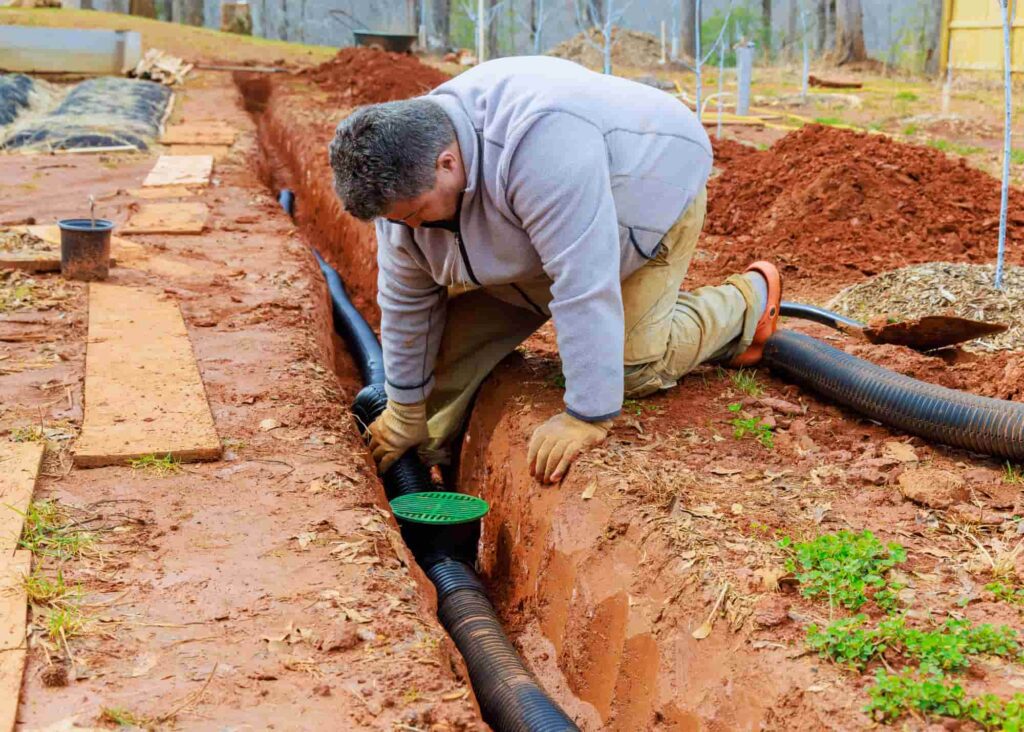
Sometimes a drainage ditch on a residential lot exists because there was no better option at the time. If an open ditch is constantly muddy, eroding or a safety concern, a buried system may be the better answer. A French drain or solid pipe with catch basins can carry the same water underground, letting you turn the ditch area back into lawn or a planting bed. This requires a proper outlet and, in shared easements, approval. Learn more about French drain installation.
What Does Ditch Landscaping Cost?
Costs depend on the length of the ditch, how much regrading or erosion repair is needed, and the materials you choose:
- Seeding or sodding with erosion-control blanket: the most affordable way to stabilize bare banks.
- Native plantings: moderate cost, with plugs being less expensive than larger container plants; more affordable over time because they need less mowing.
- Dry creek bed with river rock and boulders: higher cost due to stone, fabric and labor, but very low maintenance once installed.
- Converting a ditch to an underground system: the highest cost, similar to a French drain or pipe-and-catch-basin project, but it can give you back usable yard space.
A professional assessment helps determine whether the ditch needs only cosmetic work or also needs regrading and erosion repair to function properly.
Frequently Asked Questions
Can I fill in a drainage ditch on my property?
Only if it does not carry water that others rely on and local rules allow it. Many ditches are in drainage easements, and filling them can cause flooding upstream and legal liability. Replacing a ditch with a buried pipe system is sometimes possible with approval.
What is the cheapest way to make a ditch look better?
Establishing dense grass or native plantings and cleaning up the edges with simple stone borders are the most affordable options. A small dry creek bed using river rock is a popular next step.
Will rocks in a ditch stop erosion?
Properly sized stone over filter fabric is very effective at stopping erosion. Stone that is too small for the water flow will wash out.
What plants grow in wet ditches in Illinois?
Native sedges, blue flag iris, swamp milkweed, cardinal flower, Joe-Pye weed and switchgrass all handle wet conditions well and help hold soil in place.
How do I keep a landscaped ditch functional?
Remove leaves and debris each fall and after storms, trim plants that block flow, and check the inlet and outlet for clogs or erosion.
Why Hire a Professional?
While many homeowners enjoy the DIY aspect of planting, the grading and hardscaping of a drainage ditch can be complex. Improperly calculated slopes can lead to standing water (and mosquitoes) or, worse, basement flooding.
At Ware Landscaping, we specialize in “Landscaping with Purpose.” We understand the technical requirements of stormwater management and combine them with professional design aesthetics. We can help you navigate local codes, select the right stone and plant palettes for your specific USDA zone, and ensure the job is done right the first time.
Ready to Transform Your Yard?
Stop looking at that muddy ditch and start seeing a beautiful garden feature. Whether you’re interested in a dry creek bed, a rain garden, or a custom drainage solution, our team is here to help.
Contact Ware Landscaping today for a consultation on your property’s drainage and hardscaping needs.
Summary of Services at Ware Landscaping:
- Residential and Commercial Landscaping
- Hardscape Installation (Patios, Walkways, Dry Creek Beds)
- Seasonal Maintenance & Cleanup
- Professional Snow Removal