
If you’ve noticed puddles forming around your foundation, damp spots in your crawlspace, or soggy “dead zones” in your lawn, your gutter drainage system is likely failing. In 2026, we are seeing a significant shift in how residential water management is handled. With the increase in high-intensity “flash rain” events across the Midwest and the Northeast, the traditional plastic splash block is no longer an adequate defense for your home’s structural integrity.
A properly engineered drainage system protects your property from catastrophic water damage, soil erosion, and basement flooding. But before you call a gutter drainage contractor, it’s essential to understand what installation costs look like in the current 2026 market. This comprehensive guide breaks down the average costs, the technical types of drainage for gutters, and whether a DIY approach or professional installation offers the best long-term ROI for your property.
Don't Let a $2,000 Problem Become a $15,000 Foundation Repair
The cost of professional gutter drainage is a fraction of the price of fixing a cracked foundation. Invest in a custom-designed system that redirects water far away from your home’s most vulnerable points.
Get a Free QuoteWhy Gutter Drainage is Your Home’s Most Critical Insurance Policy
In 2026, property values are more tied to “climate-resiliency” than ever before. Home inspectors are now looking specifically at how water exits a property. A home that dumps thousands of gallons of water directly at the base of the foundation during a storm is a liability.
When gutters overflow or downspouts terminate too close to the house, the soil becomes saturated. This leads to hydrostatic pressure, where the weight of the water-logged soil literally pushes against your foundation walls, causing cracks, bowing, and eventually, seepage. A professional gutter drainage system acts as a relief valve, catching that water and transporting it to a safe “daylight” point or a municipal storm drain.
Types of Gutter Drainage Systems in 2026
Modern drainage technology has evolved. We no longer just “bury a pipe.” We engineer a path for water based on your yard’s specific hydraulics.
1. Above-Ground Systems (Budget-Friendly)
These are the most basic options, suitable for homes with minor grading issues.
- Downspout Extensions: Flexible or rigid pipes that direct water 3–10 feet away.
- 2026 Cost: $15–$65 per extension.
- Splash Blocks & Rain Chains: Decorative tools to disperse water energy.
- 2026 Cost: $10–$75.
- The Downside: These are often unsightly, can be tripped over, and are frequently moved by lawnmowers, rendered useless if not put back.
2. Underground Gutter Drainage Systems (The 2026 Gold Standard)
This is where most 2026 homeowners are investing. These systems are invisible and highly efficient.
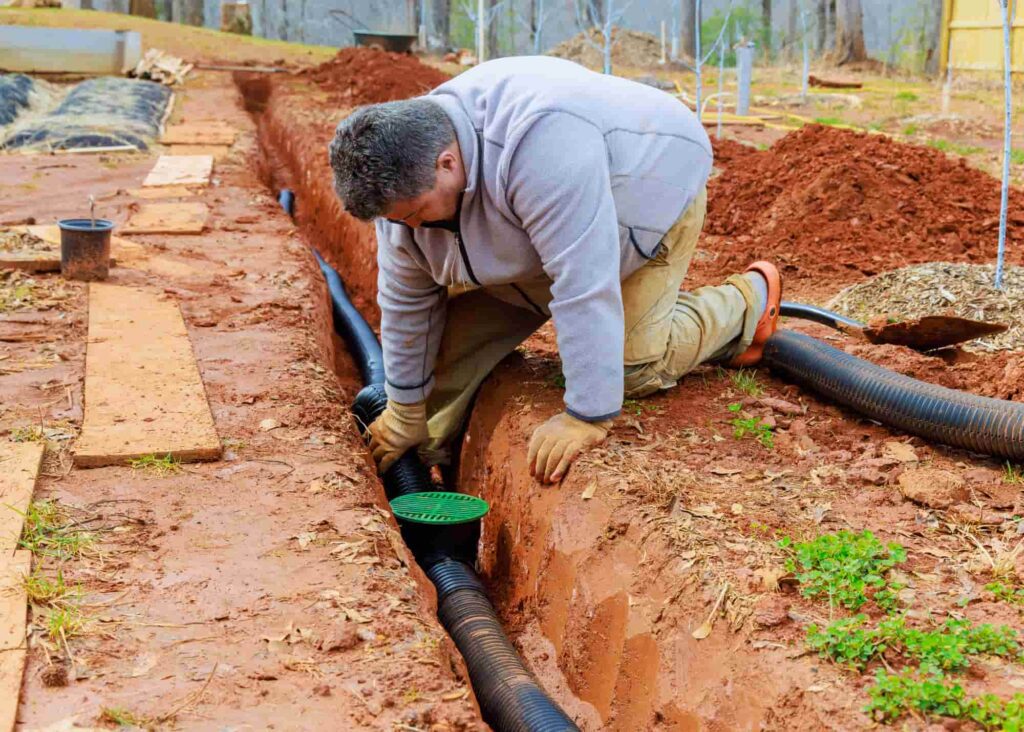
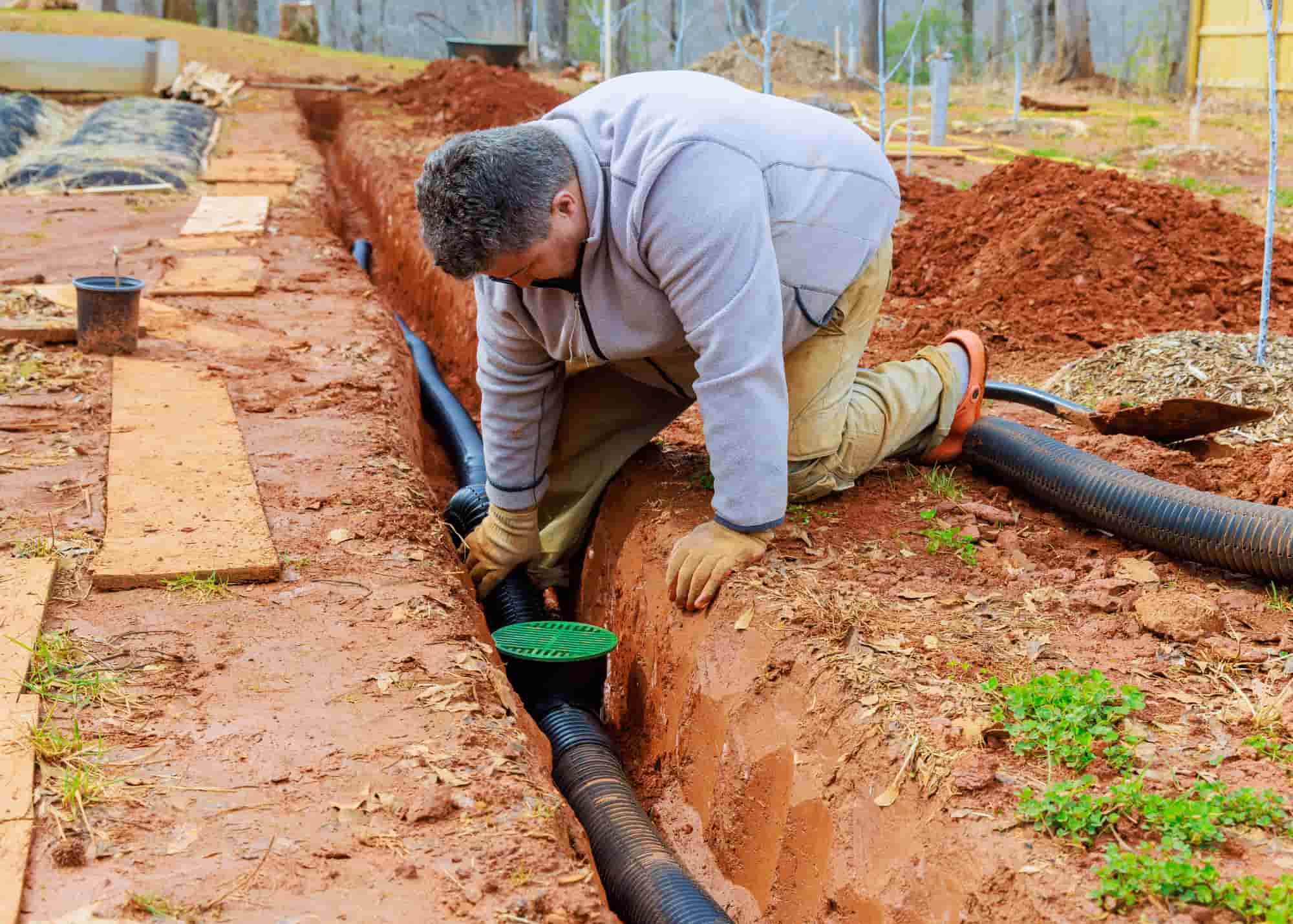
- Buried Downspout Extensions: These involve a gutter drain pipe hidden 12–24 inches beneath the turf. They usually terminate in a “bubbler pot” or pop-up emitter that opens only when water pressure is present.
- Average Cost: $2,500 – $8,000 for a full residential setup.
- French Drains: A perforated gutter pipe drain surrounded by washed gravel and wrapped in geotextile fabric. This manages both the water coming out of the gutters and the water sitting in the soil.
- Average Cost: $20–$40 per linear foot.
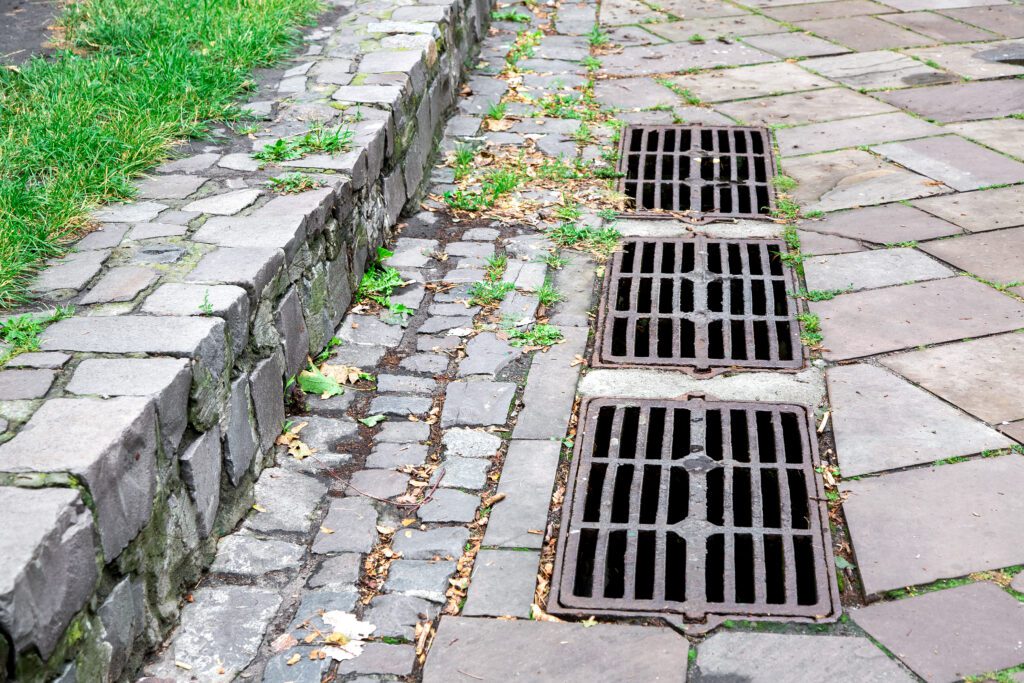
- Catch Basins: Small underground boxes with grates that collect debris and silt before they can enter your main gutter drainage pipe. These are essential for preventing long-term clogs.
- 2026 Cost: $150–$450 per basin (installed).
Average Gutter Drainage Costs: 2026 Breakdown
For a standard 2,000-square-foot home requiring approximately 200 linear feet of pipe management and 4 to 6 downspout connections, total project costs in 2026 typically fall between $3,200 and $8,500.
2026 Cost by Material (Installed, Per Linear Foot)
The material you choose significantly impacts the longevity of the system. In 2026, we strongly advise against “black corrugated pipe” as it is prone to crushing and clogging.
| Material | Installed Cost per Foot | 2026 Market Note |
| Thin-Wall Triplewall Pipe | $6 – $10 | Budget-friendly, but can be damaged by heavy equipment. |
| SDR-35 PVC (Smooth Wall) | $10 – $18 | The 2026 industry standard; root-resistant and easy to clean. |
| Schedule 40 PVC | $15 – $25 | Ultra-durable; used under driveways or heavy traffic areas. |
| Copper (Visible Sections) | $45 – $85 | Used for architectural downspouts to boost curb appeal. |
Labor and Hidden Service Costs
- Cost to install downspouts: $8 – $15 per linear foot for high-quality aluminum or steel.
- Curb Coring: If you need to drain water directly into the street through a concrete curb, expect a $350–$600 fee for professional coring.
- Landscaping Restoration: Deep trenching ruins grass. Professional contractors in 2026 often include “sod stripping” and replacement in their quotes, which adds $1.50–$3.00 per square foot.
- Utility Marking: While 811 is a free service, hand-digging around delicate fiber-optic lines can add a “complexity premium” to your labor costs.
Factors That Influence Your 2026 Quote
Not all yards are created equal. Several variables will determine if your quote sits at the low or high end of the average.
1. Soil Composition
In the Midwest, specifically areas like Naperville and surrounding suburbs, heavy clay is common. Clay is difficult to excavate and requires more machine hours. Conversely, sandy soil is easier to dig but may require more shoring to prevent trench collapse.
2. Pitch and Elevation
Water only moves if gravity allows it. If your yard is perfectly flat, a gutter drainage contractor must “create” a slope by digging deeper as the pipe moves away from the house. This increases the amount of dirt hauled away and gravel brought in.
3. Tree Roots and Obstacles
Burying a gutter drainage system near mature oak or maple trees requires careful root pruning or “boring” underneath them to avoid killing the tree. Similarly, crossing a sidewalk or driveway requires either cutting the concrete or using a horizontal boring tool, both of which add to the bottom line.
DIY vs. Professional Installation: The 2026 Verdict
The DIY Risk
Many homeowners attempt to buy a few rolls of corrugated pipe from a big-box store and bury them 6 inches deep. In 2026, we see the failure rate of these systems at nearly 80% within the first three years. Why?
- Improper Slope: Without a laser level, it is nearly impossible to maintain a consistent 1% grade.
- Clogging: Corrugated pipe has ridges that catch leaves and shingle grit. Once a clog happens underground, the pipe usually has to be dug up and replaced.
- Freezing: Shallow pipes are above the frost line. Standing water inside will freeze, expand, and shatter the pipe.
The Professional Advantage
Hiring a professional gutter drainage contractor ensures your system is engineered for a 30-year lifespan. Pros use rigid, smooth-wall PVC that can be “snaked” or hydro-jetted if a clog ever occurs. They also ensure the “daylight” point is positioned so it doesn’t flood your neighbor’s yard—a common source of legal disputes in 2026.
Signs Your Gutters Need Better Drainage
Not every home needs a full underground system. These signs suggest your current downspouts are not moving water far enough:
- Puddles, mud or eroded mulch directly below downspouts after rain.
- Damp basement walls, efflorescence or water at the floor-wall joint after storms.
- Ice sheets forming on walkways or driveways near downspouts in winter.
- Downspout extensions that are constantly kicked, crushed or moved for mowing.
- Soil settling or gaps forming along the foundation.
- A sump pump that runs frequently after rain, recycling roof water that soaks back toward the house.
If you see two or more of these, burying your downspouts and carrying the water to a proper outlet is usually one of the most cost-effective drainage improvements you can make.
Where Can Downspout Water Go? Outlet Options
Every underground gutter drainage system needs a safe place to release water. Common options in the Chicago suburbs include:
- Pop-up emitters in a lower part of the yard, far enough from the house that water does not flow back. Learn more in our lawn pop-up drain guide.
- Curb or street outlets, where the municipality allows it.
- Swales and drainage easements along property lines.
- Storm sewer connections, which typically require municipal approval or permits.
- Dry wells, which can work in sandy soils but often fill slowly in the heavy clay common across DuPage and Will counties.
Many towns restrict discharging water onto sidewalks, into neighboring yards or into sanitary sewers. A reputable contractor will check local rules before designing the outlet.
Maintenance Tips to Protect Your Investment
- Clean gutters every fall and spring, and more often under large trees. Debris from gutters is the main source of underground line clogs.
- Use downspout filters or leaf guards where gutters connect to underground pipe.
- Keep catch basin grates and pop-up emitters clear of leaves, mulch and grass clippings.
- Flush lines through cleanouts every year or two, or after heavy leaf drop.
- Clear outlets of snow and ice in winter so meltwater has somewhere to go.
- Watch during storms: water bubbling up from a downspout connection usually means a clog downstream.
Gutter Drainage vs. Gutter Replacement: Which Do You Need?
Homeowners sometimes replace gutters when the real problem is where the water goes after it leaves them. Before spending money, check which part of the system is failing:
- Gutters overflow along their length during normal storms: gutters may be undersized, clogged or sloped incorrectly. Cleaning, re-pitching or upsizing to larger gutters and downspouts is the fix.
- Gutters work, but water pools at the bottom of downspouts: the gutters are fine, and the problem is ground-level drainage. Underground downspout lines, catch basins and grading are the fix.
- Both: older homes often need upgraded gutters and better ground drainage at the same time. Coordinating the two ensures downspout locations line up with the buried system.
Fixing ground-level drainage is often less expensive than a full gutter replacement and has a bigger impact on basement moisture and yard flooding.
How Long Does Gutter Drainage Installation Take?
Most residential buried downspout projects are completed in one to two days. Day one typically covers utility locates (completed in advance through JULIE), trenching, laying pipe at the correct slope and setting catch basins and emitters. The final step is backfilling, compacting and restoring the lawn with topsoil and seed or sod. Larger systems that include French drains, regrading or connections to a storm sewer can take several days, and permits can add lead time. Late summer and fall are ideal for installation in northern Illinois, so the new system is ready for snowmelt and spring storms and the lawn has time to recover before winter.
Frequently Asked Questions
How much does it cost to bury downspouts?
For a typical home with four to six downspouts, buried downspout systems commonly cost a few thousand dollars, depending on pipe length, pipe type, number of catch basins, outlet type and lawn restoration. Simple, short runs cost less; long runs to a distant outlet cost more.
How far should downspouts discharge from the house?
A common recommendation is at least 5 to 10 feet from the foundation, and farther on heavy clay soils or where the yard is flat. The water should discharge to an area that slopes away from the house.
Should downspouts connect to a French drain?
It is usually better to carry roof water through solid pipe to its own outlet or to a properly designed system with cleanouts. Sending roof water directly into a perforated French drain can overload it and introduce debris.
Will buried downspouts freeze in winter?
A properly sloped line drains between storms, so freezing is rarely a serious problem. The most common winter issue is an outlet buried under snow or ice, which is easy to prevent by keeping outlets clear.
Can I install underground downspout drainage myself?
Short, simple runs are a manageable DIY project. Longer systems with multiple downspouts, catch basins and a single outlet are best designed by professionals to ensure correct slope and capacity.
Why Ware Landscaping is the Choice for 2026
At Ware Landscaping, we don’t just “bury pipes”—we design water-management ecosystems. We understand that your home is your largest investment, and we treat every foundation like it’s our own.
Our 2026 approach includes:
- Laser-Guided Precision: We ensure every inch of your gutter drainage pipe follows a strict hydraulic gradient.
- Root-Proofing: We use solvent-welded joints on all PVC lines to ensure thirsty tree roots can’t break into your system.
- Comprehensive Restoration: When we leave, your yard doesn’t look like a construction zone. We specialize in seamless turf restoration.
Conclusion
The cost to install downspouts and a complete underground gutter drainage system in 2026 is a necessary investment in property preservation. While the upfront cost of $3,000 to $8,000 may seem high, it pales in comparison to the $20,000+ homeowners are spending on foundation piering and basement mold remediation due to poor drainage.
Don’t wait for the next “100-year storm” to find out your drainage is insufficient. Protect your home’s foundation today.
Don't Let a $2,000 Problem Become a $15,000 Foundation Repair
The cost of professional gutter drainage is a fraction of the price of fixing a cracked foundation. Invest in a custom-designed system that redirects water far away from your home’s most vulnerable points.
Get a Free QuoteReady to secure your foundation? Contact Ware Landscaping for a Professional Drainage Quote.