
Effective stormwater management is a critical aspect of modern property development and landscape architecture. Whether you manage a commercial complex, a residential subdivision, or a municipal park, handling rain runoff is essential to preventing flooding and erosion. Two of the most common solutions you will encounter are detention basins and retention basins.
We understand that while these terms are often used interchangeably, they represent two very different approaches to water management. Understanding the distinction is vital for property owners, HOAs, and developers who need to balance flood control, water quality, and maintenance costs. In this guide, we will break down the mechanics, benefits, and maintenance needs of each system to help you determine the best fit for your landscape.
The Core Concept: Managing Runoff
Before diving into the differences, it is important to understand why these structures exist. As urbanization increases, impervious surfaces like driveways, parking lots, and rooftops replace natural ground that would otherwise absorb rainwater. Without management, this runoff rushes into storm sewers and local waterways, causing flash floods and carrying pollutants.
Both detention and retention basins emerged prominently in the 1970s as engineering solutions to this problem, evolving alongside the Clean Water Act and National Pollutant Discharge Elimination System (NPDES) regulations. Their goal is simple: to control the flow of water. However, how they achieve this varies significantly.
What is a Detention Basin? (The “Dry” Pond)
A detention basin, often referred to as a “dry pond,” is designed for the temporary storage of stormwater. Its primary function is flood control. Think of it as a pause button for rainwater.
How It Works
These basins are engineered to capture runoff during a storm and hold it briefly. An outlet structure, typically an orifice at the bottom of the basin, releases the water slowly into the downstream system over a period of 12 to 48 hours. Between storms, a detention basin remains completely dry.
Key Characteristics
- Water Presence: Temporary. Dry the vast majority of the time.
- Design: Shallower slopes (often 4:1) to allow for easy maintenance and mowing.
- Primary Goal: Quantity control. It reduces the “peak flow” of a storm to pre-development levels.
Pros and Cons
Pros:
- Cost-Effective: Generally cheaper to construct due to less excavation.
- Space Efficient: Takes up a smaller footprint than retention ponds.
- Multi-use Potential: When dry, the area can sometimes double as a recreational field or open green space.
Cons:
- Limited Water Quality Benefits: While some sediment settles, it does not filter nutrients effectively.
- Aesthetics: Can look like an empty, grassy depression when not in use.
- Maintenance Issues: If not graded properly, they can develop boggy areas that breed mosquitoes.
What is a Retention Basin? (The “Wet” Pond)
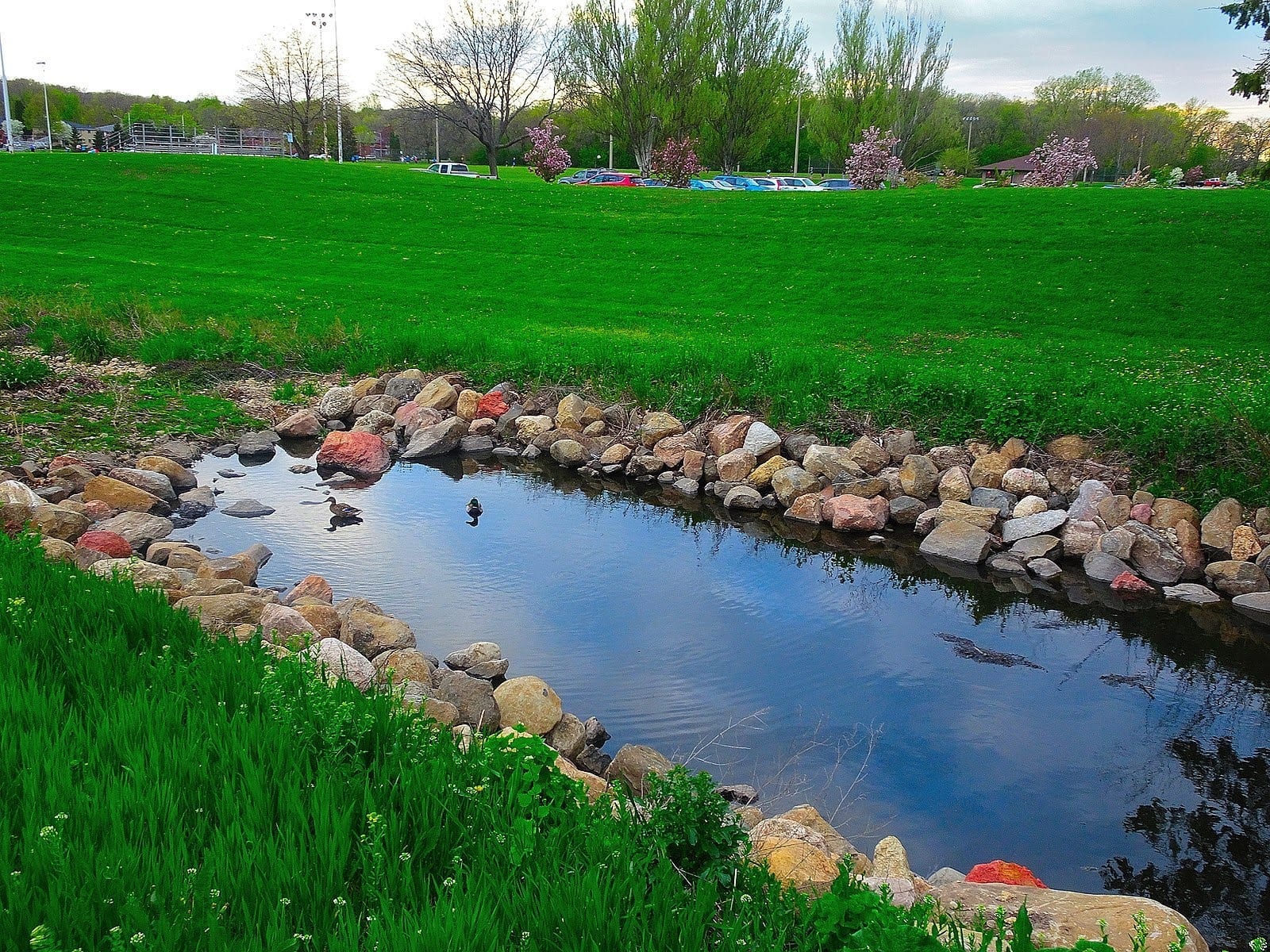
A retention basin, or “wet pond,” is designed to hold a permanent pool of water indefinitely. While it also helps control flooding, its secondary (and equally important) role is improving water quality.
How It Works
Retention basins are dug deeper to intercept the groundwater table or are lined to hold water year-round. During a storm, the water level rises above the permanent pool, capturing runoff. This water is then treated through natural processes—sedimentation settles solids to the bottom, while aquatic plants and biological uptake remove nutrients like nitrogen and phosphorus.
Key Characteristics
- Water Presence: Permanent. It always looks like a pond.
- Design: Deeper (4–8 feet) to prevent total freezing in winter and to discourage excessive weed growth from the bottom.
- Primary Goal: Quality and Quantity. It manages flood volume while actively cleaning the water.
Pros and Cons
Pros:
- Water Quality: Superior at removing pollutants and solids.
- Aesthetics: Adds a scenic water feature that can increase property value.
- Ecological Value: Creates a habitat for birds, frogs, and beneficial insects.
Cons:
- Higher Cost: Requires more land and deeper excavation.
- Safety Risks: Permanent standing water can be a drowning hazard, often requiring fencing.
- Complex Maintenance: prone to algae blooms and requires specialized vegetation management.
Comparison at a Glance
For a quick reference on how these two systems stack up, view the comparison table below:
| Feature | Detention Basin (Dry) | Retention Basin (Wet) |
| Water State | Dry between storms | Permanent pool year-round |
| Primary Function | Flood control & peak flow reduction | Water quality & pollutant removal |
| Land Requirement | Smaller footprint | Larger area required |
| Ecological Impact | Low (mostly grass) | High (supports wildlife habitat) |
| Cost | Lower ($0.15-$0.30 per cu. ft.) | Higher ($0.50-$1.00 per cu. ft.) |
| Key Maintenance | Mowing & debris removal | Algae control & dredging |
The Critical Role of Maintenance
Regardless of which basin a property utilizes, maintenance is non-negotiable. Neglected basins can fail, leading to flooding liabilities or fines from municipal inspectors. This is where professional landscaping services become essential.
Maintaining Detention Basins
Because detention basins are dry, they are essentially large lawns that require specialized care.
- Mowing: Regular mowing is required to keep the basin accessible and prevent woody growth that could block water flow.
- Debris Removal: The outlet structure (the drain) must be kept clear of trash, branches, and leaves to prevent clogging during a storm.
- Erosion Control: The sides of the basin must be stabilized with vegetation to prevent soil from washing into the outlet.
Maintaining Retention Basins
Retention basins require a different skillset, focusing on water health and shoreline stability.
- Vegetation Management: A buffer of native plants is often needed around the edge to filter runoff and deter geese.
- Algae Control: Because the water is stagnant, algae blooms are common and must be managed to prevent odors.
- Sediment Dredging: Over roughly 10-20 years, the “permanent pool” will fill with sediment and require expensive dredging to restore capacity.
Which Solution is Right for You?
Choosing between detention and retention often comes down to three factors: space, budget, and geography.
Choose a Detention Basin If:
- You are in a dense urban environment (like a tight commercial lot) where land is expensive.
- Your primary concern is meeting local flood control ordinances at the lowest initial cost.
- You want a simple maintenance schedule that fits into standard landscape mowing contracts.
Choose a Retention Basin If:
- You are developing a residential community or park where aesthetics and property values are a priority.
- You need to meet strict water quality regulations (NPDES) regarding nutrient runoff.
- You have ample space and high groundwater levels that make digging a wet pond feasible.
Conclusion
Both detention and retention basins are vital tools in the fight against flooding and water pollution. While detention basins offer a practical, space-saving solution for flood control, retention basins provide a holistic approach that benefits the ecosystem and enhances the visual appeal of a property.
However, the effectiveness of either system depends entirely on how well it is maintained. A clogged detention basin or an algae-filled retention pond can quickly become a liability rather than an asset.
At Ware Landscaping, we specialize in the comprehensive care of commercial and residential properties. From routine seasonal maintenance to complex landscape challenges, we ensure your property remains safe, functional, and beautiful.
Need help managing your property’s landscape or drainage areas?
Don’t wait for the next storm to reveal a problem. Contact Ware Landscaping today for a consultation on your property care needs.