
Hanging Christmas lights on stucco sounds simple until you actually try it. The surface is rough, uneven, and easy to damage if you force the wrong method. The keyword hanging Christmas lights on stucco matters because most homeowners think nails or staples are the only way to get a clean, secure setup—but those options can crack the stucco, break the finish, or lead to moisture issues down the line.
If you’ve ever dealt with falling clips, peeling paint, or lights that won’t stay up for more than a day, you know exactly how frustrating it gets. Good news: there are smarter ways that give you a clean, secure holiday display without risking permanent damage.
Why Stucco Makes Light Hanging Tricky
Stucco isn’t smooth. It’s porous, textured, and, depending on the type, can crack easily if you drill into it or attach anything too aggressively.
Two things make stucco difficult:
- Weak adhesives don’t grip well.
- Hard surfaces chip if handled the wrong way.
Traditional stucco (cement-based) is tough, but still sensitive to prying or pulling. Synthetic stucco (EIFS) is worse—drilling can cause water intrusion. That’s why you need non-invasive methods.
What You’ll Need
To avoid damage and get a secure hold, stock up on:
- Outdoor-rated adhesive clips (Command Outdoor, parapet clips, universal LED clips)
- Stucco-safe tapes (UV-resistant stucco duct tape, double‑sided outdoor tape)
- Hot glue gun (only for short-term use on unpainted stucco)
- Cleaning tools (rubbing alcohol, cloth, brush)
- Extension cords (outdoor-rated)
- Ladder
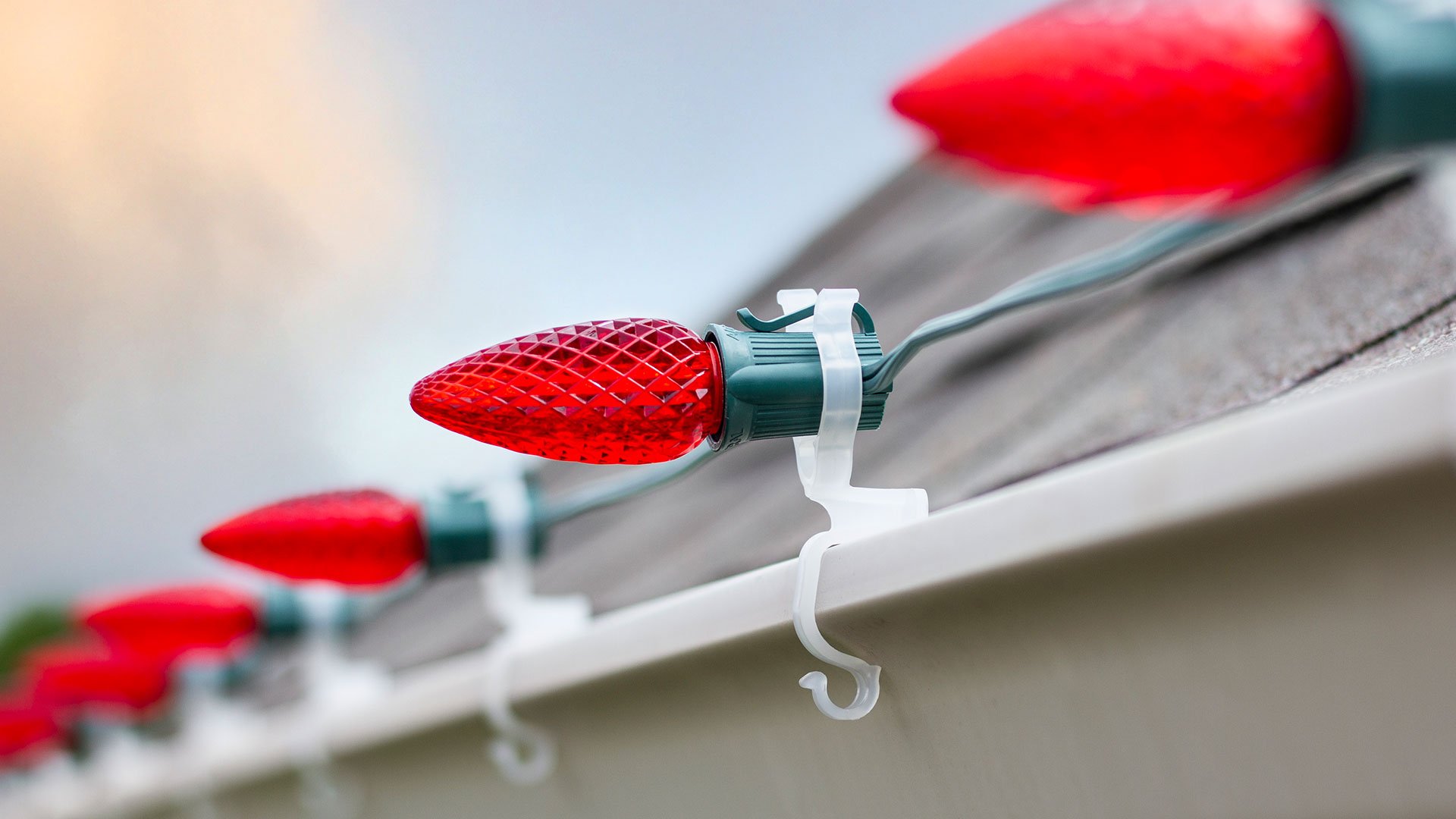
- Optional: roof/gutter clips if your home has edges you can use
These are the same tools professional installers use—simple, proven, and safe.
The Best Ways to Hang Lights on Stucco
Different homes need different methods, but these are the most reliable.
1. Adhesive Clips (Best for Most Homes)
This is the safest, easiest method.
How to do it:
- Clean the stucco with rubbing alcohol.
- Press the adhesive clip firmly for 30–60 seconds.
- Wait at least one hour before hanging lights.
- Space clips 1–2 feet apart.
Why it works:
- No drilling
- No surface damage
- Easy removal
Just make sure you choose outdoor-rated clips.
2. Stucco Duct Tape or Double-Sided Tape
Works best for lightweight LED strands.
Steps:
- Clean the area.
- Cut small tape squares.
- Stick them to the light cable, not the bulb.
- Press into stucco.
Pros: Cheap, fast.
Cons: Tape breaks down in wet or cold conditions.
3. Hot Glue (Short-term Only)
Hot glue grips stucco well but must be used carefully.
When to use:
- Only on unpainted stucco
- Only for short-term installs
Risks:
- Can remove stucco when pulled off
- Can peel paint
If you use this method, plan to soften glue with a hairdryer to remove it.
4. Gutter or Roof Clips
If your stucco home has gutters or shingle edges, use these instead of attaching anything directly to the wall.
Pros:
- Zero stucco contact
- Fully reusable
Great for: Rooflines, peaks, and edges.
5. Drilling With Anchors (Last Resort)
This is for permanent installations only.
Why you avoid it:
- Creates holes
- Risks cracks
- Allows water intrusion
Use it only for heavy displays that need strong anchors.
Pros & Cons of Each Method
| Method | Pros | Cons | Best Use |
|---|---|---|---|
| Adhesive clips | Clean, removable, safe | Can fail in extreme cold | Most stucco surfaces |
| Stucco tape | Cheap, quick | Weakens in moisture | Lightweight LEDs |
| Hot glue | Strong hold | Can damage surface | Temporary setups |
| Gutter clips | No wall contact | Requires gutter | Roofline lighting |
| Drilling | Very secure | Permanent damage | Heavy, permanent displays |
Safety Tips You Don’t Want to Skip
Most accidents happen from rushing or using the wrong gear.
Follow these basics:
- Use a sturdy fiberglass or wooden ladder.
- Don’t install in wet or windy weather.
- Inspect every strand before hanging.
- Use GFCI outlets for all outdoor lights.
- Avoid running cords through doors or windows.
- Never overload circuits—use LED lights instead of incandescent.
A clean setup is great. A safe setup is mandatory.
Avoid These Common Mistakes
People make the same errors every year. Skip these and your setup gets easier:
- Using indoor lights outside.
- Applying adhesives on dirty stucco.
- Hanging heavy icicle lights on weak clips.
- Installing on wet surfaces.
- Overextending tape or glue.
Fix these, and most problems disappear.
Eco-Friendly Choices
If you want a clean look and lower bills:
- Switch to LED strands.
- Use timers or smart plugs.
- Avoid salt-based de-icers near cords.
- Reuse clips instead of buying new ones every year.
Small choices add up.
Troubleshooting Quick Guide
Lights keep falling:
- Add more clips.
- Switch to stronger tape.
- Clean area again.
Adhesive won’t stick:
- Temperature is too cold—warm area slightly.
- Surface still has dust—wipe again.
Residue left behind:
- Use rubbing alcohol.
- Use mild heat to soften glue.
Traditional Stucco vs. EIFS: Know What You Have
Before attaching anything, find out which type of stucco is on your home, because it changes what is safe:
- Traditional (cement) stucco is hard and brittle. It sounds solid when tapped and feels like masonry. It tolerates adhesive clips well and, if absolutely necessary, sealed masonry anchors.
- EIFS (Exterior Insulation and Finish System), often called synthetic stucco, has a foam insulation layer behind a thin finish coat. It sounds hollow when tapped and may dent with firm pressure. Never drill or nail into EIFS, because breaches can let water behind the system and cause hidden rot and mold.
If you are unsure, check your home’s documents, ask the builder, or treat it as EIFS and use only non-penetrating methods.
Choosing the Right Lights for a Stucco Home
- LED C9 bulbs are the standard for crisp, bright rooflines and are lightweight, which makes adhesive clips more reliable.
- Mini lights work well around windows, doors and columns where a softer glow fits the architecture.
- Warm white complements most stucco colors, especially earth tones, while multicolor suits a more traditional look.
- Lighter strands put less strain on clips, which matters on textured surfaces.
Step-by-Step: Hanging Lights on Stucco the Right Way
- Plan the layout. Decide which edges you want to outline (rooflines, windows, doors, columns) and measure each run. Note where outdoor outlets are and how cords will reach them without crossing walkways.
- Test the lights on the ground before you climb. Replace any dead bulbs or damaged strands.
- Clean the surface. Brush off dust, cobwebs and loose paint where clips will go, then wipe with rubbing alcohol and let it dry. Adhesives grip clean, dry stucco far better.
- Mark clip spacing. For C9 bulbs, a clip at each bulb or every 12 inches keeps lines straight. For mini lights, every 12 to 18 inches is usually enough.
- Apply clips in suitable temperatures. Most outdoor adhesives need surface temperatures above roughly 50°F to bond properly and should cure for 24 hours before you hang lights. In the Chicago area, that means installing adhesive clips in October or early November, not after a cold snap.
- Hang the lights starting at the end closest to the power source, working outward so you do not end up short.
- Secure cords along the bottom of walls or behind shrubs, using outdoor-rated extension cords and connectors kept off the ground.
- Plug into a GFCI outlet with a weather-resistant in-use cover, and add a timer.
Power and Timer Planning
Stucco homes often have fewer exterior outlets than homes with siding, and drilling new ones through stucco is a job for an electrician. Plan power before you hang anything: count the strands on each run, check the manufacturer’s maximum connected length, and spread the load across more than one outdoor circuit if possible. Use outdoor-rated extension cords of the shortest practical length, keep connections elevated off wet ground and snow, and add a weatherproof timer or smart plug so lights turn on at dusk and off at bedtime automatically.
Outlining Windows, Doors and Columns
- Windows and doors: attach clips to the trim rather than the stucco whenever possible. Painted wood or vinyl trim holds adhesive clips better than textured stucco.
- Columns: wrap lights in a spiral and secure the top and bottom with removable hooks or a strap around the column instead of adhesives.
- Arches: use flexible clips and keep spacing consistent so the curve looks smooth.
- Stucco parapets and flat roofs: parapet clips that grip the cap or ledge avoid fastening into the wall.
How to Remove Lights Without Damaging Stucco
- Remove on a warmer day if possible. Adhesives release more cleanly when they are not frozen.
- Pull removable strips straight down, parallel to the wall, not outward. This is how removable strips are designed to release.
- Use dental floss or fishing line to slice under stubborn clips instead of prying.
- Warm residue gently with a hair dryer on low, then roll it off with your thumb.
- Do not scrape with metal tools, which will gouge the texture and paint.
- Touch up any small chips with matching exterior paint or stucco patch.
Consider Permanent Holiday Lighting for Stucco Homes
If you decorate every year, a permanent LED track system can be a smart choice for stucco homes. The track is mounted once along the fascia or roofline, often in a color that blends with the trim, and the lights stay up year-round. You avoid seasonal adhesives entirely, and app-controlled LEDs can be set for Christmas, other holidays or subtle everyday accent lighting. Installation is a bigger upfront investment, but it removes the annual hassle and risk of surface damage. See our Christmas light installation cost guide for typical pricing.
When to Call a Professional
Call a professional if your home has a second story, steep roof, EIFS (synthetic stucco) that should not be drilled, or extensive rooflines and trees. Pros use non-damaging clips, the right ladders and lifts, commercial-grade lights and outlet planning that avoids overloaded circuits. Many also handle takedown and storage. Ware Landscaping provides holiday light installation for homes across Naperville and the western suburbs.
Frequently Asked Questions
What is the best way to hang Christmas lights on stucco?
For most homes, attach lights to gutters, fascia or trim with clips, and use outdoor-rated removable adhesive clips on the stucco itself where needed. Apply adhesives on a dry day above about 50°F and let them cure before hanging lights.
Can I use nails or screws in stucco?
It is best to avoid them. Fasteners can crack traditional stucco and let water into EIFS (synthetic stucco), causing hidden moisture damage. If you must drill, use masonry anchors sealed with exterior caulk, and only on traditional cement stucco.
Do adhesive hooks work on textured stucco?
They can, if the surface is cleaned and the adhesive is rated for outdoor use and rough surfaces. Very rough textures may need a small amount of exterior-rated adhesive or putty to fill gaps. Test one clip before committing.
Why do my light clips keep falling off stucco?
Common causes are dust or loose paint on the surface, applying adhesives in cold weather, not allowing cure time, or using indoor-rated products. Clean the surface and reapply on a warmer day.
Will hot glue damage stucco?
Hot glue can hold for a short time, but it often fails in cold weather and can pull paint or texture when removed. It is best used only for short-term, light-duty attachments.
How do I hang lights on a stucco house without gutters?
Attach lights along the fascia or roof edge with shingle or fascia clips, outline windows and doors using the trim, and use removable outdoor adhesive clips on the stucco only where there is no trim to attach to.
Final Thoughts
Hanging Christmas lights on stucco doesn’t have to be a nightmare. With the right materials and the right method, you get a clean, secure, damage-free setup that holds all season.
If your stucco is fragile, the weather is unpredictable, or you just don’t want to deal with ladders and adhesives, there’s an easier option.
Holiday Light Help from Ware Landscaping
If you want your home to look clean, bright, and professionally done without risking cracks, falls, or hours on a ladder, Ware Landscaping can handle the full installation for you. We work with stucco every season and know what holds, what fails, and how to keep your display secure through snow, wind, and freeze.
Whether you need a simple roofline setup or a full-property holiday design, we take care of everything from planning to installation to post-season removal.
Skip the stress. Let Ware Landscaping hang your lights the right way. Reach out today and book your installation before the holiday rush hits.