
Your lawn may look tired after summer. The grass is thinner, the soil feels hard underfoot, and bare patches are beginning to appear. Fall is a good time to address these problems, but should you choose lawn aeration, overseeding, or both?
The answer depends on what your lawn needs.
Fall aeration relieves soil compaction, while overseeding introduces new grass seed to thicken an existing lawn and fill bare or thinning areas. They solve different problems, but they can work together to improve lawn health before winter.
For homeowners in Chicago, Naperville, and surrounding Illinois communities, fall is an important season for lawn maintenance. Cooler temperatures can reduce heat stress, while suitable soil conditions give cool-season grass an opportunity to recover and establish roots.
Here is how to tell which treatment your lawn needs, when to combine them, and what to consider before winter arrives.
What Is the Difference Between Fall Aeration and Overseeding?
Aeration and overseeding are often recommended together, but they serve different purposes.
Lawn aeration addresses the condition of the soil. Overseeding addresses the density and coverage of the grass.
Understanding this distinction helps you avoid paying for a treatment that does not address your lawn’s main problem.
What Is Fall Lawn Aeration?
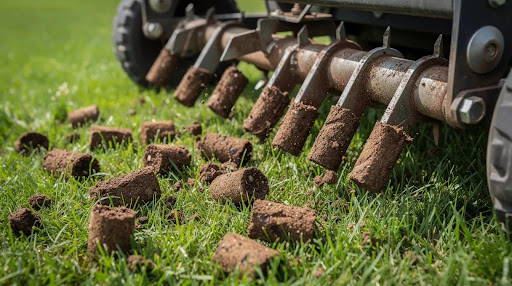
Lawn aeration is the process of creating openings in the soil to improve conditions around the grass roots. Core aeration, the preferred method for relieving significant soil compaction, uses a machine to remove small plugs of soil from the lawn.
These openings help air, water, and nutrients move into the root zone. They also create better conditions for grass roots to grow.
Aeration can be especially useful when:
- The soil feels hard or compacted.
- Water runs off the lawn instead of soaking into the ground.
- Grass struggles in areas that receive regular foot traffic.
- The lawn has difficulty growing despite routine care.
- You plan to overseed and want better seed-to-soil contact.
Core aeration does not automatically solve every lawn problem. Poor drainage, unsuitable soil conditions, excessive thatch, or incorrect watering may require additional attention.
For Illinois homeowners, lawn aeration and overseeding are useful practices to understand when improving soil conditions and supporting lawn renovation.
What Is Fall Overseeding?
Overseeding involves spreading new grass seed over an existing lawn without removing all the established grass.
The goal is to increase grass density, repair thin areas, and fill bare patches. It can also introduce a more suitable grass variety when the existing lawn struggles with the site’s conditions.
Overseeding may be beneficial when:
- Your lawn looks thin after summer.
- Bare patches have developed.
- Grass coverage is uneven.
- Some sections have been damaged by disease, drought, or heavy use.
- You want to improve lawn density and reduce opportunities for weeds to establish.
Successful overseeding depends on more than spreading seed. The seed needs good contact with the soil, suitable growing conditions, and consistent moisture while it germinates.
If the soil is heavily compacted, overseeding alone may not deliver the results you want. The new grass may struggle to establish because the underlying soil conditions remain poor.
Fall Aeration vs Overseeding: Which Does Your Lawn Need?
The easiest way to decide is to look at the symptoms your lawn is showing.
1. Choose Aeration If Your Soil Is Compacted
Compacted soil restricts the movement of air and water through the soil profile. Grass roots may struggle to grow, and water may collect on the surface or run off instead of soaking in.
Compaction is common in areas that receive frequent foot traffic, including paths across the lawn, play areas, and sections near patios.
One simple check is to push a screwdriver into the soil when it is moist. If it is unusually difficult to insert in several areas, the soil may be compacted. This is a useful initial check, although soil type and moisture also affect resistance.
Core aeration can help relieve compaction by removing small plugs of soil. The holes provide space for air and water to enter the root zone and can improve conditions for existing grass.
Choose aeration first when the main problem is the soil rather than a lack of grass coverage.
If the lawn is also thin, aeration followed by overseeding may be more effective than aeration alone.
2. Choose Overseeding If Your Lawn Is Thin
A lawn can have healthy soil but still look sparse because grass plants have died, coverage has declined, or the lawn has suffered damage.
In this situation, adding new seed may be the priority.
Overseeding introduces new grass plants that can fill gaps and improve the lawn’s overall density. A thicker lawn can also compete more effectively with weeds when the grass is well suited to the site and receives appropriate care.
Before overseeding, identify why the lawn has become thin. Heavy shade, drought, disease, poor mowing practices, and unsuitable grass varieties can all affect coverage.
Adding seed without correcting the underlying problem may lead to disappointing results.
For example, grass seed intended for sunny conditions may struggle under dense tree cover. Similarly, seed spread over a dry, compacted surface may fail to establish even when the seed itself is good quality.
Choose overseeding when the main problem is thin grass or bare patches and the soil provides suitable growing conditions.
3. Choose Both If Your Lawn Is Compacted and Thin
Many lawns need both treatments.
If the soil is compacted and the grass is sparse, aeration can improve the growing environment while overseeding introduces new grass to fill the gaps.
A typical renovation sequence is:
- Inspect the lawn and identify the cause of thinning or poor growth.
- Mow as appropriate and prepare the surface for treatment.
- Core-aerate when the soil is moist enough for the machine to penetrate.
- Apply suitable grass seed at the recommended rate.
- Ensure the seed makes good contact with the soil.
- Water consistently to support germination and establishment.
- Adjust mowing and foot traffic while the new grass develops.
Aeration holes can provide useful places for seed to settle, but seed should still be distributed appropriately across the lawn. Follow the seed supplier’s instructions and the recommendations for your grass type.
Combining both treatments is often a practical approach to fall lawn renovation because it addresses soil compaction and grass coverage at the same time.
Why Fall Is a Good Time for Aeration and Overseeding
For many cool-season lawns in Illinois, fall provides favourable conditions for repairing summer damage and improving grass density.
Cool-season grasses, including Kentucky bluegrass, perennial ryegrass, and fescues, generally grow actively during cooler periods of the year. However, the best timing depends on the grass variety, local temperatures, and how much time remains for the grass to establish before winter.
Cooler Temperatures Reduce Heat Stress
Grass seed and young seedlings can struggle when exposed to excessive heat and dry conditions.
Fall often brings cooler air temperatures, making it easier for cool-season grass to establish when moisture is managed properly.
This does not mean that seed can be left unattended. New grass still needs consistent moisture and suitable growing conditions.
Soil Can Remain Warm Enough for Germination
Even as air temperatures fall, soil may retain enough warmth to support seed germination.
This combination of cooler air and suitable soil temperatures can help new grass establish before winter, provided seeding takes place early enough for the local climate.
Aeration Can Help Improve Root-Zone Conditions
Summer foot traffic, mowing, and repeated use can contribute to compacted soil.
Core aeration creates openings that allow water and air to move more easily into the root zone. When combined with appropriate lawn care, this can improve conditions for existing grass and newly seeded areas.
New Grass May Have Time to Establish Before Winter
Early establishment gives seedlings more opportunity to develop roots before growth slows during colder weather.
However, the ideal seeding window varies across Illinois. Northern areas generally need earlier seeding than southern areas, and late-season seeding carries greater risk if seedlings cannot establish before winter.
The fall lawn care recommendations for cool-season grass from University of Illinois Extension can help homeowners plan seasonal maintenance around local growing conditions.
Should You Aerate Before or After Overseeding?
In most situations where both treatments are needed, core aeration should be completed before or as part of the overseeding process.
Aerating first allows the machine to work across the existing lawn without having to account for newly germinated seedlings. It also creates openings in the soil that can improve seed-to-soil contact.
A practical sequence is to core-aerate the lawn, distribute the seed at the appropriate rate, and follow the recommended watering and establishment practices.
The exact order may vary with the equipment and seeding method. For example, a slit seeder places seed into narrow cuts in the soil and may be used as part of a different renovation approach.
Avoid aerating newly germinated grass unnecessarily. Young seedlings need time to establish, and additional mechanical disturbance can damage them.
Should You Leave the Soil Plugs on the Lawn?
After core aeration, small plugs of soil will be visible across the lawn.
In most cases, they can be left in place to break down naturally through weather and normal lawn activity. They may look untidy at first, but they can gradually return soil to the surface.
If overseeding is part of the project, avoid removing the plugs in a way that damages the lawn or interferes with seed placement. Follow the recommendations for your equipment, soil conditions, and overall lawn renovation plan.
How to Know If Your Lawn Needs Both Treatments
Not every lawn needs a full renovation. Before booking a service, look for signs that indicate whether the main issue is soil compaction, poor grass coverage, or a combination of both.
Signs Your Lawn May Need Aeration
- The soil is hard to penetrate when moist.
- Water runs off or struggles to infiltrate the ground.
- Grass grows poorly in heavily used areas.
- The lawn has compacted sections near walkways or play spaces.
- Root growth appears limited by poor soil conditions.
Signs Your Lawn May Need Overseeding
- Grass coverage is visibly thin.
- Bare patches remain after summer.
- The lawn has uneven density.
- Grass has been damaged by drought, disease, or heavy use.
- You want to introduce a grass variety better suited to the site’s conditions.
Signs Your Lawn May Need Both
- The soil is compacted and grass coverage is poor.
- Water infiltration is limited, and bare patches are spreading.
- Existing grass struggles to grow despite routine maintenance.
- You want to improve both soil conditions and lawn density before winter.
If the lawn is severely damaged, has extensive weed coverage, or suffers from major soil problems, aeration and overseeding may not be enough. More extensive renovation may be necessary.
Common Mistakes to Avoid During Fall Lawn Renovation
Aeration and overseeding can improve a lawn, but poor timing or preparation can limit the results.
Aerating Soil That Is Too Dry or Too Wet
Very dry soil can be difficult for aeration equipment to penetrate. Soil that is excessively wet can become muddy and may be damaged by machinery.
The best conditions are generally when the soil is moist but not saturated. If rainfall has softened the ground too much, allow conditions to improve before proceeding.
Using Spike Aeration to Solve Severe Compaction
Spike aerators create holes by pushing solid tines into the ground. They do not remove soil cores and are generally less effective for relieving significant compaction, particularly in clay-heavy soils.
Core aeration is usually the better option when the objective is to reduce compaction.
Spreading Seed Without Preparing the Surface
Grass seed needs contact with the soil to establish successfully. Seed left sitting on thick grass, debris, or an unsuitable surface may not germinate well.
Prepare the lawn as needed, distribute seed evenly, and follow the recommended application rate.
Choosing the Wrong Grass Seed
Grass varieties differ in their tolerance for shade, drought, foot traffic, and maintenance requirements.
Choose a seed blend suited to the conditions in your yard rather than selecting solely by price or appearance.
Allowing Newly Seeded Areas to Dry Out
Germinating seed needs consistent moisture. If the seedbed dries out repeatedly, establishment may be uneven or unsuccessful.
Water as needed to keep the seed zone moist without saturating the soil. As the grass develops, adjust watering to encourage stronger root growth.
Waiting Too Late in the Season
Seeding too close to winter can leave young grass without enough time to establish.
Check local conditions and choose a suitable window for your grass variety and location. If the ideal fall window has passed, consider whether a spring renovation is more appropriate instead of rushing the work.
How Much Do Fall Aeration and Overseeding Cost?
The cost of fall aeration and overseeding depends on lawn size, soil conditions, equipment requirements, seed selection, and the amount of preparation involved.
Aeration alone is generally a different scope of work from a combined lawn renovation that includes seed, surface preparation, and follow-up care.
Costs may increase when the lawn has severe compaction, extensive bare patches, difficult access, or additional problems that need attention before seeding.
When requesting an estimate, ask what the service includes:
- Core aeration or another aeration method.
- Lawn preparation and debris management.
- Grass seed type and application rate.
- Overseeding and any additional soil amendments.
- Guidance on watering and post-treatment care.
- Any follow-up work or additional treatments.
It is also worth asking whether the contractor has identified the reason for the lawn’s poor condition. If drainage, shade, unsuitable grass, or another underlying problem remains unresolved, aeration and overseeding may not provide lasting improvement.
How Ware Landscaping Can Help With Fall Lawn Care
Choosing between aeration and overseeding starts with understanding what is happening beneath and above the grass.
Ware Landscaping provides lawn maintenance services for homeowners in Chicago, Naperville, and surrounding communities. An assessment of the lawn can help determine whether soil compaction, thinning grass, or another issue should be addressed before winter.
Depending on the property’s needs, lawn care may involve aeration, overseeding, or additional improvements to support healthier growth.
If water consistently pools on your lawn, remember that aeration and overseeding are not substitutes for correcting a drainage problem. Poor grading, compacted soil, and inadequate drainage may require a separate assessment before a lawn renovation can succeed.
Homeowners can explore professional lawn care services, including options for lawn maintenance in Naperville and lawn maintenance in Chicago, depending on their property’s needs.
Contact Ware Landscaping to discuss your lawn’s condition and determine which fall treatments are appropriate for your property.