

Buried downspouts and underground sump pump lines help protect your home by carrying water away from the foundation. When these systems become blocked, damaged, or unable to discharge water properly, moisture can accumulate around the house. Freezing temperatures may make existing drainage problems even more difficult to manage.
The effects are not always obvious during fall. A buried line may appear to be working until heavy rain, melting snow, or a winter storm sends more water through the system. By then, a blocked or frozen discharge line could contribute to standing water, icy walkways, or basement moisture.
For homeowners in Chicago, Naperville, and surrounding northeastern Illinois communities, preparing underground drainage before winter means checking the entire route water travels, from the gutter or sump basin to its final discharge point.
Here is how to inspect these systems, address common warning signs, and determine when professional drainage help may be necessary.
Why Buried Downspouts and Sump Pump Lines Need Winter Preparation
Although buried downspouts and sump pump discharge lines may look similar from the surface, they serve different purposes.
Buried downspouts carry rainwater from your roof’s gutter system through underground piping to an appropriate discharge point. Sump pump lines transport water collected in a sump basin away from the basement or foundation drainage system.
Both systems need a clear, reliable route for water to escape.
If a line is blocked, damaged, poorly sloped, or unable to discharge water properly, water may back up or collect near the house. Freezing conditions can make these problems worse, particularly when water remains trapped inside a pipe or ice obstructs its outlet.
What happens when a buried downspout line freezes?
When water remains inside an underground downspout line, freezing temperatures may restrict or block the flow. Roof runoff then has fewer places to go, potentially causing water to back up into the downspout, overflow the gutter, or collect around the foundation.
However, not every drainage problem during winter is caused by a frozen pipe. A blocked outlet, accumulated debris, or an improperly sloped line can produce similar symptoms.
What happens when a sump pump discharge line freezes?
A sump pump removes water collected in a sump basin and sends it away from the house. If the discharge line freezes or becomes obstructed, the pump may struggle to move water out of the system.
The pump may continue running while water accumulates in the basin. Depending on the circumstances, this can contribute to pump damage or basement flooding.
The risk can increase during winter thaws, when melting snow and changing groundwater conditions may send more water into the sump basin.
The goal of winter preparation is to keep both systems clear, functional, and capable of moving water safely away from the home.
1. Inspect the Discharge Outlets Before Temperatures Drop
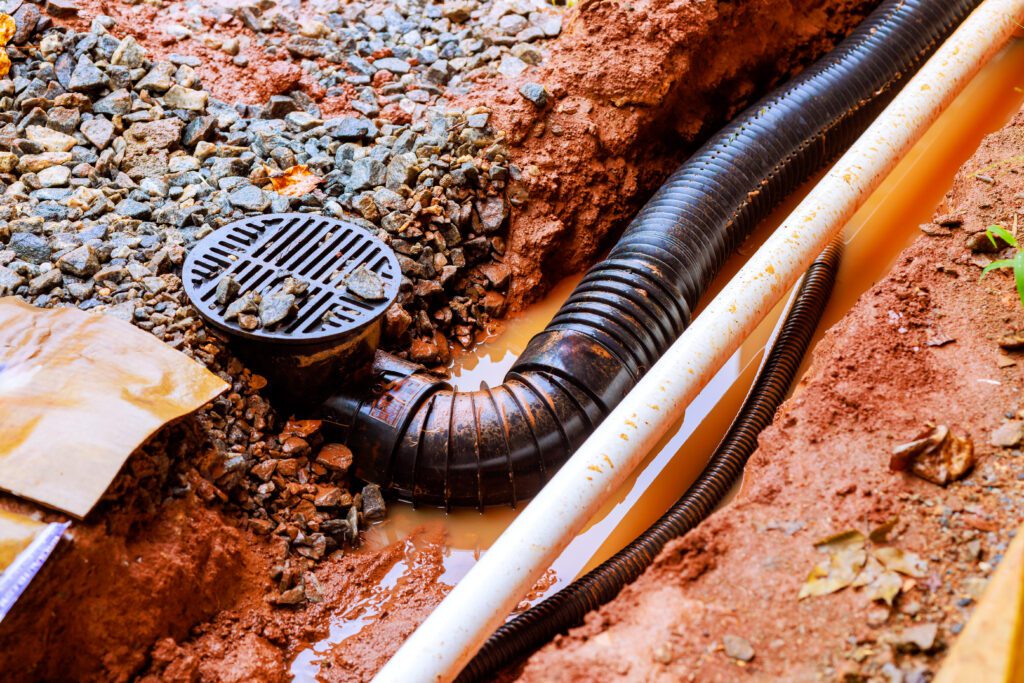
Start by checking where each underground drainage line releases water. Even a pipe in good condition can fail to drain effectively if its outlet is covered by leaves, soil, mulch, snow, or ice.
Depending on the installation, a buried downspout line may terminate at a pop-up emitter, an open outlet, or another suitable drainage destination. A sump pump line may have a separate discharge point designed to carry water away from the foundation.
Check each accessible outlet for:
- Leaves, twigs, mulch, and other debris.
- Soil or landscaping material blocking the opening.
- Visible ice restricting water flow.
- A damaged or displaced pop-up emitter.
- Snow covering the discharge point.
- Water collecting around the outlet instead of moving away.
Remove accessible debris and make sure the outlet is unobstructed. During winter, check it again after significant snowfall or a thaw, since snow and ice can cover a previously clear opening.
If you cannot locate the outlet or suspect a blockage inside the buried pipe, avoid digging blindly. A drainage professional can help locate the line and determine whether it needs cleaning, inspection, or repair.
2. Check Buried Downspouts for Blockages
Once the outlets have been checked, inspect the gutters and downspout openings that feed water into the underground system.
Leaves and debris can enter through the gutter system and accumulate at pipe bends, connections, or other sections of the line. Sediment may also restrict water flow, especially in areas where water moves slowly.
A partial blockage might go unnoticed during light rainfall but become a problem when a larger volume of roof runoff enters the system.
Before winter, clean the gutters, remove accessible debris from downspout openings, and look for signs that water is not draining properly. Warning signs include:
- Water overflowing from gutters during rainfall.
- Water backing up near the bottom of a downspout.
- Pooling around the foundation during rain.
- Little or no discharge from an outlet when water should be flowing.
- Recurring standing water along the underground drainage route.
A dry outlet does not automatically mean the pipe is blocked. There may simply be no water entering the system at the time of inspection. Instead, observe how the system behaves during rainfall and investigate any recurring problems.
If water repeatedly backs up or pools near the house, the issue may involve the underground pipe, its outlet, or the way the system was installed. The appropriate solution depends on the cause, which is why downspout drainage design and installation should account for both water collection and the final discharge point.
3. Make Sure Water Can Drain Out of the Lines
Clearing debris is only part of preparing buried drainage for winter. The pipes must also allow water to move toward the outlet without unnecessary pooling along the route.
The pipe’s slope, layout, and outlet location all influence drainage performance. If a section sags, settles, or was installed without an appropriate fall, water may remain trapped inside. During prolonged cold weather, that trapped water can increase the risk of freezing.
Inspect accessible connections for movement or damage. If drainage problems keep returning, a professional may need to assess whether the underground pipe maintains the intended slope.
Do not assume that burying a pipe deeper will automatically prevent freezing. Suitable burial depth depends on the installation, local conditions, and pipe design. Proper routing, effective drainage, and an unobstructed outlet are also important.
What if the line has a low spot?
A low spot in the pipe can allow water to collect rather than flow toward the discharge point. Depending on the location and severity, the solution may involve correcting the slope, repairing a settled section, or replacing part of the line.
Flushing the pipe may remove debris, but it will not correct structural damage or an improperly sloped installation.
If the same line repeatedly backs up or freezes, have the cause assessed instead of relying on temporary fixes. The objective is to restore reliable drainage, not simply clear the pipe for the moment.
4. Test the Sump Pump Before Winter
Even if your sump pump worked properly during summer, it is worth checking the equipment and discharge line before freezing weather arrives. A pre-winter test gives you time to identify problems before heavy rain or snowmelt increases the demand on the system.
Follow the manufacturer’s instructions for testing your specific pump. Many models can be tested by adding water to the sump basin until the float activates the pump, but the correct procedure depends on the equipment.
During the test, check that:
- The pump activates at the appropriate water level.
- Water flows through the intended discharge line.
- The pump stops when the basin reaches the appropriate level.
- There are no unusual noises or signs of excessive vibration.
- Accessible connections show no signs of leakage.
- The discharge outlet remains clear.
Do not run the pump dry unless the manufacturer specifically permits it. Never open electrical components or attempt repairs while the equipment is connected to power.
If the pump fails to activate, runs continuously, makes unusual noises, or cannot discharge water, arrange an inspection before winter conditions make repairs more difficult.
Why the discharge line matters as much as the pump
A functioning pump cannot reliably remove water if the discharge line is obstructed. If the pump runs but water does not appear at the outlet, the problem could involve a blocked or frozen line, a damaged connection, or another system fault.
Avoid repeatedly running a pump that appears to be struggling or moving no water. Continuing to operate a system with an obstruction can create additional problems. Have the cause investigated before relying on the pump during a winter storm or thaw.
5. Keep Sump Pump Discharge Away From the Foundation
Getting water out of the sump basin is only half the job. It must also be discharged somewhere that allows it to move safely away from the house.
If the outlet releases water beside the foundation, the surrounding soil may become saturated, allowing moisture to find its way back toward the building. In freezing weather, discharge water can also create slippery surfaces or accumulate as ice.
Before winter, check the discharge location and confirm that water moves away from the building toward an appropriate destination. Depending on the property’s layout, this may involve a buried line leading to a suitable outlet or an approved drainage connection.
Avoid directing water onto public walkways, driveways where it could freeze, neighboring properties, or areas where it will flow back toward the house. The appropriate arrangement depends on the site’s slope, local requirements, and the design of the drainage system.
If the discharge area repeatedly becomes icy or water collects near the foundation, the route or outlet may need improvement. Addressing the discharge location can be just as important as repairing the pump or pipe itself.
6. Protect Exposed Sections and Keep Outlets Clear of Snow
Although most of an underground drainage system is buried, some components remain exposed to cold air. These may include short pipe sections near the foundation, above-ground discharge extensions, outlet fittings, and other connections.
Inspect exposed components for cracks, loose connections, sagging, or areas where water could remain trapped. Where appropriate, insulation or other cold-weather protection may help reduce freezing risk. However, insulation alone cannot correct poor drainage or guarantee that a pipe will remain ice-free during prolonged cold weather.
Keep snow from accumulating over discharge outlets, and avoid piling shoveled snow directly against them. If the same outlet repeatedly becomes blocked by snow or ice, its location or design may need to be reconsidered.
Never use an open flame or boiling water to thaw a frozen pipe. Sudden heat can damage components, and an open flame creates a fire risk. If a line is frozen and cannot be cleared safely, seek professional assistance.
7. Look for Signs of a Failing Underground Drainage Line
Fall maintenance is also an opportunity to identify problems that may have developed during the year. Underground pipes can become obstructed by sediment, affected by root intrusion, damaged by ground movement, or disconnected at their joints.
Although the pipe itself may be hidden, problems often leave visible clues.
Look for:
- Persistent puddles near the foundation or discharge route.
- Soggy soil in the same area after rainfall.
- Erosion or channels forming near an outlet.
- Sunken ground above the underground pipe.
- Water backing up into gutters or downspouts.
- A sump pump that runs more frequently than usual.
- Basement moisture that returns after rain or snowmelt.
These signs do not necessarily prove that a buried pipe has failed. Poor grading, clogged gutters, high groundwater, and other drainage problems can produce similar symptoms.
However, recurring issues deserve attention before winter. A professional inspection may involve checking the outlet, evaluating water flow, and using suitable diagnostic equipment to investigate sections that cannot be accessed directly.
If the problem extends beyond the buried pipe, understanding what causes standing water and soggy areas in a yard can help identify other possible contributors, including grading and surface runoff.
8. Prepare for Power Outages and Heavy Snowmelt
A sump pump depends on electricity unless the system has an alternative power source. Winter storms can interrupt power, and a pump that stops operating while water continues entering the basin may allow the basin to fill.
Before winter, check that the pump is connected to a suitable power supply and that any backup system is maintained according to the manufacturer’s instructions.
If you have a battery backup, check its condition and follow the recommended testing procedure. A backup pump or alternative power arrangement may also be appropriate, depending on the home’s flooding risk.
Remember that backup power does not eliminate the need to maintain the discharge line. If the outlet is blocked or the pipe is frozen, a backup pump may face the same drainage problem.
Inspect the property after heavy snowfall and during winter thaws. Make sure snow is not covering discharge points and that melting water has a safe route away from the house.
If your basement has flooded before or your sump pump operates frequently, consider having the complete system assessed before winter.
9. Avoid Common Winter Drainage Mistakes
A few seemingly minor oversights can undermine an otherwise effective drainage system. Avoid these common mistakes when preparing your buried downspouts and sump pump lines.
Ignoring the gutters
Leaves and debris in gutters can restrict water flow before it reaches the downspout. Clean the gutters and check the downspout openings after most fall leaves have dropped.
Assuming underground pipes cannot freeze
Buried pipes are not automatically protected from every freezing condition. Shallow sections, trapped water, exposed fittings, and blocked outlets may remain vulnerable. The system’s slope, depth, connections, and discharge point all deserve attention.
Disconnecting the sump pump line without a plan
Do not disconnect or redirect a sump pump discharge line simply because freezing weather is expected. The system still needs to move water away from the foundation. If the existing arrangement freezes repeatedly, have a suitable alternative designed rather than leaving water to discharge beside the house.
Pouring chemicals into the line
Avoid using salt, antifreeze, or other chemicals as a routine way to prevent freezing in buried downspout or sump pump lines. These substances may damage components, affect surrounding soil, or create environmental concerns. Use maintenance and repair methods appropriate to the system.
Waiting until water backs up
A drainage line that repeatedly freezes or becomes blocked should be investigated before it causes basement moisture, foundation-area pooling, or hazardous ice. Addressing the underlying problem in fall generally gives you more options than waiting for a winter failure.
10. Your Pre-Winter Buried Drainage Checklist
Before freezing weather arrives, work through the following checks:
- Clean the gutters and downspout openings. Remove leaves and accessible debris that could restrict water flow.
- Locate and inspect the discharge outlets. Clear visible obstructions and check for damage.
- Check drainage after rainfall. Look for pooling, slow discharge, or water backing up.
- Inspect accessible pipe connections. Look for cracks, separation, sagging, or other visible damage.
- Test the sump pump. Follow the manufacturer’s instructions and confirm that the pump discharges water.
- Review the discharge route. Make sure water moves away from the foundation toward an appropriate destination.
- Keep outlets clear of snow. Recheck them after storms and during winter thaws.
- Check backup power systems. Follow the manufacturer’s maintenance and testing instructions.
- Investigate recurring problems. Arrange a professional assessment if the line repeatedly freezes, backs up, or fails to discharge.
- Monitor the system throughout winter. Watch for new pooling, icing, basement moisture, or unusual pump activity.
These checks cannot prevent every winter drainage problem, but they can help identify developing issues before they become more disruptive.
When Should You Call a Drainage Professional?
Clearing accessible debris and checking visible outlets are reasonable homeowner maintenance tasks. Problems involving buried pipes, recurring blockages, or failing equipment may require professional assessment.
Consider getting help if:
- Water repeatedly backs up into a downspout.
- A buried line appears blocked or damaged.
- A sump pump runs but fails to discharge water.
- The discharge line freezes repeatedly.
- The ground above an underground pipe begins to sink.
- Standing water returns near the foundation after repairs.
- Basement moisture increases during rainfall or snowmelt.
A drainage professional can investigate whether the problem involves a blockage, damaged piping, poor slope, an unsuitable discharge location, or a broader yard drainage issue.
Depending on the findings, the solution may involve cleaning the line, correcting a connection, repairing a damaged section, or improving the drainage layout. Replacing the entire system is not always necessary, which makes identifying the actual cause an important first step.
Prepare Your Buried Downspouts and Sump Pump Lines With Ware Landscaping
For homeowners in Chicago, Naperville, and surrounding northeastern Illinois communities, Ware Landscaping provides drainage services that include underground downspouts, underground sump pump lines, and other yard drainage solutions.
Preparing these systems for winter starts with understanding how water moves from the roof or sump basin to its final discharge point. A blockage, damaged connection, or poorly planned outlet can affect the performance of the entire system.
If you are dealing with recurring pooling, blocked outlets, soggy areas near underground lines, or a sump pump that is not discharging properly, an assessment can help determine what needs attention before freezing weather arrives.
Depending on the property, the appropriate solution may involve clearing a blockage, repairing a line, improving the discharge route, or addressing a wider drainage problem. The right approach is one that responds to the actual cause and gives water a reliable route away from your home.
Don’t wait for a frozen line or winter storm to reveal a drainage problem.Ware Landscaping’s drainage services and contact the team to discuss your buried downspout or sump pump concerns before winter conditions make repairs more difficult.