

Winter in the Chicago suburbs can deliver a few inches of fluffy snow one day and a foot of heavy, wet snow the next. Clearing it is about more than convenience: icy walkways cause falls, heavy shoveling strains backs and hearts, and the wrong tools or products can damage driveways, lawns and plantings. The good news is that the right preparation and technique make snow removal faster and much safer.
This updated 2026 guide covers 12 practical ways to clear snow quickly and safely, from getting ready before the first storm to choosing ice melt, protecting your health and knowing when it makes sense to hand the job to a professional crew.
Quick Summary: The Fastest Safe Way to Clear Snow
- Prepare before the storm: tools ready, walkways pre-treated, cars parked out of the way.
- Clear early and in layers during long storms instead of waiting for it all to pile up.
- Push, don’t lift, and use a snow blower for larger areas.
- Treat ice with the right product for the temperature and surface, and add traction where needed.
- Protect your body: warm up, take breaks, and stop at the first sign of chest pain or dizziness.
- Know your limits and call a professional for big storms, long driveways or health concerns.
1. Get Ready Before the First Snowfall
The fastest snow removal starts in fall. Before winter:
- Check shovels, snow pushers and ice scrapers for cracks and worn edges.
- Service the snow blower: fresh fuel or stabilizer, new spark plug if needed, shear pins on hand, and skid shoes adjusted for your surface.
- Stock ice melt and sand or grit before stores run low.
- Mark driveway edges, curbs, landscape beds and pop-up drain emitters with stakes so you do not damage them.
- Decide where snow piles will go, away from walkways, drains and areas where meltwater will run back across pavement.
2. Pre-Treat Walkways and Steps
Applying a de-icer or salt brine before snow falls stops ice from bonding to the pavement, which makes shoveling and blowing much faster and reduces the amount of ice melt you need afterward. This “anti-icing” approach is what professional snow crews use on commercial properties. See our guide on how to make brine for snow removal.
3. Start Early and Clear in Layers
Waiting until a storm ends means moving more snow at once, often after it has been packed down by foot and car traffic. During long storms, clear every few inches. Lighter loads are faster to move and easier on your body, and you avoid snow turning into a compacted ice layer.
4. Use the Right Shovel for the Job
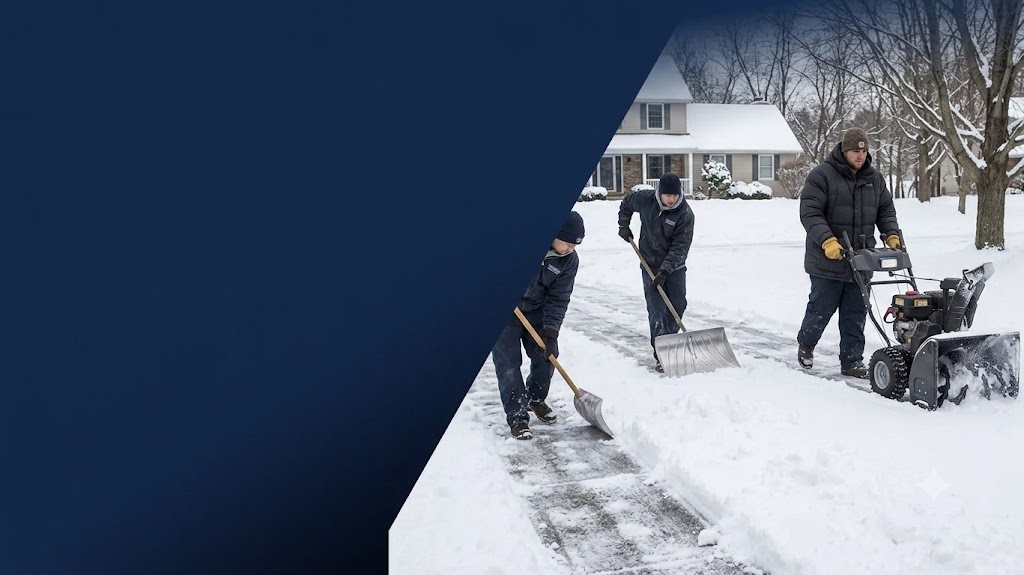
- Snow pushers (wide, curved blades) are the fastest manual tool for moving snow off driveways and walks in light to moderate snow.
- Ergonomic shovels with bent shafts reduce bending and back strain when you do need to lift.
- Smaller blades limit how much heavy, wet snow you lift at once, which the American Heart Association recommends.
- Plastic or poly blades are gentler on pavers, stamped concrete and decks than steel edges.
5. Push Snow Instead of Lifting It
Pushing snow to the side is faster and far easier on your back and heart than lifting and throwing. When you must lift, bend at the knees, keep the load close to your body, lift with your legs and turn your whole body instead of twisting. Never throw snow over your shoulder.
6. Use a Snow Blower for Larger Areas
For long driveways and frequent storms, a snow blower saves time and effort.
- Single-stage blowers suit paved driveways with light to moderate snow.
- Two-stage and three-stage blowers handle deep, heavy snow and the plow ridge at the end of the driveway, and are the right choice for gravel because their augers do not touch the ground.
- Battery-powered models are quieter and easier to maintain but may have limited run time in heavy snow.
Safety matters: never clear a clogged chute or auger with your hands, even with the engine off. Shut it down, wait for moving parts to stop, and use the clearing tool. Keep children and pets away from the discharge, wear hearing protection, and only refuel when the engine is off and cool. If you have a gravel driveway, see our guide to removing snow from gravel without ruining it.
7. Tackle the End-of-Driveway Plow Ridge Smartly
The heavy ridge of snow left by city plows is often the hardest part of the job. Clear a pocket on the side of the driveway that faces oncoming traffic before the plow passes, so the plow deposits less snow across your entrance. When you do clear the ridge, take it in smaller bites and use a two-stage blower if you have one.
8. Choose the Right Ice Melt for the Temperature
| Product | Works best | Notes |
|---|---|---|
| Rock salt (sodium chloride) | Down to the mid-teens and above | Inexpensive; slows down in deep cold; can harm plants, concrete and metal |
| Calcium chloride | Into well-below-zero temperatures | Fast-acting; use sparingly on concrete and near plants |
| Magnesium chloride | Below zero | Often marketed as gentler on concrete and plants |
| Calcium magnesium acetate (CMA) | Above about 20°F | Less corrosive; more expensive |
| Sand or grit | Any temperature | Adds traction but does not melt; sweep up in spring |
Use the least amount that works. More product does not melt ice faster, and excess salt damages lawns, shrubs and pavement. Avoid de-icers on new concrete in its first winter, and follow product labels for pavers and natural stone. Our guide on removing snow from a driveway without a shovel compares more options.
9. Break Up Ice Safely
For thick ice, apply ice melt first and give it time to work, then break it up with an ice chopper or a sturdy scraper. Avoid hacking at pavers, stamped concrete or decks with metal tools. Warm (not boiling) water can loosen small patches, but it must be followed by ice melt or traction material, or it will refreeze. Never use open flame or torches to melt ice.
10. Keep Pets and Plants in Mind
- Choose de-icers labeled pet-friendly for walkways your dog uses, and wipe paws after walks.
- Keep salty snow from being piled on top of shrubs, perennials and lawn edges.
- Shovel walkways before applying de-icer so less product is needed.
- Rinse salt-affected beds and lawn edges with water in early spring.
11. Clear Roofs and Gutters From the Ground
Heavy snow and ice dams can stress roofs and cause leaks. Use a roof rake with an extendable handle to pull snow from the lower few feet of the roof while standing on the ground. Do not climb onto icy roofs. Keep downspout outlets clear so meltwater can drain away instead of refreezing on walks and driveways. If ice repeatedly forms in the same spot, a drainage problem is usually to blame, and fixing it can eliminate the hazard. Learn more in our article on snow removal from roofs.
12. Protect Your Health While Shoveling
Shoveling heavy snow is strenuous exercise in cold air, which increases strain on the heart. The American Heart Association recommends:
- Taking frequent breaks and paying attention to how your body feels.
- Using a smaller shovel or a snow thrower, lifting smaller loads and pushing snow when possible.
- Avoiding large meals and alcohol before or right after shoveling.
- Talking with a doctor before the season if you have a heart condition, high blood pressure, are not regularly active, or are middle-aged or older.
- Dressing in layers and wearing a hat.
Stop immediately and call 911 if you feel chest pressure or pain, discomfort in the arms, back, neck or jaw, shortness of breath, a cold sweat, nausea or lightheadedness.
Other safety habits: warm up for a few minutes before you start, wear boots with good traction, use ice cleats on slick surfaces, stay hydrated, and wear reflective clothing if you clear snow near the street or after dark.
Build a Simple Storm-Day Plan
A few decisions made in advance turn snow days from chaos into a routine:
- Watch the forecast for timing, total accumulation and whether the snow will be light and dry or heavy and wet. Wet snow is much heavier and harder on your body and equipment.
- Pre-treat steps, walkways and the driveway apron the evening before if snow or freezing rain is expected.
- Move vehicles into the garage or to one side so you can clear the driveway in a single pass.
- Clear priority paths first: front steps, the main walkway, the path to the garbage cans and a lane for cars. Then widen and finish.
- Split the work. Share shoveling among household members in short shifts rather than one person clearing everything.
- Do a final check at dusk. Melting during the day can refreeze into black ice overnight. Re-apply traction to steps and slopes before dark.
Sidewalks, Hydrants and Neighbors
Many municipalities expect property owners to clear public sidewalks in front of their homes within a set time after snowfall ends, and to avoid pushing snow into the street. Check your town’s ordinance. It is also good practice to:
- Clear a path around fire hydrants near your home so firefighters can find them quickly.
- Keep storm drain inlets at the curb clear so meltwater does not flood the street and refreeze.
- Check on elderly or disabled neighbors who may need help clearing a path.
- Keep mailbox access clear for mail carriers.
Snow Removal Mistakes That Slow You Down
- Waiting until the storm ends to start clearing.
- Piling snow where it melts back across the driveway and refreezes.
- Overusing salt, which damages surfaces and lawns without working faster.
- Using steel shovels on pavers and decorative concrete.
- Burying drain inlets, pop-up emitters and fire hydrants under snow piles.
- Pushing yourself too hard on heavy, wet snow days.
When to Call a Professional Snow Removal Service
A professional crew makes sense if you have a long or steep driveway, travel during the winter, have health or mobility concerns, manage a commercial property, or simply want the driveway cleared before you leave for work. Professional services typically plow at a set snowfall trigger, pre-treat and salt walkways, and return during long storms.
Ware Landscaping provides residential and commercial snow removal across Naperville and the western suburbs. For pricing details, see our snow removal service cost guide.
Frequently Asked Questions
What is the fastest way to clear snow from a driveway?
A two-stage snow blower is the fastest option for most driveways, especially in heavy snow. For lighter snow, a wide snow pusher is quick and effective. Pre-treating before the storm and clearing in layers speeds up either method.
Should I shovel during the storm or after?
During, for storms with more than a few inches. Clearing in layers means lighter, safer loads and prevents snow from compacting into ice.
How often should I clear snow during a long storm?
A good rule of thumb is to clear every 2 to 4 inches, or more often if the snow is wet and heavy. Frequent passes keep loads light, prevent compaction and make the final cleanup much faster.
Is it better to salt before or after shoveling?
Pre-treating before snow falls prevents ice from bonding. After shoveling, apply a light amount only where ice remains. Salting on top of deep snow wastes product.
How can I shovel snow without hurting my back?
Push instead of lifting, use an ergonomic shovel, lift small loads with your legs, avoid twisting and take regular breaks.
What ice melt is safe for pets?
Products labeled pet-friendly, often based on magnesium chloride or CMA, are gentler, but no de-icer is entirely risk-free. Wipe pets’ paws after walks and use sand for traction where possible.
Is it safe to pour hot water on ice?
Warm water can loosen small patches but will refreeze unless followed by ice melt or traction material. Boiling water can crack cold concrete and glass. It is not a good routine method.
Make This Winter Easier
Clearing snow quickly and safely comes down to preparation, technique and the right products. Start early, push instead of lift, use the right tools and ice melt, and listen to your body. When storms get big or your schedule gets busy, a professional crew can keep your property clear and safe all season.
Ready to hand off the shovel? Contact Ware Landscaping to reserve your snow removal service before the season fills up.