

Lawnmowers That Can Also Remove Snow: A Full 2026 Guide
Yes, lawnmowers that can also remove snow are real, practical options for some homeowners and landscaping businesses. However, not every lawnmower can handle winter work, and buying an attachment does not automatically make an existing machine compatible with snow removal.
The right choice depends on your lawn tractor or mower model, the size and layout of your property, the depth and type of snow you receive, your budget, and how often you need to clear driveways or walkways.
Some systems use riding lawn tractors fitted with snow blowers or plow blades. Commercial stand-on machines, such as the Toro GrandStand MULTI FORCE, support purpose-built seasonal attachments. Modular robotic systems, including Yarbo, combine lawn mowing and snow blowing through interchangeable modules.
These options can reduce the need to own separate machines, but their capabilities and costs differ considerably. A snow blade may be sufficient for light snowfall on a short driveway, while a snow blower is often better suited to moving deeper snow without creating large piles at the edges. Automated systems offer convenience but require a substantially larger initial investment.
This guide compares the main machine types, currently listed equipment, attachment compatibility, winter safety, and realistic ownership costs to help you decide whether a multipurpose mower makes sense for your property in 2026.
The Rise of Year-Round Multi-Purpose Mowers
The idea of using one machine throughout the year is not new. Homeowners and landscaping professionals have long looked for equipment that can mow lawns during the growing season and clear snow during winter without requiring separate engines, storage spaces, and maintenance routines for every task.
The modern approach relies on compatible attachments and modular equipment. A lawn tractor can be fitted with a snow blower, blade, or other approved accessory. Commercial machines may support power brooms and plows. Newer robotic platforms use interchangeable modules for mowing and snow removal.
The important development is not that every mower has suddenly become a winter machine. It is that some manufacturers have designed equipment around specific seasonal attachments, with the required mounting systems, power delivery, and operating controls.
For example, Cub Cadet’s 42-inch three-stage snow blower attachment is listed for compatible XT1 and XT2 Enduro Series lawn tractors from model year 2015 onward. Toro’s GrandStand MULTI FORCE attachment range includes options for seasonal work, while Yarbo’s modular Y40 systems offer configurations combining lawn mowing and snow blowing.
These systems can be useful when the base machine is compatible with the attachment and the property suits its capabilities. They are not automatically cheaper or more capable than dedicated snow-removal equipment.
Before buying, confirm the exact model and serial number, the required mounting hardware, whether the mower deck must be removed, and whether the manufacturer approves the machine for the intended winter attachment.
Three Types of Multi-Function Machines
Most mower-based snow-removal options fit into three broad categories. Each offers a different balance of price, performance, convenience, and maintenance.
1. Attachment-Based Riding Mowers
Riding lawn tractors are a familiar starting point for homeowners who already own a suitable machine. Depending on the model, the tractor may support a front-mounted snow blower, a snow blade, tire chains, wheel weights, or other winter accessories.
A snow blower uses an auger and impeller to collect and discharge snow. A blade pushes snow to the side or toward a designated pile. A compatible power broom can sweep away light snow or loose material from suitable surfaces.
The main advantage is that you may be able to use equipment you already own. However, compatibility is specific to the tractor, attachment, mounting system, and model year.
Two examples worth checking are:
- Cub Cadet XT1/XT2 Enduro Series: Cub Cadet currently lists its 42-inch three-stage snow blower attachment, model 19B40024OEM, for compatible XT1 and XT2 lawn tractors from 2015 onward. The US product listing displays a price of $2,649.99 and describes a design intended to remove snow up to 18 inches deep. Its claimed improvement of up to 25% over a traditional two-stage snow thrower is a manufacturer claim, not a guarantee for every snow condition.
- John Deere 100 Series: John Deere offers snow-removal equipment for selected lawn tractors, but fit depends on the exact tractor model and attachment.
Riding tractors are generally most useful on relatively open properties with a driveway or paved area that can be cleared without excessive manoeuvring. They may be less suitable for steep slopes, tight paths, uneven ground, or unusually heavy snow unless the specific machine is approved and equipped for those conditions.
Another consideration is traction. A lawn tractor designed primarily for grass does not necessarily have the tires, weight distribution, or braking characteristics required for icy surfaces. Approved tire chains and wheel weights may be necessary, depending on the machine and attachment.
2. All-Season Stand-On and Zero-Turn Mowers
Commercial stand-on and zero-turn equipment can offer higher productivity for landscaping businesses managing lawns, walkways, and larger properties. However, not all zero-turn mowers support snow attachments, and a standard zero-turn machine should not be treated as a snow-removal platform without manufacturer-approved equipment.
The Toro GrandStand MULTI FORCE is a relevant example because Toro specifically markets the platform for seasonal versatility. Its official attachment range includes a BOSS plow and power broom options. The 55-inch MULTI FORCE Power Broom is designed to clear snow and debris down to the pavement. Toro specifies that additional components are required for installation, including the appropriate hydraulic kit and attachment plate.
For a landscaping company, this kind of system can make sense when the same machine can generate useful work during multiple seasons. In summer, it can support lawn-care operations; in winter, approved attachments can help with snow clearing.
The potential benefits include:
- Year-round equipment use: A compatible base machine can support different seasonal tasks.
- Commercial manoeuvrability: Stand-on designs can be practical for navigating certain commercial properties and confined areas.
- Multiple attachment options: Depending on the platform, a business may be able to use a plow, broom, or other compatible accessory.
- Potential operational efficiency: One machine may reduce some storage and equipment-management requirements.
There are also limitations. Commercial platforms and their attachments can be expensive. Hydraulic components, mounting systems, and wear parts add maintenance requirements. A plow pushes snow rather than lifting and throwing it, so storage space for snow becomes an important consideration. A broom is useful for suitable snow conditions but is not a universal substitute for a snow blower during heavy accumulation.
A commercial machine is therefore best assessed against the work it will actually perform, rather than its attachment count alone.
3. Robotic Modular Systems
Robotic modular systems are a newer option for homeowners who want lawn mowing and snow clearing with less direct operation. Rather than converting a conventional riding mower, these systems use a powered robotic core with interchangeable modules.
Yarbo is one current example. Its Y40 Core product range includes a lawn-mowing module, a snow-blower module, and bundles combining the two. The manufacturer lists a variety of configurations, so buyers should compare the included modules carefully rather than assuming every package offers the same features. The main appeal is convenience. Depending on the configuration and conditions, the robot can follow programmed or mapped routes and perform outdoor tasks with less hands-on operation.
However, robotic equipment should not be described as completely maintenance-free or guaranteed to work without supervision. Setup, boundary and obstacle management, charging, software, weather conditions, and site layout can all affect performance. The manufacturer’s stated snow-depth and operating limits should be checked before purchase.
Cost is another major consideration. Yarbo’s US product listings currently show the Y40 Core with Snow Blower Gen 2 and Lawn Mower Pro modules at approximately $6,499, although promotional pricing and availability can change. This is an advertised US price, not a guaranteed final price or landed cost in other countries.
Robotic systems may suit owners who value automation and have a compatible property layout. They are less compelling if the main objective is simply to clear an occasional snowfall at the lowest possible cost.
How These Machines Actually Work
The mechanism depends on the type of machine and attachment. A riding lawn tractor, commercial stand-on mower, and robotic modular system do not necessarily power or control snow-removal equipment in the same way.
Snow Blower Attachments
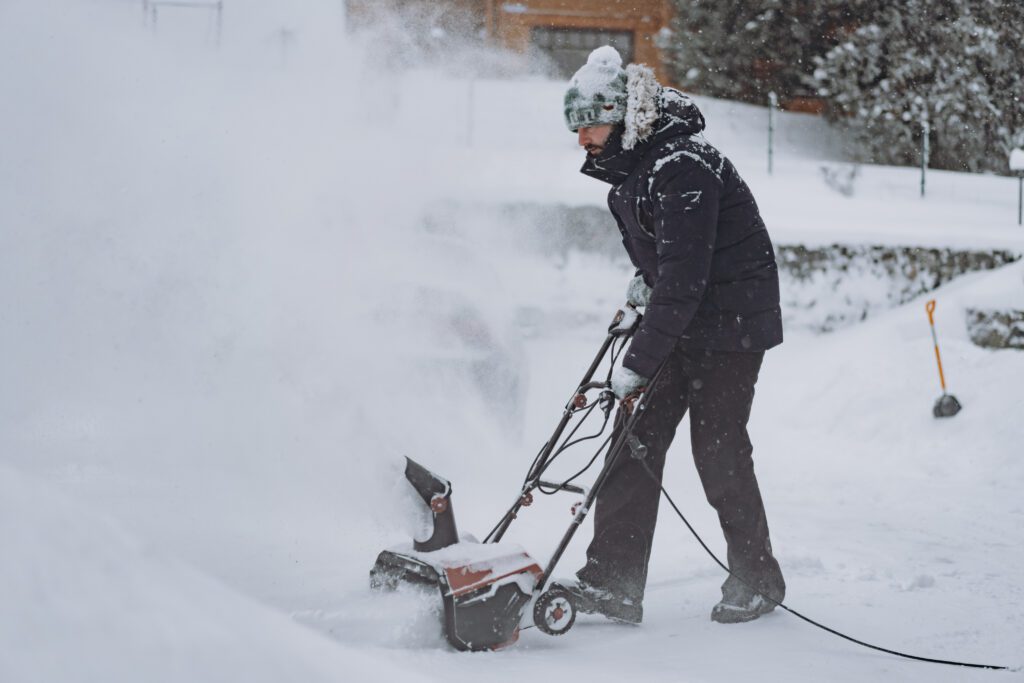
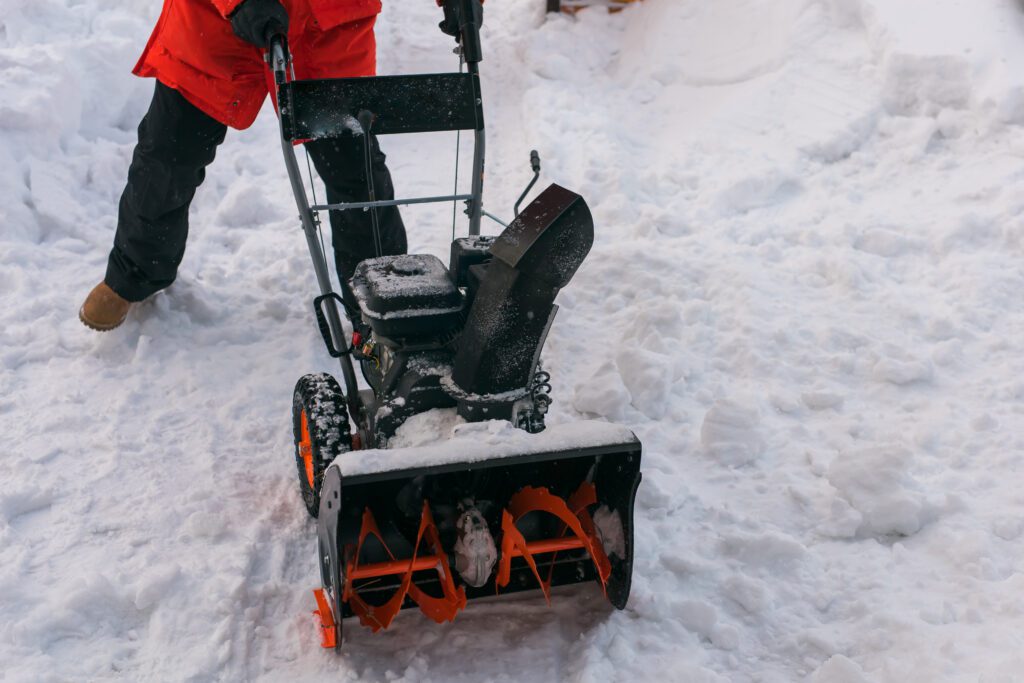
A snow blower collects snow through an intake. An auger moves the snow toward an impeller or discharge mechanism, which directs it through a chute. The operator adjusts the machine’s movement and, where available, the chute direction to place snow away from driveways and walkways.
Some tractor attachments use belts and pulleys to transfer engine power to the blower. Others use different drive arrangements specified by the manufacturer. The attachment’s capacity depends on its design, intake width, power delivery, and the depth and moisture content of the snow.
Snow Plow Blades
A blade pushes snow across the surface and moves it to the side. It can be effective for clearing suitable driveways and paved areas, particularly when snow is moved before it becomes too deep.
The main limitation is where the snow goes. Repeatedly pushing snow to the edge of a driveway can create large banks that reduce parking space or obstruct visibility. A blade may also struggle with compacted snow or deep accumulations that exceed the machine’s capability.
Power Brooms
A power broom uses rotating bristles to sweep snow and loose debris from compatible surfaces. It can be helpful for lighter snow and certain cleanup tasks, but it should not be assumed to replace a snow blower in all conditions.
Surface material matters. Brush type, pressure, and operating technique must suit the pavement or other surface being cleared. For example, Toro describes its MULTI FORCE Power Broom as a 55-inch attachment intended for sidewalks and clearing snow and debris down to the pavement.
Robotic Modular Systems
Robotic systems use a powered base, navigation hardware, sensors, software, and interchangeable task modules. The snow-removal module performs the clearing work, while the navigation system controls the robot’s movement within its configured operating area.
Although automation can reduce manual work, it does not eliminate the need to inspect the property, clear obstacles, maintain the machine, and verify that its performance is appropriate for local winter conditions.
The key point is that the base machine and attachment must be designed to work together. Never assume that an attachment from one brand or product family can be safely fitted to another.
Top Models Worth Looking At in 2026
The following products and platforms were listed by their manufacturers or official product stores during research for this guide. Availability, pricing, and compatibility can change, so confirm the current details before buying.
Toro GrandStand MULTI FORCE
Toro’s GrandStand MULTI FORCE is a commercial stand-on platform designed to support compatible seasonal attachments. Its official product information includes options for snow clearing, such as the BOSS plow and power broom.
Best suited for: Landscaping contractors and property-maintenance businesses that can use the platform for several seasonal jobs.
What to check: The exact machine model, approved attachment, required hydraulic kit, mounting components, dealer availability, and total equipment cost. This is a commercial investment rather than a budget-friendly attachment for an ordinary homeowner’s mower.
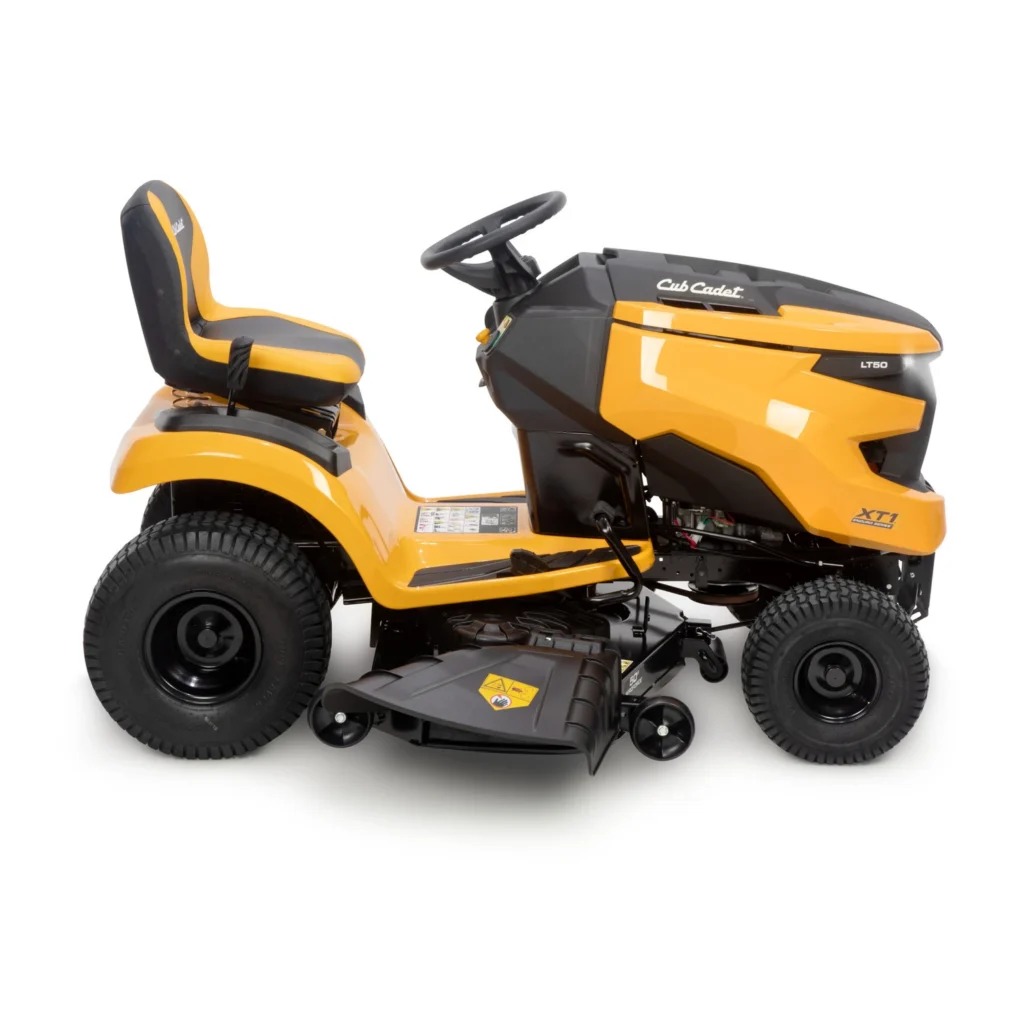
Cub Cadet XT1/XT2 with a 42-Inch Three-Stage Snow Blower
Cub Cadet’s 42-inch three-stage snow blower attachment is listed for compatible XT1 and XT2 Enduro Series lawn tractors from 2015 onward. The manufacturer’s stated features include a high-volume accelerator and a claimed snow-clearing advantage of up to 25% over a traditional two-stage snow thrower.
The US listing displays a price of $2,649.99. That figure covers the attachment, not necessarily every accessory, installation expense, or the tractor itself.
Best suited for: Owners who already have a specifically compatible tractor and want to extend its use into winter.
What to check: Tractor model and year, mounting kit, tire chains, rear weights, cab availability, and whether the attachment is currently in stock.
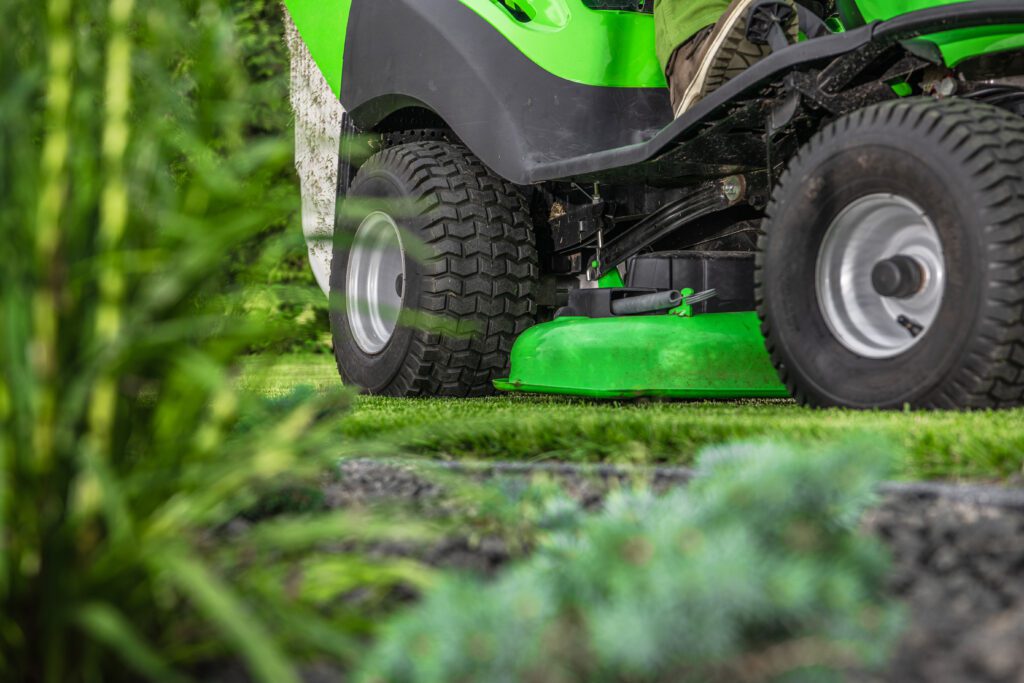
John Deere 100 Series with a Compatible Snow Attachment
John Deere lawn tractors can be considered for winter use where the manufacturer lists an appropriate attachment for the exact model. However, compatibility should be confirmed individually rather than assumed across the entire 100 Series.
Start with the manufacturer’s lawn and garden equipment range and ask an authorised dealer to identify the correct snow-removal attachments for your tractor.
Best suited for: Owners who already have a compatible John Deere tractor and want to assess the cost of adding winter equipment.
What to check: The tractor’s full model number, approved blower or blade, required mounting hardware, tire and weight recommendations, and local dealer support.
Do not purchase a 44-inch blower or another attachment solely because its advertised width seems suitable. Fitment and safe operation depend on the manufacturer’s specifications.
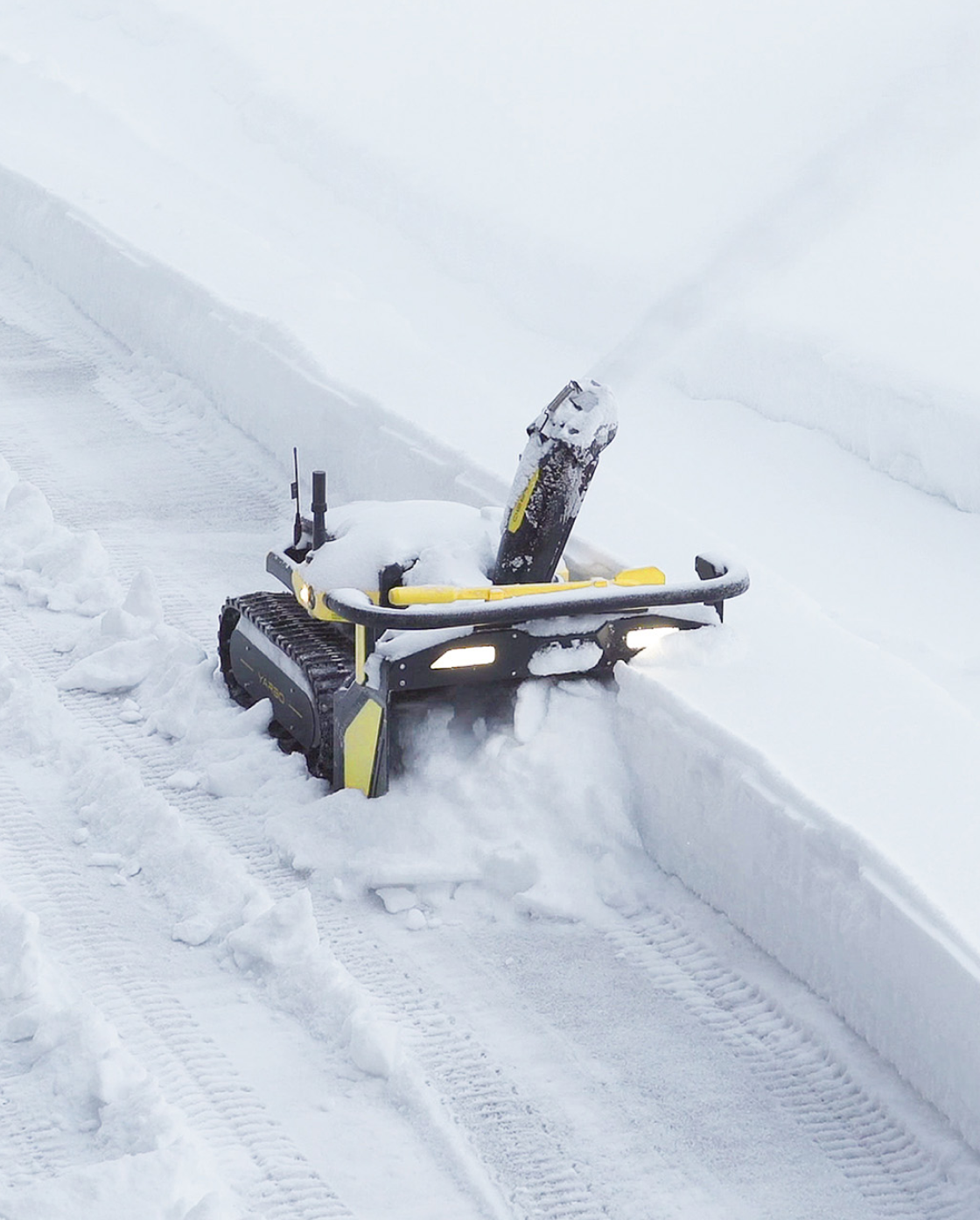
Yarbo Y40 Core with Snow Blower and Lawn Mower Modules
Yarbo’s Y40 Core range includes configurations that combine a snow-blower module with the Lawn Mower Pro module. The manufacturer’s store displays bundle pricing, including a configuration around $6,499 during the research period, although promotional pricing and availability vary.
Best suited for: Homeowners who prioritise automation and want one modular platform for mowing and snow removal.
What to check: The snow module’s rated operating conditions, the maximum snow depth specified by the manufacturer, property layout, navigation requirements, battery and charging arrangements, connectivity, maintenance, and warranty coverage.
The upfront cost is considerably higher than purchasing a basic snow shovel or adding a conventional blade to an already-compatible tractor. Automation may justify the difference for some owners, but not for everyone.
Grasshopper FrontMount Mowers
Grasshopper’s FrontMount commercial mower range is another platform worth investigating for seasonal equipment needs. However, a current listing for a mower does not by itself establish that a particular snow blower or blade fits that machine.
Before including a specific Grasshopper model in a purchasing shortlist, obtain confirmation from the manufacturer’s official website or an authorised dealer that the exact model supports the intended snow-removal attachment and that the attachment is available for the relevant season.

Best suited for: Commercial operators already considering a compatible FrontMount system for year-round property maintenance.
What to check: Current model availability, attachment compatibility, mounting and drive requirements, dealer support, and the full cost of the machine and snow equipment.
Quick Comparison: Which Type Makes the Most Sense?
| Machine type | Main advantage | Main limitation | Best use case |
| Riding tractor with blower | Moves snow away from the cleared surface | Requires exact compatibility and seasonal setup | Suitable driveways and open residential areas |
| Riding tractor with blade | Straightforward snow pushing | Needs room to store pushed snow | Light to moderate snow on suitable surfaces |
| Commercial stand-on with approved attachments | Designed for recurring professional work | Higher purchase and maintenance costs | Landscaping and property-maintenance businesses |
| Robotic modular mower and snow blower | Reduced hands-on operation | High upfront cost and site-dependent performance | Owners prioritising automation |
No category is automatically the best choice. Match the equipment to the surface, snowfall, property layout, storage space, and available budget.
What Users Love and What They Don’t
A multipurpose mower can reduce the number of machines a property owner needs to store and maintain. However, whether it saves money or effort depends on how often the machine is used and how well it performs under local winter conditions.
Pros
- Potentially lower equipment duplication: If you already own a compatible tractor, an attachment may cost less than buying another complete machine.
- Reduced storage needs: A single base machine with removable attachments may use less space than several dedicated machines, although attachments still require storage.
- Seasonal versatility: Approved attachments can extend the useful working season for homeowners and landscaping businesses.
- Convenience: Riding machines can reduce the physical effort required to clear larger areas compared with manual shovelling.
- Automation options: Robotic platforms can reduce hands-on operation when the site and weather fall within their supported operating conditions.
Cons
- Compatibility restrictions: Not every mower supports a snow blower or blade, and incompatible equipment can create safety and performance problems.
- Conversion and storage work: Removing a mowing deck, fitting an attachment, and storing seasonal components can take time.
- Winter traction: Lawn tires and mower weight distribution may be inadequate for icy surfaces without approved accessories.
- Snow-condition limits: Wet, compacted, drifting, or unusually deep snow can reduce productivity and exceed the equipment’s intended capacity.
- Additional operating costs: Fuel, electricity, wear parts, repairs, maintenance, and accessories add to the purchase price.
- Less flexibility in some layouts: Tight paths, steep slopes, narrow gates, and uneven surfaces may favour a different type of snow-removal equipment.
A multipurpose mower is not automatically a substitute for a dedicated snow blower. It is a practical alternative when its capabilities match the property and the cost of adding the attachment makes sense.
Performance and Maintenance Insights
Snow-removal performance depends on more than the advertised attachment width or the number of stages in a blower. Snow moisture, temperature, depth, wind, pavement condition, machine power, and operator technique all influence the result.
For example, Cub Cadet claims that its compatible 42-inch three-stage attachment can clear snow up to 25% faster than a traditional two-stage snow thrower. That is a specific manufacturer comparison and should not be interpreted as proof that all three-stage blowers are 25% faster in real-world use.
Similarly, snow-throwing distance is not a fixed measure of overall performance. Wet, heavy snow behaves differently from dry powder, and the safe discharge distance depends on the equipment, operating conditions, and surroundings.
Before winter, inspect and maintain the machine according to the manufacturer’s instructions.
- Check belts, chains, and drive components. Look for wear, damage, or incorrect tension.
- Inspect the attachment and mounting system. Ensure all specified fasteners, guards, and safety devices are present and secure.
- Review traction requirements. Fit only approved tire chains, wheel weights, or other traction aids.
- Check lights and controls. Make sure visibility, steering, braking, and attachment controls function correctly.
- Prepare fuel-powered equipment properly. Use the fuel and storage procedures specified by the manufacturer.
- Follow battery guidance for robotic and electric systems. Observe the specified charging, storage, and temperature limits.
- Store attachments correctly. Keep them clean and dry where practical, and address corrosion or damaged components before the next season.
Do not assume that a lawn tractor’s ordinary maintenance schedule fully covers a snow attachment. The attachment may have its own lubrication, inspection, storage, and service requirements.
Understanding the Real Operating Costs
The advertised purchase price is only one part of the total cost of owning a mower-based snow-removal system.
A more realistic comparison includes:
- Initial equipment cost: The base mower or robotic core, snow attachment, and any required mounting hardware.
- Installation and setup: Assembly, dealer installation where required, and time spent changing seasonal equipment.
- Accessories: Approved chains, wheel weights, a cab, lighting, or other required equipment.
- Energy or fuel: Gasoline, electricity, and the cost of charging or operating the machine.
- Maintenance and repairs: Belts, scraper blades, skid shoes, auger components, hydraulic servicing where applicable, batteries, and other wear parts.
- Storage: Space for the base machine, attachment, fuel, and accessories.
- Replacement and depreciation: The cost of eventual repairs or replacement, less any resale value.
Consider the Cub Cadet example. Its listed attachment price of $2,649.99 is not the complete cost of converting an existing property-maintenance setup. If the owner already has the exact compatible tractor, the purchase may be reasonable. If the owner must also buy a tractor and accessories, the total investment is much higher.
A robotic bundle such as the Yarbo Y40 Core with snow-blowing and lawn-mowing modules requires a substantially larger initial budget. Its value depends on whether the owner will actually use the automated mowing and snow-clearing functions enough to justify the price.
A simple way to compare options is to estimate the total cost over the number of years you expect to own the equipment, then divide by the number of seasons or clearing jobs you expect it to handle. Include maintenance, fuel or electricity, accessories, and realistic repair allowances rather than comparing purchase prices alone.
Safety Tips
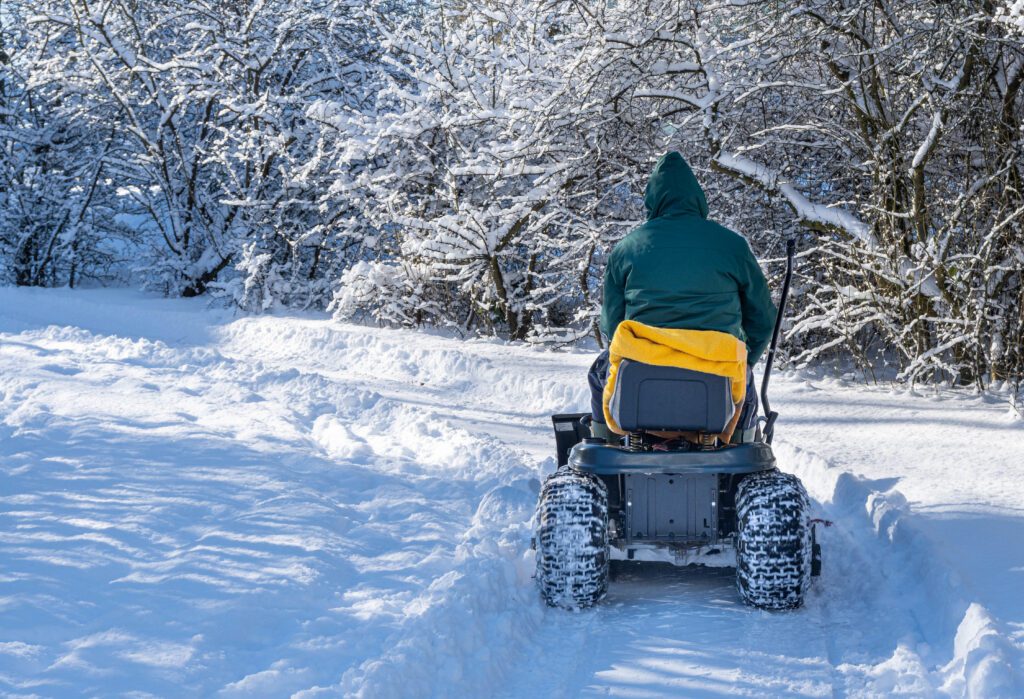
Safety matters because a riding mower or commercial platform can be heavier and more difficult to control on snow and ice than it is on dry grass. A snow blower also introduces moving augers and discharge mechanisms that can cause serious injuries.
Follow these precautions whenever using mower-based snow-removal equipment.
- Read the exact model’s manual. Use only approved attachments and follow the specified operating limits.
- Inspect the area before starting. Remove stones, branches, toys, hoses, and other objects that could be thrown or damage the equipment.
- Keep people and pets away. Snow blowers can eject debris, so never direct the discharge toward people, vehicles, windows, or roads.
- Never clear a blocked chute by hand. Stop the machine, disengage the attachment, shut down the engine or power source, and follow the manufacturer’s procedure. Use only the specified clearing tool. The US Consumer Product Safety Commission’s snow blower safety guidance warns that reaching into a snow blower can cause severe hand injuries.
- Use suitable protective equipment. Wear winter footwear with appropriate traction, eye and hearing protection where required, and clothing that cannot become entangled in moving parts.
- Be cautious on slopes. Snow and ice reduce traction and control. Follow the manufacturer’s slope limits and avoid conditions the machine is not designed to handle.
- Maintain visibility. Work in adequate lighting and take care around parked vehicles, structures, and people.
- Refuel safely. For fuel-powered machines, follow the manual’s instructions for shutting down, cooling, refuelling, and storing fuel.
- Do not leave equipment running unattended. Shut it down when leaving the operating position or performing checks, as instructed by the manufacturer.
For robotic equipment, also verify the operating area, boundary settings, obstacle detection, and weather limitations. Automation is not a substitute for keeping people clear of moving machinery or inspecting the site for hazards.
Are These Machines Worth It?
Whether a mower that can also remove snow is worth buying comes down to your property, the amount of snow you receive, the equipment you already own, and the full cost of ownership.
A compatible riding tractor attachment can be attractive if you already own the base machine and regularly clear an open driveway. A commercial stand-on system may make sense for a landscaping business that can put the same platform to productive use in several seasons. A robotic modular system may appeal to someone who values automation and is comfortable with a larger upfront investment.
A dedicated snow blower may be the better option if snow removal is your only winter equipment need, if the mower is not compatible with an attachment, or if your property’s layout makes a multipurpose machine impractical.
Before making a decision, answer these questions:
- What is the exact model number of the mower?
- Does the manufacturer confirm compatibility with the attachment?
- How much snow typically falls, and is it usually dry, wet, or compacted?
- Is the property flat, sloped, narrow, or difficult to manoeuvre around?
- Where will the cleared snow be stored?
- What are the total purchase, accessory, maintenance, fuel, and storage costs?
- Is a separate snow blower or professional snow-removal service more practical?
If the answers point toward an attachment system, confirm compatibility and availability with the manufacturer or an authorised dealer before purchasing. If not, a dedicated machine or professional service may be a safer and more economical choice.
Final Thoughts
Lawnmowers that can also remove snow are a legitimate equipment category, but the best choice depends on the machine, attachment, property, and winter conditions. Compatible riding tractors can accept certain blowers or blades, commercial platforms such as the Toro GrandStand MULTI FORCE support specific seasonal attachments, and modular systems such as Yarbo combine lawn mowing with snow blowing.
The main advantages are seasonal versatility, the potential to reduce duplicate equipment, and in the case of robotic systems less hands-on operation. The trade-offs include compatibility restrictions, storage and conversion work, winter traction, maintenance, and the cost of purchasing the complete system.
Do not choose a product based on an advertised snow-clearing width or a promise that it can handle every storm. Verify the exact model, the attachment’s specifications, current availability, safety requirements, and the full cost of ownership.
For moderate winter conditions and suitable properties, a compatible multipurpose machine may be a practical investment. For heavy snowfall, difficult terrain, or properties with demanding access requirements, dedicated snow-removal equipment may be the better fit.
Need Reliable Snow Removal? Let Ware Landscaping Handle It
If you would rather not invest in winter equipment, manage attachment changes, or worry about whether your machine can handle the next storm, professional snow removal is another option.
Ware Landscaping provides snow-removal services for properties that need dependable winter maintenance. The right service plan depends on the site, access requirements, and expected winter conditions. You can review the company’s commercial snow-removal services or check our snow-removal FAQ for more information.
Contact Ware Landscaping to discuss your property’s winter maintenance needs and plan for safer, more accessible driveways and walkways throughout the season.