
There is nothing quite like the sight of a lush, emerald-green lawn to transform a property’s curb appeal instantly. Whether you’ve just moved into a new build, are renovating a neglected yard, or are battling stubborn erosion, sod installation is the “instant gratification” of the landscaping world. Unlike seeding, which can take months of careful nurturing to establish, sod provides an immediate carpet of grass that is ready for light use in just a few weeks.
However, before you roll out the green carpet, it is essential to understand the investment involved. From the type of grass you choose to the regional labor rates of 2026, many factors influence the final bill. In this guide, Ware Landscaping breaks down everything you need to know about the cost to install sod in the United States.
What Exactly Is Sod?
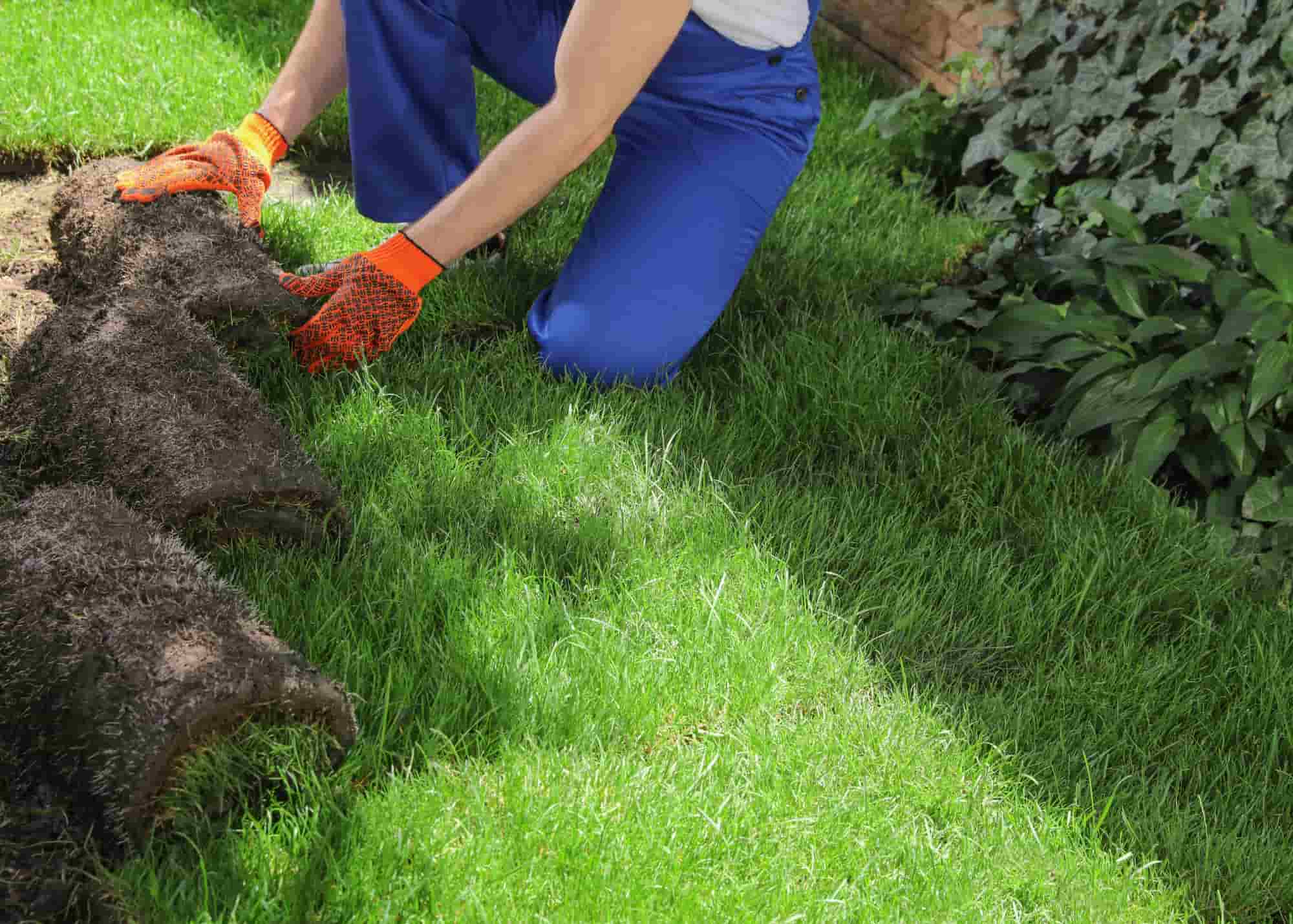
Sod is pre-grown grass turf that includes the grass blades, the root system, and a thin layer of soil held together by a biodegradable mesh or simply the roots themselves. It is harvested at specialized sod farms, rolled or stacked on pallets, and transported to your site to be installed like a giant living puzzle.
Beyond the aesthetics, sod offers significant environmental benefits. It acts as a natural air conditioner, cooling urban areas by $20$ to $30^\circ\text{F}$ compared to hard surfaces like concrete. It also excels at carbon sequestration, absorbing $\text{CO}_2$ and releasing oxygen, while its dense root system filters rainwater and prevents soil erosion.
National Average Costs (2026 Projections)
As we look at the current landscaping market, prices have stabilized into predictable ranges based on square footage.
- Sod Material Only: Expect to pay between $0.30 and $0.85 per square foot.
- Total Professional Installation: This usually ranges from $1 to $6 per square foot, with a national average falling between $1.50 and $3.50. This price typically includes the sod, delivery, labor, and basic soil preparation.
Cost by Project Size
| Project Size | Estimated Total Cost (Installed) |
| Small Yard (500–1,000 sq ft) | $1,000 – $3,000 |
| Average Yard (5,000 sq ft) | $5,000 – $17,500 |
| Large Estate (1/2 Acre) | Up to $98,000 (High-end/Complex) |
Typically, sod is sold by the pallet. One pallet covers approximately 450–500 square feet and costs between $150 and $450 for the material alone.
Factors That Influence Your Quote
Several variables can swing the price of your landscaping project significantly:
- Grass Variety: Premium grasses like Zoysia or Bentgrass command a higher price point than more common varieties like Bermuda or Fescue.
- Yard Condition: If your yard is sloped, has poor access for machinery, or is riddled with old tree roots, labor costs can increase by 20% to 50%.
- Soil Prep: Installing sod on top of dead grass or compacted dirt is a recipe for failure. Removing old turf and tilling the soil ($0.20–$0.50 per sq ft) is a necessary but added expense.
- Seasonality: Demand peaks in the spring and fall. Scheduling during these “prime” times may lead to higher labor rates or delivery fees.
Regional Variations: What to Expect in Your Area
Geography plays a massive role in pricing due to local labor laws, climate-specific grass types, and shipping distances.
- Northeast (NY, MA): Higher costs at $1.80–$3.80 per sq ft due to expensive labor and the demand for cool-season grasses.
- Southeast (GA, FL): Moderate pricing at $1.50–$3.50 per sq ft, though specialty warm-season grasses like St. Augustine can fluctuate.
- West Coast (CA, WA): Ranging from $2 to $4 per sq ft, driven by high labor costs and the need for drought-resistant varieties.
- Midwest (IL, MI): Very competitive at $1.50–$3.50 per sq ft, focusing on hardy, resilient cool-season blends.
Choosing the Right Grass Type
The “best” grass isn’t always the cheapest; it’s the one that survives in your climate.
| Grass Type | Material Cost (per sq ft) | Best For |
| Kentucky Bluegrass | $0.29–$0.43 | Cool Northern climates; dense and resilient. |
| Fescue | $0.32–$0.67 | North & Midwest; great for shaded yards. |
| Bermuda | $0.44–$0.83 | Heat-loving Southern lawns; very durable. |
| Zoysia | $0.40–$0.60 | The “Transition Zone”; low maintenance. |
| St. Augustine | $0.41–$0.86 | Coastal South; highly salt-tolerant. |
DIY vs. Professional Installation
If you’re looking to save money, the “Do-It-Yourself” route is tempting.
- DIY: You’ll save roughly 30% to 50% on total costs, spending mostly on the sod and tool rentals (rollers, tillers). However, sod is incredibly heavy. A single pallet can weigh over 2,000 lbs. One mistake in soil prep or laying the seams can lead to the sod dying, costing you more in the long run.
- Professional: While it costs an extra $1–$2 per square foot, pros bring heavy machinery, expert grading (to prevent drainage issues), and often provide a warranty on the grass’s survival.
Comparison: Sod vs. Seeding
| Aspect | Sod | Seed |
| Cost | $1.00 – $6.00 /sq ft | $0.09 – $0.19 /sq ft |
| Usability | 2–3 Weeks | 10–12 Weeks |
| Success Rate | Very High | High Risk of Weeds/Washout |
While seeding is vastly cheaper, it requires months of perfect weather and constant maintenance. Sod is the preferred choice for those who want an instant solution or have property slopes where seeds would simply wash away in the first rain.
Post-Installation Maintenance
Once the sod is down, the clock starts.
- Watering: This is the most critical step. Start watering within 30 minutes of installation. For the first two weeks, keep the sod consistently moist (2–3 times per day) but avoid creating puddles.
- Mowing: Wait until the roots have firmly attached to the soil (usually 2–3 weeks). Test this by gently tugging on a corner; if it resists, you can mow. Never cut more than 1/3 of the blade height.
- Traffic: Keep pets and children off the new lawn for at least 14 days to allow the roots to knit into the underlying soil.
Common Mistakes to Avoid
- Skipping the Soil Test: If your soil pH is off, your expensive new sod won’t take root.
- Leaving Gaps: Sod should be laid like bricks (staggered) with the edges touching tightly. Gaps lead to drying and weed growth.
- Overwatering: While sod needs moisture, “swamping” it can rot the delicate new roots before they ever have a chance to grow.
Final Thoughts
Investing in sod is an investment in your property’s value and the environment. While the upfront costs averaging $1,000 to $3,500 per 1,000 square feet are higher than seeding, the results are undeniable.
If you’re ready to transform your yard without the months of waiting, Ware Landscaping is here to help. From expert site preparation to selecting the perfect grass type for your local climate, we ensure your new lawn starts on the right foot.
Contact us today for a professional quote and let’s get your green space started!