
Running a landscaping operation means juggling tools, machines, seasonal gear, and materials that rarely fit neatly into a garage or trailer. As your business grows, the challenge is not just owning the right equipment but protecting it, organizing it, and accessing it quickly when the workday starts.
Poor storage leads to wasted time, damaged tools, and unnecessary replacement costs. Smart storage, on the other hand, supports efficiency, professionalism, and long-term growth.
Landscaping equipment storage is not a one size fits all decision. Your needs depend on crew size, job types, climate, and how often equipment moves between sites. Still, one solution consistently stands out for durability, flexibility, and cost effectiveness.
A shipping container gives you a secure, weather resistant base that can evolve with your business. At the same time, there are situations where sheds, trailers, or pole buildings make sense. Understanding each option helps you choose the right setup for your operation today and tomorrow.
Why Proper Landscaping Equipment Storage Matters
Landscaping tools are exposed to harsh conditions even when they are not in use. Moisture causes rust. Sun exposure degrades plastics and hoses. Theft is an ever present concern, especially for equipment left overnight on job sites or in open yards. Storage is not just about clearing space. It is about extending the life of your investment and protecting your ability to work.
When equipment is well stored, you start each day prepared. Crews load faster. Maintenance becomes easier. Tools are visible, accessible, and accounted for. You also present a more professional image to clients when your gear is clean and organized rather than piled in a trailer or scattered across a yard.
Shipping Containers as a Core Storage Solution
A shipping container is one of the most practical storage solutions available for landscaping equipment. Originally designed to cross oceans, these steel structures are built to withstand extreme conditions. That durability translates perfectly to job sites, yards, and rural properties where landscaping businesses often operate.
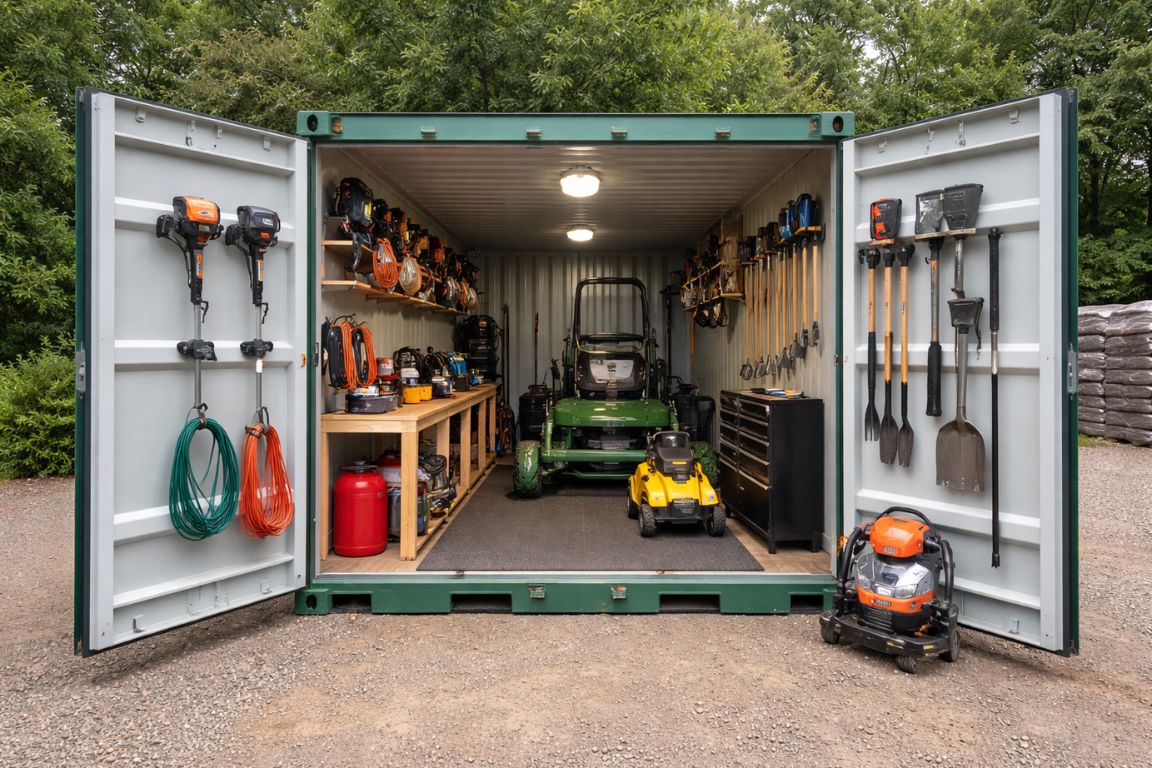
A standard container gives you a large, lockable space that can store mowers, trimmers, blowers, chainsaws, and even compact equipment like skid steers. With basic modifications, it becomes far more than a steel box. Shelving, tool racks, lighting, and ventilation can turn a container into a purpose built equipment hub.
Many landscaping operators start by searching for 20ft shipping containers for sale because that size balances storage capacity with ease of placement. A twenty foot container fits comfortably on most properties while still holding a surprising amount of equipment.
Benefits of Using a Shipping Container for Landscaping Equipment
Shipping containers work so well for landscapers because they solve multiple problems at once. They are secure, durable, and adaptable. Unlike wooden sheds or temporary structures, they are designed to last decades with minimal maintenance.
Here are some of the biggest advantages you experience when using a shipping container for equipment storage:
- Strong steel construction that resists theft and vandalism
- Weather resistance against rain, snow, wind, and sun
- Ability to add shelves, hooks, pegboards, and workbenches
- Portable design that allows relocation if your yard changes
- Long lifespan compared to traditional sheds
A container also gives you peace of mind. When equipment is locked inside steel walls, you worry less about overnight losses and more about running your business.
Organizing Landscaping Equipment Inside a Container
The true value of a shipping container comes from how you organize it. A poorly organized container becomes just as frustrating as a cluttered garage. A well organized one saves time every single day.
Start by separating equipment by function. Hand tools belong together. Power tools should have dedicated shelving. Larger machines need clear floor space with room to move them safely. Wall mounted racks keep trimmers and blowers off the floor while protecting shafts and motors.
Lighting is another simple but critical upgrade. Battery powered or hardwired LED lights transform a dark container into a functional workspace. Ventilation helps reduce moisture buildup, especially in regions with temperature swings.
Over time, many landscapers treat their container like a mobile shop. Minor repairs, blade changes, and equipment prep can all happen inside a controlled environment.
Climate Considerations for Container Storage
Your local climate plays a big role in how you configure storage. In dry regions, basic ventilation may be enough. In wetter or colder areas, condensation control becomes more important.
Adding vents, insulation, or moisture absorbers protects engines and electronics. Even simple upgrades like rubber mats on the floor help reduce moisture transfer from the ground.
In agricultural and landscaping regions like central Washington, many operators look for shipping containers in Yakima because they handle dust, sun, and seasonal weather changes far better than lightweight sheds.
Storage Trailers as an Alternative Option
Enclosed storage trailers are another popular option for landscaping equipment. They work especially well for crews that move daily between jobs and need equipment to travel with them.
A trailer allows you to keep everything loaded and ready to go. You hitch up, drive to the site, and start working. This convenience is valuable for smaller operations or mobile crews.
However, trailers come with tradeoffs. They are easier to steal than containers and often require ongoing maintenance. Tires, brakes, and axles add costs that stationary storage does not. Over time, trailers can also feel cramped as equipment inventory grows.
Sheds and Prefab Buildings
Wooden or metal sheds are common on residential properties and small commercial yards. They are often cheaper upfront and blend visually with existing buildings.
For light equipment like rakes, shovels, and small tools, a shed may be sufficient. Larger landscaping operations usually outgrow sheds quickly. Limited security, susceptibility to weather damage, and size constraints make them less scalable.
Metal prefab buildings offer more space but require a foundation and permits. Installation costs add up quickly compared to placing a container on prepared ground.
Pole Barns and Permanent Structures
For established landscaping companies with owned property, pole barns and permanent buildings can be excellent long term solutions. They provide ample space for vehicles, equipment, and materials under one roof.
These structures shine when you need height for loaders or multiple bays for trucks. The downside is commitment. Construction time, zoning, and higher upfront investment make permanent buildings less flexible.
A shipping container often acts as a stepping stone. Many landscapers start with a container, then later add a pole barn while keeping the container for overflow or specialty equipment.
Job Site Storage vs Yard Storage
Where you store equipment matters as much as how. Yard storage works well for centralized operations. Everything returns to one place at the end of the day. Maintenance and inventory tracking become easier.
Job site storage is useful for long term projects. Placing a container on site reduces daily transport and protects equipment overnight. This setup is common for large landscaping installs or commercial contracts.
Because containers are movable, you can redeploy them as projects change. That flexibility is difficult to match with other storage options.
Cost Considerations and Long Term Value
When evaluating storage, look beyond initial cost. Consider lifespan, security, and how the solution supports growth. A cheap shed that needs replacement in five years may cost more than a container that lasts decades.
Shipping containers hold value well. If your needs change, you can sell or repurpose them. They also adapt easily. Adding doors, windows, or partitions lets the same container serve new roles as your business evolves.
The ability to scale storage without rebuilding is one of the strongest financial arguments for containers.
Choosing the Right Storage Mix for Your Business
Most landscaping businesses do not rely on just one storage type. You may use a container for core equipment, a trailer for daily transport, and a shed for overflow tools. The key is intentional planning.
Think about how equipment flows through your day. Where does it start in the morning? Where does it end? How often does it move? Storage should support that rhythm rather than fight it.
A shipping container often becomes the anchor of that system. From there, other solutions plug in as needed.
Final Thoughts on Landscaping Equipment Storage
Storage is not an afterthought. It is a foundational part of a successful landscaping operation. The right setup protects your tools, saves time, and supports growth without constant reinvestment.
Shipping containers stand out because they are strong, flexible, and practical. They meet the demands of real world landscaping work better than most alternatives. When paired with thoughtful organization and complementary storage options, they help you run a cleaner, safer, and more efficient business.
As your equipment inventory grows, your storage should grow with it. Choosing solutions that adapt over time ensures you stay focused on landscaping rather than worrying about where everything fits.