
Prevent Ice Dams and Structural Damage with the Right Gear
Winter brings a picturesque blanket of white to our neighborhoods, but for homeowners, that heavy snow accumulation on the roof is less about beauty and more about structural risk. “Roof snow removal tools” are essential investments for anyone living in a snow-belt region.
Using the right equipment not only prevents costly disasters like ice dams and leaks but also keeps you safely on the ground. From simple telescopic rakes to advanced slide systems, this guide breaks down the best tools to protect your home this winter.
The Risks: Why You Can’t Just “Wait for it to Melt”
Ignoring snow buildup on your roof can lead to severe consequences. Wet snow can weigh 20 to 30 pounds per cubic foot. If that accumulation exceeds 12 inches, older roofs or low-slope structures risk sagging trusses, cracked beams, or even collapse.
However, the most common enemy is the ice dam. This occurs when heat from your attic melts snow on the roof, which then trickles down and refreezes at the colder eaves. This ridge of ice traps water, forcing it to back up under your shingles and leak into your walls and insulation.
Types of Roof Snow Removal Tools
Safety experts and professional roofers agree: stay off the ladder. The market is filled with tools designed to clear snow effectively while you remain safely on the ground.
1. Traditional Telescopic Roof Rakes
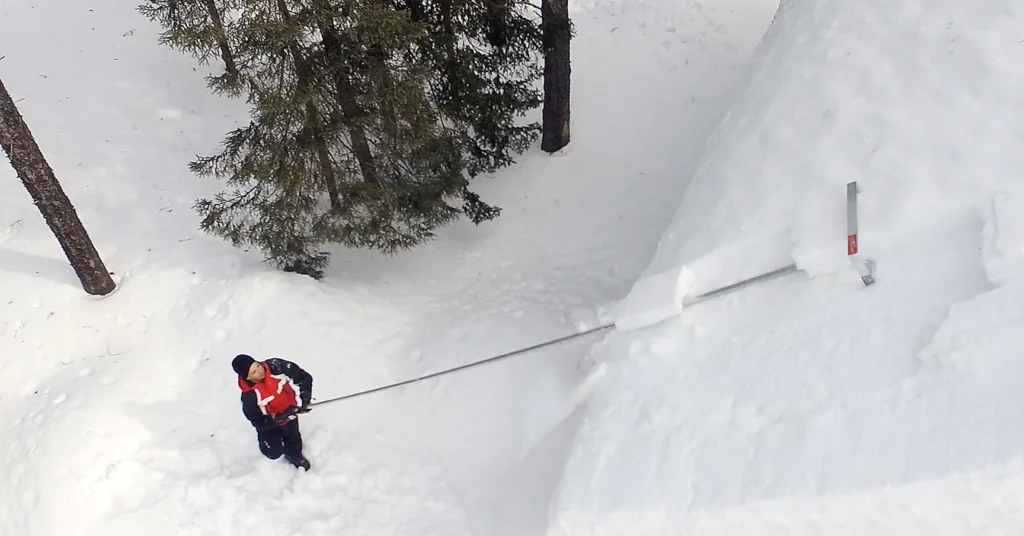
The standard roof rake is the most common tool found in sheds across the Snow Belt.
- Design: A long, extendable pole (usually 14–20 feet) tipped with a flat aluminum or plastic blade (roughly 24 inches wide).
- How it Works: You extend the pole to the roof edge and pull snow down in small sections.
- Best For: Light, fluffy powder and fresh snowfall.
- Pros/Cons: They are affordable and durable but can be heavy to lift when fully extended. Without wheels, aggressive use can scrape the granules off asphalt shingles.
2. Slide-Equipped Systems (Snow Slides)
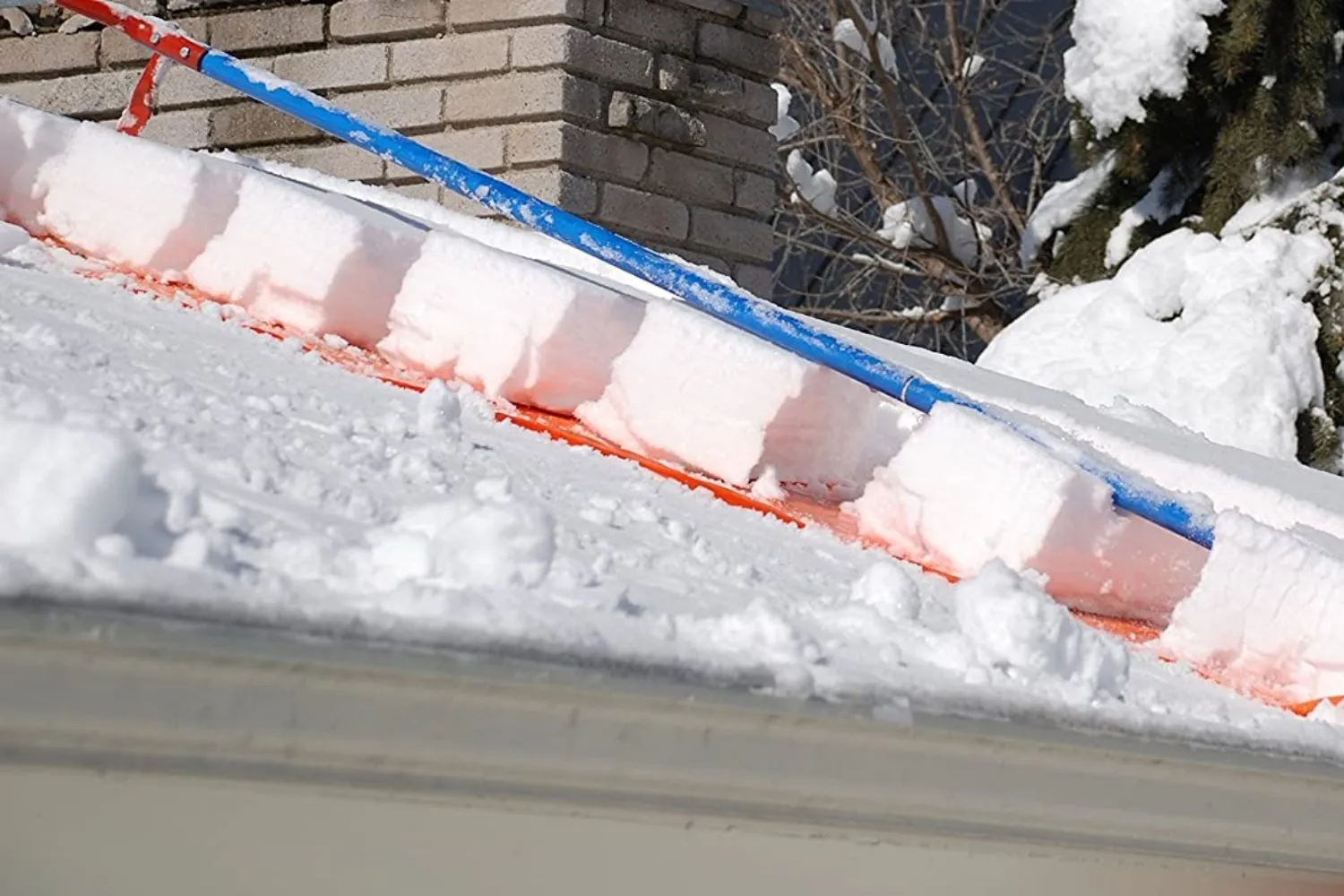
Tools like the Avalanche! AVA500 or the Snowpeeler Premium have revolutionized manual snow removal.
- Design: These feature a metal frame with a long plastic “slide” or banner attached to it.
- How it Works: Instead of pulling snow, you push the cutter head up the roof. The snow is cut loose and slides down the slick plastic sheet, cascading off the roof with minimal effort.
- Best For: Heavy, packed snow and large surface areas.
- Pros/Cons: They are significantly faster (often 2x speed) and require less physical strength than pulling heavy rakes. However, they can be pricier ($100+) and difficult to control in high winds.
3. Wheeled Rakes (Shingle Savers)
To address the risk of roof damage, manufacturers introduced rakes with small rollers or bumpers.
- Design: Similar to a standard rake but equipped with small wheels on the head.
- How it Works: The wheels keep the blade slightly elevated (about 1 inch) above the roof surface.
- Best For: Homeowners with asphalt shingles concerned about granular loss.
- Pros/Cons: Excellent for preserving roof life, but they leave a thin layer of snow behind (which is actually recommended to protect the roof surface).
Choosing the Right Tool for Your Home
| Tool Model | Type | Best Application | Approx. Price |
| Avalanche! AVA500 | Slide System | Frequent light-to-moderate snow; asphalt shingles | $100 – $120 |
| Snowpeeler Premium | Heavy-Duty Slide | Deep snowpack; large or commercial roofs | $145+ |
| Garant Telescopic | Basic Rake | Entry-level use; moderate slopes; budget-friendly | $50 – $60 |
| Snow Joe RJ208M | Wheeled Rake | Sloped roofs with obstacles; shingle protection | $40 – $50 |
Safety and Best Practices
Even with the right tools, removing snow from a roof carries risks. Follow these guidelines to ensure safety for both you and your home.
- Work from the Ground: Never use these tools while standing on a ladder. The force of falling snow can easily knock you off balance.
- Leave a Buffer: Do not try to scrape the roof bare. Aim to leave 1-2 inches of snow to avoid damaging the shingles or flashing.
- Watch for Hazards: Always be aware of overhead power lines. Metal poles conduct electricity, and accidental contact can be fatal. Use fiberglass poles if working near wires.
- Start Early: It is much easier to remove 6 inches of fresh snow than 12 inches of packed, wet snow. Removing snow before it goes through freeze-thaw cycles prevents ice dams from forming in the first place.
Don’t Want to Deal with the Cold?
While owning a high-quality roof rake is a smart move for homeowners, tackling a steep or high roof in freezing temperatures isn’t for everyone. Improper technique can void roof warranties or lead to injury.
At Ware Landscaping, we provide professional snow management services that go beyond just the driveway. If you are concerned about ice dams or heavy snow loads threatening your property, let our experienced team handle the dangerous work.
Protect your home this winter.
Contact Ware Landscaping today for a consultation on comprehensive residential and commercial snow removal services.