
When homeowners invest in premium hardscapes—such as custom paver patios, intricate walkways, or natural stone driveways—they often view these features as isolated components of their property. However, property maintenance experts understand that a home functions as a single, integrated ecosystem. One of the most overlooked factors in the premature degradation of expensive stonework is actually located forty feet above it: the roof.
The correlation between a dirty roof and a failing hardscape is rooted in physics, biology, and chemistry. This comprehensive guide explores the scientific and structural reasons why maintaining a clean roof is not just about curb appeal, but is a critical necessity for protecting the structural integrity and aesthetic value of your pavers.
The “Waterfall Effect”: How Gutter Overflow Destroys Pavers
The primary link between your roof and your hardscape is water management. When a roof is neglected, it accumulates debris, moss, lichen, and algae. These organic materials act as sponges, trapping water and diverting it from the intended drainage path.
1. Joint Sand Erosion and the Loss of Interlock
Paver systems rely on “interlock”—the friction between individual stones—to remain stable. This interlock is facilitated by jointing sand, often reinforced with polymers that harden when activated by water. However, these polymers are designed to withstand vertical rainfall, not the high-velocity “curtain” of water created by overflowing gutters.
When a roof is dirty or gutters are clogged with roof-borne debris, rainwater does not flow into downspouts. Instead, it “sheets” off the edge of the roof in a concentrated waterfall. This high-velocity impact strikes the pavers directly, rapidly eroding the joint sand. Once the sand is compromised, the pavers lose their structural bond. This leads to:
- Shifting and Spalling: Pavers move underfoot or under the weight of vehicles.
- Weed Infiltration: Empty joints become the perfect environment for airborne seeds to take root.
- Ant Hills: Displaced sand allows insects to tunnel beneath the stones, further destabilizing the surface.
2. Sub-Base Saturation and Hydrostatic Pressure
Landscape engineering experts know that a hardscape is only as good as its base. Typically, a paver installation consists of a compacted sub-grade, a layer of geotextile fabric, and several inches of crushed stone and bedding sand.
Concentrated runoff from a dirty roof saturates the ground immediately adjacent to or underneath the pavers. This leads to a phenomenon known as hydrostatic pressure. When the soil becomes oversaturated, it loses its load-bearing capacity. Over time, this causes the compacted gravel base to soften and shift. The result? Uneven surfaces, “sinking” pavers, and costly trip hazards that require a complete teardown and re-leveling to repair.
Biological Contamination: The Spread of Algae and Moss
If your roof is covered in black streaks (Gloeocapsa Magma) or green moss, it is only a matter of time before those organisms migrate to your hardscape. This is not merely an aesthetic issue; it is a biological invasion that can physically degrade masonry.
The Spore Migration Process
Rainwater acts as a vehicle for biological spores. As water runs over a contaminated roof, it picks up algae and moss spores and deposits them directly onto the porous surface of your pavers. Because pavers are often shaded by the house or located in damp areas near the foundation, they provide the perfect breeding ground for these organisms.
- Slipperiness and Liability: Algae growth on pavers creates a dangerous, slick film when wet. This is a significant liability for walkways and pool decks.
- Chemical Etching: Many types of moss and lichen produce organic acids as part of their metabolic process. When these organisms grow on concrete or natural stone (like limestone or travertine), the acids can “etch” the surface, leading to permanent pitting and a loss of the stone’s original texture.
- Moisture Retention: Moss acts like a damp sponge, holding moisture against the paver surface for extended periods. This prevents the stone from “breathing” and drying out, which accelerates the degradation of the material.
To stop this cycle at the source, homeowners should invest in professional roof cleaning to eliminate the biological reservoir that is constantly reseeding their patio with invasive growth.
Chemical Staining and Shingle Granules
As asphalt shingles age and become infested with lichen, they begin to shed their protective granules. These granules are not just “sand”; they are specifically engineered ceramic-coated minerals designed to protect shingles from UV rays.
1. Abrasive Wear and Sealant Failure
Shingle granules are essentially crushed stone. When they wash off a dirty roof and settle on your hardscape, they act like sandpaper. Every time someone walks across the patio or a car drives over the driveway, these granules are ground into the paver surface. If your pavers are sealed, this abrasive action will strip the sealant in a matter of months, leaving the stone vulnerable to oil stains, salt damage, and UV fading.
2. Tannin Staining and Organic Rot
Debris trapped on a roof—such as wet leaves, pine needles, or decaying moss—creates a potent “tannin tea” as it rots. When this dark, acidic liquid overflows onto a light-colored paver patio, it can leave deep, stubborn stains. Unlike surface dirt, tannin stains penetrate the pores of the stone and often require specialized chemical restoration to remove.
The Role of the Freeze-Thaw Cycle
In climates that experience cold winters, the combination of a dirty roof and a hardscape can be devastating. When water “waterfalls” from a clogged roof onto pavers, it saturates the joints and the base material just as temperatures begin to drop.
When this trapped water freezes, it expands by approximately 9%. If the joint sand is missing (due to erosion) and the base is saturated, this expansion pushes the pavers upward—a process known as “heaving.” When the ice melts, the pavers don’t always settle back into their original position. After several winters of this cycle, a once-flat patio can become a jagged, uneven mess of displaced stones.
Professional Cleaning vs. DIY Power Washing
Many homeowners attempt to solve these issues with a rented pressure washer. However, high-pressure water can often do more harm than good to both the roof and the hardscape.
The Dangers of High Pressure on Roofs
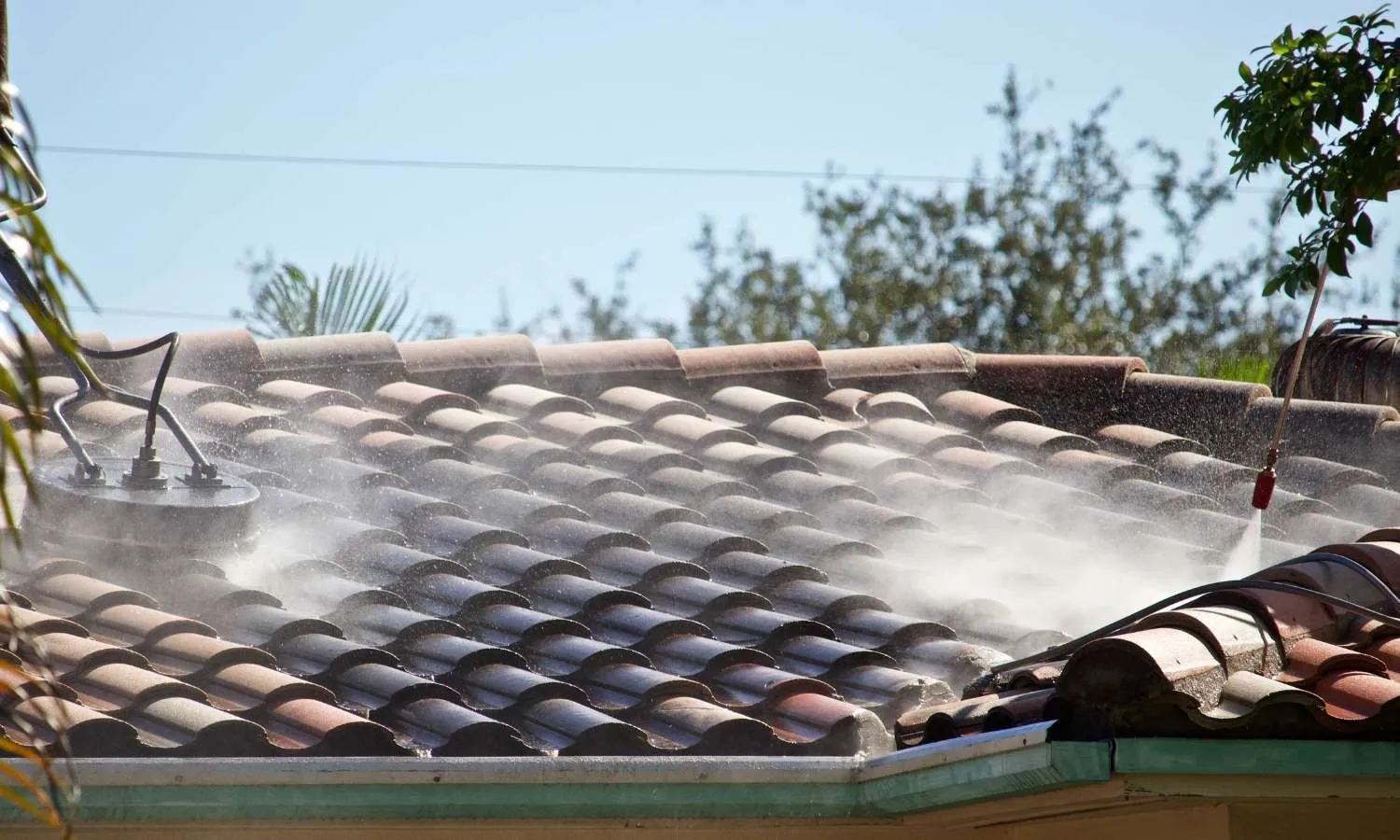
Blasting an asphalt shingle roof with high pressure can strip away years of shingle life in minutes by removing the protective granules. This is why professional cleaners use “soft washing”—a low-pressure chemical application that kills the organisms at the root without damaging the substrate.
The Dangers of High Pressure on Pavers
Similarly, using excessive pressure on pavers can:
- Blow out the joint sand.
- Damage the surface texture of the stone (exposing the aggregate).
- Force water deep into the sub-base, exacerbating the saturation issues mentioned earlier.
A professional approach involves cleaning the roof first to stop the source of contamination, followed by a gentle cleaning and re-sanding of the hardscape to restore its structural integrity.
The Economic Value of Preventive Maintenance
The cost of replacing a high-end paver patio can range from $15,000 to over $50,000 depending on the materials and scale. In contrast, routine roof maintenance is a fraction of that cost. By viewing roof cleaning as a component of your hardscape maintenance plan, you maximize your Return on Investment (ROI) in several ways:
- Extended Sealant Life: A clean roof means fewer abrasives and biological contaminants landing on your pavers, allowing your $1,500+ sealing job to last 5 years instead of 2.
- Avoidance of Reconstruction: Maintaining the joint sand and base stability through proper water diversion can prevent a $10,000 “lift and relay” repair job down the road.
- Property Valuation: Curb appeal is the primary driver of initial interest in real estate. A home with black roof streaks and mossy, uneven pavers signals neglect to potential buyers, often resulting in lower offers or expensive “repair credits” during closing.
Homeowner’s Seasonal Maintenance Checklist
To ensure the longevity of your outdoor investments, follow this “Top-Down” maintenance schedule:
Spring: The Post-Winter Assessment
- Inspect Gutters: Clear out any granules or debris that washed down during winter thaws.
- Check Joint Levels: Look for areas where sand has washed away near the roofline.
- Look for Streaks: If black streaks are appearing on the roof, schedule a soft wash before summer humidity accelerates growth.
Summer: Preservation and Prevention
- Sealant Check: Water should “bead” on your pavers. If it soaks in, it’s time to reseal.
- Biological Watch: Keep an eye out for green “fuzz” in the shade. Spot-treat with an eco-friendly biocide if necessary.
Fall: The Critical Cleanout
- Roof Debris Removal: Don’t let leaves sit on the roof; they trap moisture and create tannin stains.
- Final Gutter Flush: Ensure downspouts are clear so winter snowmelt has a clear path to exit.
Conclusion
Protecting your hardscape requires more than just an occasional sweep or power wash. To truly ensure paver longevity, you must address the environmental stressors coming from above. By keeping your roof clean and your drainage systems clear, you prevent the erosion, biological contamination, and structural settling that claim so many beautiful landscapes prematurely.
A home is a system of interconnected parts; neglecting the roof doesn’t just damage your shingles—it eventually undermines the very ground you walk on. A long-lasting, beautiful patio starts with a clean roof.