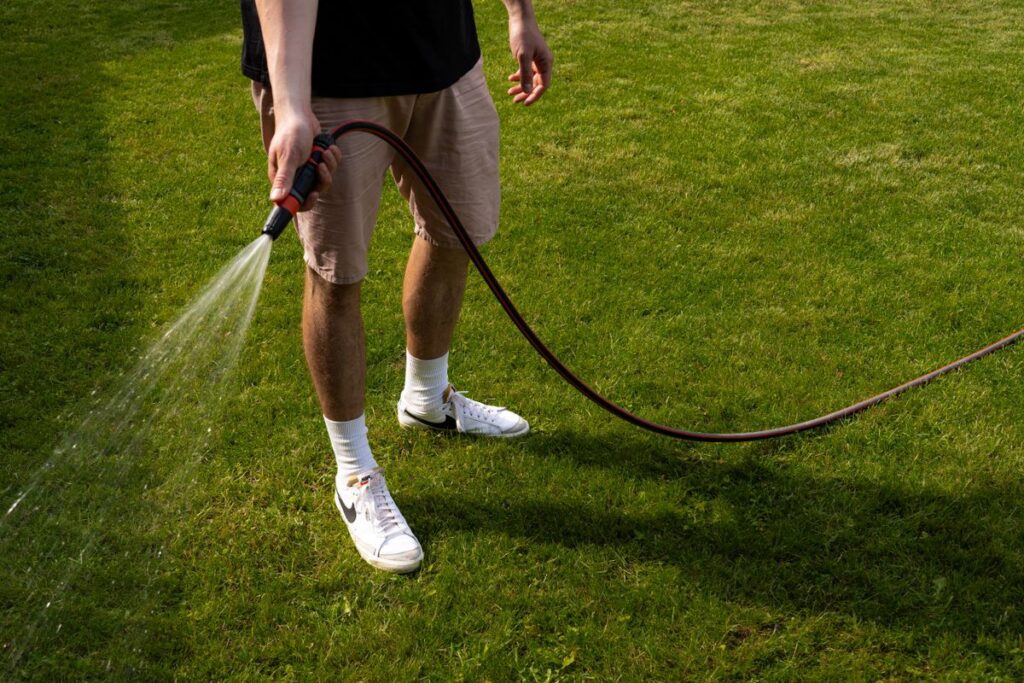


If your lawn looks thin, feels hard underfoot, or develops puddles after rain despite regular watering and fertilizing, compacted soil is likely the problem. Over time, foot traffic, mowing, and rain gradually compress the soil until water, air, and nutrients can no longer reach the root zone. The grass above weakens even when you are doing everything else right.
Aeration fixes this by pulling small plugs of soil out of the ground, opening up pathways for roots to grow deeper and for nutrients to reach them more effectively. It is one of the most straightforward ways to improve a struggling lawn and one of the most commonly skipped.
What Aeration Actually Does
Aeration is the process of removing small cores of soil typically about 2 to 3 inches deep and half an inch wide across your lawn. Those small openings relieve compaction, improve the movement of water and nutrients into the root zone, and give grass roots room to expand downward.
The benefits compound over time. Deeper roots make grass more resistant to drought, heat, and heavy use. Water absorbs into the soil instead of running off. Fertilizer becomes more effective because it can actually reach the roots. When paired with overseeding, the open holes give new seed direct contact with soil, which significantly improves germination rates.
Signs Your Lawn Needs Aeration
You do not always need to wait for visible problems. But these are clear signals that aeration is overdue:
- Water pools or runs off rather than soaking in after rain
- The soil feels hard and dry even after watering
- Grass looks thin, patchy, or discolored in areas that receive regular care
- Heavy foot traffic zones play areas, pathways, dog runs show wear that does not recover
A quick way to test: Push a long screwdriver into the soil with moderate pressure. If it struggles to go 3 to 4 inches deep, your soil is compacted and will benefit from aeration.
Thatch test: Cut a small slice of turf about 4 inches deep. If the layer of dead material between the grass and soil is thicker than half an inch, it is restricting water and airflow and aeration will help break it down.
When to Aerate
The right timing depends on your grass type. Aerate during the active growing season so the lawn can recover quickly and fill in the holes.
Cool-season grasses — Kentucky Bluegrass, Fescue, Ryegrass common across the Midwest and Northeast including the Chicago area: Best window: late August through early October. Soil is still warm, moisture levels are typically good, and the grass is focused on root development heading into winter. Early spring works as a secondary option but can disturb weed seeds in the soil.
Warm-season grasses — Bermuda, Zoysia, St. Augustine common in southern states: Best window: late spring through early summer (May through July), when the grass is growing most actively and can recover quickly.
Never aerate during a drought, a heat wave, or when the grass is dormant. You will stress the turf without getting meaningful results.
How Often Should You Aerate?
Most lawns: once per year is sufficient. For the majority of residential properties, an annual fall aeration keeps soil healthy and roots growing well.
High-need lawns — clay soil, heavy foot traffic, visible compaction, or thick thatch — benefit from aerating twice per year, once in spring and again in fall.
Low-need lawns — sandy or loamy soil, light use, consistently well-maintained — can go every 2 to 3 years without issue.
Aerating too frequently is counterproductive. The lawn needs time between sessions to regrow and stabilize.
How to Aerate: Step by Step
Core aeration is the recommended method. It removes actual plugs of soil and creates genuine pathways for air, water, and nutrients. Spike aeration which pokes holes without removing material is less effective and can actually compact soil further around each hole.
Before You Start
- Mow short 1 to 2 days before. Cut to the lower end of the recommended height for your grass type.
- Water the lawn 24 to 48 hours in advance. The soil should be moist — not soggy — for the aerator tines to penetrate cleanly.
- Mark any sprinkler heads, irrigation lines, or utility lines before you begin. In the US, call 811 to have buried utilities marked at no cost.
During Aeration
- Make 2 to 3 passes over the entire lawn. Most aerators only treat a portion of the surface per pass, so multiple overlapping passes are necessary for thorough coverage.
- Give extra attention to high-traffic areas and any spots that show visible compaction or standing water issues.
- Leave the soil plugs on the lawn. They are nutrient-rich and will break down naturally within 1 to 3 weeks, returning organic matter to the soil. If the appearance bothers you, mow over them to speed up the process.
After Aeration
- Overseed immediately if your lawn has thin or bare patches. The open holes provide ideal seed-to-soil contact for germination.
- Apply fertilizer within 24 to 48 hours to take advantage of the improved nutrient pathways.
- Water consistently for the first 2 to 3 weeks, keeping the top inch or two of soil moist. If you have overseeded, short and frequent watering sessions help seeds establish.
- Stay off the lawn for 2 to 4 weeks to allow roots and any new seedlings to establish without disturbance.
- Wait to mow for at least 2 to 3 weeks, and mow at a higher setting the first time.
DIY vs. Professional Aeration
DIY aeration costs roughly $60 to $100 for a core aerator rental for the day. It is a practical option for small to medium lawns if you are comfortable operating the equipment. Core aerators are heavy, typically over 150 lbs so plan accordingly.
Professional aeration averages between $75 and $200 for a typical residential yard depending on size and location. Professionals bring the right equipment, understand local soil conditions, and often bundle aeration with overseeding or fertilization for better results. For larger properties or first-timers, the investment is usually worth it.
Mistakes That Reduce Results
Aerating at the wrong time. Aerating dormant or heat-stressed grass tears at roots without giving the lawn any chance to recover.
Using spike aeration as the primary method. It is faster and easier, but it does not remove compacted soil. It just displaces it, which can make compaction worse around each hole.
Skipping post-aeration care. Aeration opens the lawn up for improvement, but without watering and fertilizing in the days that follow, you miss most of the benefit.
Aerating bone-dry or waterlogged soil. Dry soil prevents tine penetration. Saturated soil clogs the machine and produces poor results.
Frequently Asked Questions
Does aeration help with drainage problems? It can help with surface drainage caused by compaction. If water is pooling because the soil is too dense to absorb it, aeration often improves the situation noticeably. However, if the drainage problem is structurally poor grading, a high water table, or an inadequate drainage system, aeration alone will not resolve it.
Can I aerate a newly seeded or sodded lawn? Wait at least one full growing season before aerating a new lawn. New turf needs time to establish roots before the disruption of aeration.
Should I aerate before or after fertilizing? Aerate first, then fertilize. The open channels allow fertilizer to reach the root zone far more effectively than applying to an unaeracted lawn.
How long before I see results? Visible improvement typically shows within 2 to 6 weeks as roots strengthen, grass fills in, and the soil structure begins to recover.