
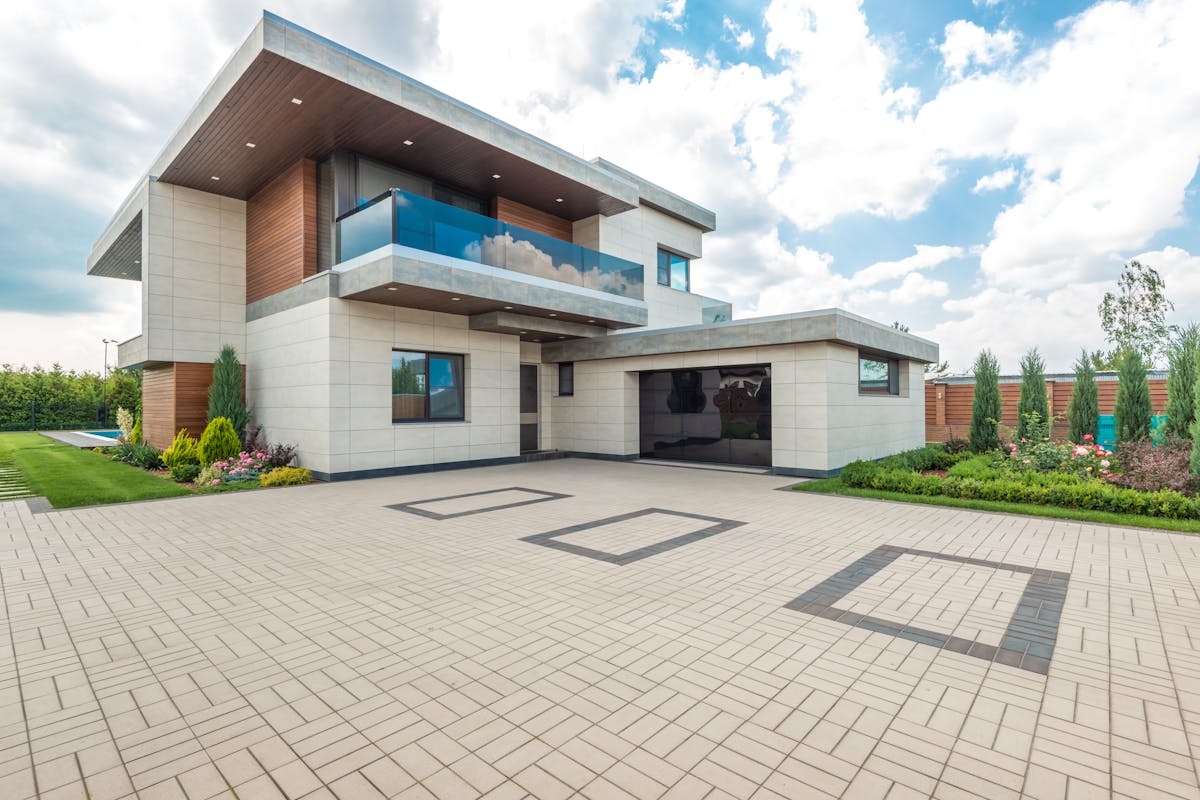
If your concrete patio, driveway, or walkway looks dull, cracked, or outdated in 2026, you aren’t alone. As property values continue to climb, homeowners are looking for “high-ROI” ways to boost curb appeal without the massive expense of a full demolition. Laying pavers on top of concrete has emerged as the most efficient way to transform a property’s aesthetic while utilizing the existing structural foundation.
At Ware Landscaping, we’ve seen a 40% increase in requests for “paver overlays” this year. This method saves you the hassle of jackhammering an old slab and creates a stylish, durable, and low-maintenance surface. However, in the 2026 climate, successful installation requires more than just “setting and forgetting.” In this guide, we’ll explore how to properly remodel a walkway, the rise of thin pavers over concrete driveways, and why your drainage strategy is the difference between a beautiful patio and a shifting disaster.
Installing pavers over concrete requires precision drainage and a specialized sand bed to prevent standing water and shifting stones. Skip the DIY disaster and get a professional installation that stays level and beautiful for decades.Don't Let Your New Pavers Crack or Shift
Understanding Your Materials: What Exactly is a Paver?
Before diving into the installation, it’s important to understand the material itself. A paver is a specialized outdoor flooring unit typically a precast piece of concrete, natural stone, or clay brick designed to be laid in a pattern to create a durable, load-bearing surface.
Unlike a continuous pour of concrete, which is prone to cracking as the ground shifts, pavers are individual units that form a “flexible” pavement system. In 2026, the term “paver” has expanded to include high-tech materials and architectural finishes:
- Concrete Pavers: The most popular choice for overlays. They are manufactured to be high-density and are often treated with UV-resistant pigments to prevent fading.
- Natural Stone (Travertine, Slate, Granite): Slabs cut from the earth. These offer a unique, high-end aesthetic and are naturally heat-resistant, making them ideal for pool decks.
- Brick Pavers: Made from kiln-fired clay, these provide a classic, timeless look and are incredibly resistant to stains and heavy loads.
- Porcelain Pavers: A major 2026 trend. These are ultra-thin, nearly non-porous, and mimic the look of wood or marble while being completely slip-resistant.
Can You Put Pavers Over Concrete? The 2026 Verdict
The short answer is: Yes, absolutely. You can install pavers on a concrete slab, but only if the underlying concrete is “statically sound.”
In 2026, we categorize concrete slabs into two types: those that can be saved and those that must be removed. If your slab has minor hairline cracks or surface pitting, it’s a perfect candidate for an overlay. However, if the concrete is “heaving” (lifting up) or has wide structural cracks (over 1/4 inch), these movements will eventually mirror through to your pavers, regardless of how much sand you use.
The Rise of Thin Pavers (1-Inch Pavers)
A major trend for 2026 is the use of thin pavers over concrete. Traditional pavers are usually 2.3 inches thick, which can create “step-up” issues at your front door or garage. Modern 1-inch pavers over concrete allow for a significant aesthetic upgrade without creating a tripping hazard. These are especially popular for covering old concrete walkways and pool decks where height clearance is a primary concern.
Step-by-Step: How to Lay Pavers Over Concrete
Step 1: Structural Assessment & Drainage Audit
Before you consider laying pavers over concrete, you must check the “pitch.” In 2026, we use laser-levels to ensure the concrete base slopes away from the home at a rate of 1/8 inch per foot. If your concrete is flat or slopes toward your foundation, adding pavers will only trap water underneath, leading to mold, “efflorescence” (white salt stains), and potential basement seepage.
Step 2: Preparation and Deep Cleaning
“Co położyć na stary chodnik betonowy?” (What to put on an old concrete walkway?) is a common question we receive from our diverse local community. The answer always starts with a clean surface. In 2026, we recommend a commercial-grade pressure wash (3,000 PSI) to remove oil, moss, and loose debris. This ensures that your adhesive or sand bed has a stable surface to sit on.
Step 3: Choosing the Right Installation Method
There are three primary ways we handle overlays in 2026:
- The Sand Bed Method (Recommended for Patios): We lay a 1-inch bed of coarse, washed sand. This acts as a “buffer” that allows the pavers to move slightly during the Illinois freeze-thaw cycles without cracking.
- The Bituminous Method: Using a mix of asphalt and sand, this is the “gold standard” for thin pavers over concrete driveways. It provides the strength of a road with the beauty of stone.
- The Adhesive Method: Best for pavers on top of concrete patios that have very low clearance. We use high-flexibility polymeric adhesives that bond the stone directly to the slab.
Step 4: Edge Restraints and Containment
One of the most common DIY failures is forgetting edge restraints. Without a solid border, your pavers will slowly “drift” apart over the years. In 2026, we utilize heavy-duty PVC or aluminum restraints anchored directly into the concrete base with specialized masonry bolts.
Step 5: Polymeric Sand and Final Lock
Once the pavers are laid, we fill the joints with polymeric sand. Unlike the regular sand used in the 1990s, modern polymeric sand contains binding agents that turn into a “flexible grout” when misted with water. This prevents weed growth and keeps ants from colonizing your new walkway.
2026 Cost Estimates: Pavers Over Concrete
Pricing has shifted due to material innovations and labor demand. For a standard project in the Naperville area, expect the following ranges:
| Project Type | 2026 Estimated Cost (Installed) | Key Factor |
| Old Walkway Remodel | $12 – $18 per sq. ft. | Accessibility & curve complexity |
| Thin Paver Driveway | $15 – $22 per sq. ft. | Load-bearing requirements |
| 1-Inch Patio Overlay | $10 – $16 per sq. ft. | Existing slab condition |
Note: These costs are significantly lower than “Rip and Replace” projects, which often start at $25+ per square foot once demolition and hauling fees are included.
Common Mistakes to Avoid in 2026
- Ignoring the “Mirror Effect”: If you have a massive crack in the concrete and you don’t bridge it with a geotextile fabric, that crack will show up in your pavers within two seasons.
- Poor Sand Choice: Never use “play sand” or “mason sand” for the bedding layer. It is too fine and will wash away. In 2026, we only use ASTM-C33 washed concrete sand.
- Skipping the Sealer: With the increase in acid rain and UV intensity, unsealed pavers in 2026 can fade within 36 months. A high-quality breathable sealer is mandatory for long-term “curb appeal.”
DIY vs. Professional Installation
If you are handy and the project is small (under 100 sq. ft.), a DIY installation of pavers on a concrete slab is a rewarding weekend project. However, for anything larger, the technical challenges multiply.
Can you put pavers over concrete? Yes. Can you do it so that it stays level after a -20°F Chicago winter? That requires professional equipment. At Ware Landscaping, we use plate compactors with “poly-pads” to lock the pavers into the sand without scratching the surface, and we employ laser-leveling to ensure your drainage is flawless.
Why Ware Landscaping is the Choice for 2026
We are a family-owned, Naperville-based company that understands Northern Illinois soil. We don’t just look at the surface; we look at the hydrology of your entire yard. Whether you are wondering “cómo se colocan los adoquines sin mortero” (how to lay pavers without mortar) or how to clad your concrete stairs with stone (klä betongtrappa med sten), our multilingual, expert team has the answers.
Our 2026 Overlay Program features:
- Micro-Drainage Integration: We ensure water never sits between your pavers and the concrete.
- Premium Material Access: Exclusive access to 1-inch “High-Density” pavers designed specifically for overlays.
- Structural Warranty: We stand by our work because we know our base prep is the best in the business.
Final Thoughts
Transforming a dull, grey concrete slab into a designer outdoor living space is one of the smartest investments you can make in 2026. By choosing to install pavers over concrete, you are recycling your existing foundation while dramatically upgrading your home’s value.
Don’t let a “DIY guess” turn into a tripping hazard. Let the experts at Ware Landscaping ensure your new surface is level, drained, and beautiful for the next 30 years.
Installing pavers over concrete requires precision drainage and a specialized sand bed to prevent standing water and shifting stones. Skip the DIY disaster and get a professional installation that stays level and beautiful for decades.Don't Let Your New Pavers Crack or Shift
Ready to turn that dull concrete into a masterpiece? Schedule Your Professional Consultation Today.