
Many homeowners notice something frustrating over time. Bathroom countertops seem to age faster than kitchen counters, even though kitchens see heavy daily use. Stains appear sooner. The surface loses shine. Hairline cracks show up around sinks. In some cases, swelling or peeling starts long before anyone expects it. This pattern confuses people because kitchens deal with heat, knives, spills, and constant activity, yet bathroom counters often look worse first.
This happens for clear reasons tied to moisture, habits, materials, and how bathrooms function day to day. Understanding why bathroom countertops fail faster helps homeowners make smarter choices about care, repairs, and surface renewal. Reglazing plays a key role because it resets the surface without tearing anything out, and it addresses the exact issues that cause early failure.
Bathrooms Create Constant Moisture Stress
Water exposure explains much of the difference. Kitchen counters deal with spills, but they usually dry quickly. Bathroom counters stay damp far longer. Steam from showers fills the room daily. Water pools around sinks. Toothbrush cups, soap bottles, and cosmetics trap moisture underneath them for hours.
This repeated damp environment slowly weakens surface coatings. Moisture seeps into tiny pores in laminate, cultured marble, tile grout, and even solid surface materials. Over time, the top layer breaks down. The counter may look clean at first, but moisture damage works below the surface.
Reglazing seals the countertop with a new protective layer. That layer blocks water from soaking in and creates a smooth, non-porous finish. Once sealed, moisture no longer penetrates the surface the way it did before.
Cleaning Habits Wear Bathroom Counters Down Faster
Bathroom counters face harsher cleaning routines than kitchen counters. People wipe them daily, often several times a day. Many cleaning products used in bathrooms contain strong chemicals meant to fight soap scum and stains. Even products labeled as gentle can wear down a surface when used constantly.
Kitchen counters usually get wiped after meals, then left alone. Bathroom counters rarely get that break. Over time, frequent scrubbing dulls the finish and causes uneven wear, especially around sinks and faucet bases.
Reglazing creates a fresh surface that resists cleaning damage better than the worn original finish. The new coating restores uniform shine and gives the counter a cleanable surface that does not absorb residue or react as quickly to cleaners.
Heat and Styling Tools Take a Toll
Bathrooms introduce a type of heat kitchens rarely see on counters. Hair straighteners, curling irons, hot rollers, and styling tools often sit directly on vanity tops. Many homeowners place them down quickly while rushing through morning routines.
This heat damages laminate and cultured marble finishes fast. Burn marks, bubbling, and surface discoloration follow. Kitchens use hot cookware, but most people rely on trivets or stovetops instead of placing pans directly on counters.
Reglazing repairs heat damage by restoring the surface layer and adding a coating designed to handle normal bathroom heat exposure. The renewed surface looks smooth and even, removing visible marks left by styling tools.
Sink Design Accelerates Wear
Bathroom sinks often sit flush or integrated into the countertop. Water splashes around the faucet constantly. Toothpaste, soap, and cosmetics collect near the drain area. This concentrated exposure causes faster breakdown near the sink than anywhere else.
Kitchen sinks usually sit deeper and handle water flow differently. Splash zones remain smaller, and food prep habits spread wear across larger areas rather than focusing it in one spot.
Reglazing addresses sink-area damage directly. The process repairs worn sections, smooths rough spots, and seals the entire surface evenly so the sink zone no longer acts as a weak point.
Bathroom Counter Materials Age Differently
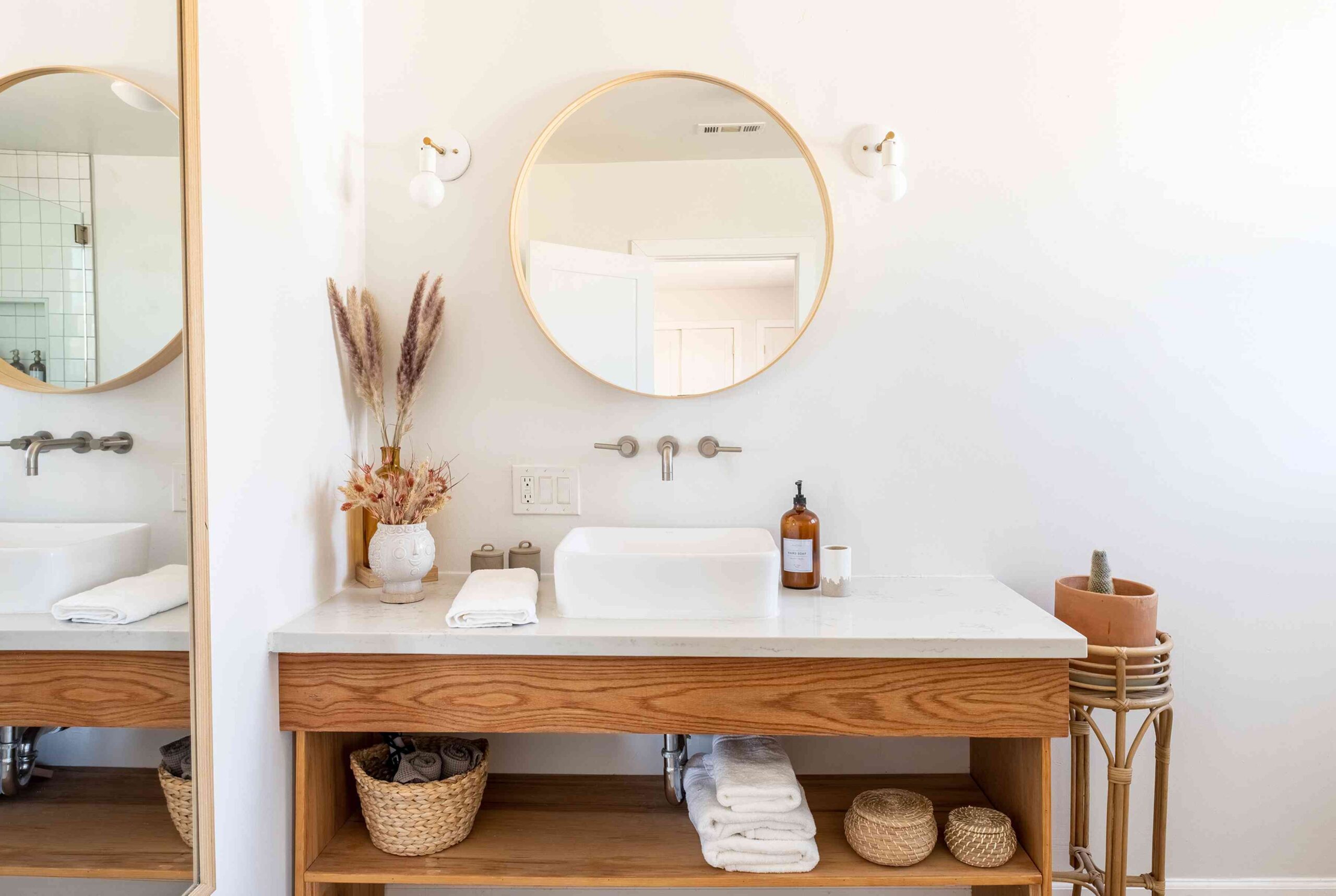
Many bathroom countertops use materials chosen for appearance rather than heavy-duty use. Cultured marble, laminate, and tile dominate bathrooms, especially in older homes. These materials look great at first but suffer once moisture and cleaning routines take over.
Kitchen counters more often use stone or newer solid surface materials designed for heavier use. Even when kitchens use laminate, people treat it with more care due to food prep habits.
Reglazing works well on common bathroom materials. It restores cultured marble shine, smooths laminate damage, covers tile grout visually, and refreshes solid surfaces that lost their finish. The result looks consistent across the entire vanity.
Small Spaces Amplify Damage
Bathrooms usually have limited counter space. People crowd items onto the surface because storage runs tight. Bottles, trays, and accessories sit close together, trapping moisture and residue underneath. Kitchens spread items across larger surfaces and cabinets. Airflow stays better, and surfaces dry faster.
Reglazing creates a smoother finish that makes cleanup easier even in tight spaces. Water beads instead of soaking in, and residue wipes away without leaving marks.
Why Kitchen Counters Hold Up Better
Kitchen counters benefit from habits that protect them without people realizing it. Cutting boards absorb knife damage. Trivets prevent heat exposure. Spills get wiped quickly. Airflow stays better due to open layouts.
Bathroom counters face direct exposure to water, chemicals, heat, and tight storage. That combination shortens surface life faster than most homeowners expect.
How Reglazing Resets the Surface
Reglazing works by renewing the surface instead of patching damage. Technicians clean and prep the countertop thoroughly, removing buildup and worn finish. They repair chips, burns, and scratches before applying a new coating designed to bond with the existing material.
The finished surface looks uniform, glossy, and clean. It resists moisture, staining, and daily wear far better than the damaged original layer. The process avoids demolition, plumbing changes, or cabinet removal.
Improved Hygiene and Maintenance
A worn bathroom countertop often harbors grime in tiny cracks and dull spots. Even regular cleaning cannot remove buildup once the surface degrades. Reglazing smooths the surface completely, eliminating those hidden problem areas.
After reglazing, routine cleaning becomes easier. Soap residue does not cling. Water spots wipe away quickly. The counter stays cleaner with less effort, which matters in high-use bathrooms.
Visual Consistency Without Remodeling
Bathroom updates often stall because homeowners do not want to remodel fully. Reglazing refreshes countertops without touching cabinets, sinks, or walls. The updated surface blends well with existing fixtures and paint.
This reset helps bathrooms look newer without altering layout or style. Many homeowners use reglazing as a reset point before making other small cosmetic changes over time.
A Practical Long-Term Solution
Bathroom countertops fail faster for clear reasons tied to moisture, habits, and materials. Reglazing addresses those causes directly. It seals the surface, restores durability, and gives the countertop a second life.
Homeowners who understand why the damage happens can make smarter choices moving forward. With proper care, a reglazed bathroom countertop stays smooth, clean, and attractive for years, closing the gap between bathroom and kitchen surface longevity without major disruption.