

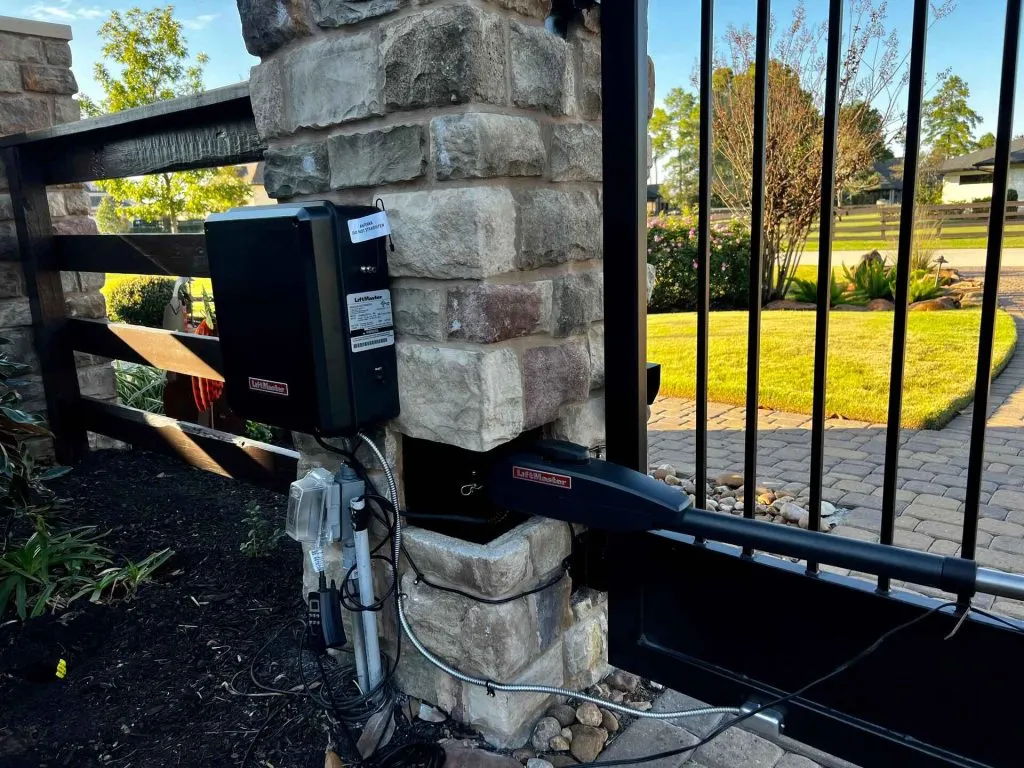
When people press a button on a gate opener remote, they expect the gate to glide open smoothly and reliably every single time. It feels effortless—almost magical. But behind that simple action lies a sophisticated communication system involving radio frequencies, encryption, signal verification, and the processing logic of the gate controller.
Understanding how this communication works is the key to mastering how an automatic gate opener functions, diagnosing issues, and choosing the right equipment or upgrades. Whether you’re a homeowner curious about how your remote “talks” to your gate, an installer wanting deeper technical insight, or someone researching smart home access systems, the communication mechanism between the remote and the receiver is the real backbone of every gate automation system.
This article takes you through that hidden world—how the signal is generated, transmitted, decoded, validated, and finally turned into motion.
How Wireless Communication Starts: Inside the Gate Opener Remote
The moment you press a button on a gate clicker, a series of electronic components inside the small transmitter wake up and begin generating a coded radio signal. Most gate remotes operate on common RF bands like 315 MHz, 390 MHz, or 433 MHz. These frequencies are chosen because they travel well outdoors, penetrate obstacles like vehicles or fences, and do not require line-of-sight like infrared systems.
Inside the remote, the signal is created using:
- A crystal oscillator that generates a stable frequency
- An encoding chip that produces the digital code
- A modulator that shapes the signal into pulses
- An antenna that broadcasts the RF transmission
To the user, it’s just a click. But electronically, the remote is broadcasting a precise, coded message designed for the receiver module of the gate opener—similar to “password + access request” sent via radio.
What Happens When the Signal Reaches the Receiver
Mounted near the gate opener’s control board, the receiver module “listens” for incoming RF signals. But it is not passively accepting every wireless pulse. It must:
- Detect a valid frequency
- Amplify the weak signal
- Filter out noise and interference
- Demodulate the signal back into digital form
- Check whether the received code matches an authorized transmitter
- Deliver a verified instruction to the gate controller
Only after these verification steps does the gate controller activate the motor and open the gate.
This sequence prevents random signals—from car remotes, radios, or wireless devices—from opening your property gate accidentally.
Encoding Systems: The Foundation of Security
The encoding system used by the remote and receiver determines both the reliability and security of a gate opener system. Over the years, several encoding technologies have developed:
-
Fixed Code (Legacy Systems)
Early gate opener remotes used fixed codes—simple, unchanging numeric sequences. These systems were cheap and easy to copy. Anyone with a code grabber could record your signal and replay it to open the gate.
This system is now outdated and generally considered insecure.
-
Rolling Code (Hopping Code)
The next evolution was rolling code technology. Instead of sending the same code every time, the remote generates a new code with each button press. The receiver knows the algorithm and valid sequence window, so both stay synchronized.
Rolling code technology solves replay attacks and remains the standard for many modern automatic gate opener systems.
-
Advanced Encryption and Smart Protocols
Modern smart gate opener systems incorporate secure cryptographic methods comparable to online authentication. These may include:
- 128-bit or higher encrypted codes
- Dual-way authentication
- Time-based, event-based, or cloud-synchronized permissions
- Tokenized access keys
These systems are nearly impossible to replicate without proper authorization.
How the Receiver Validates the Signal
When the receiver module picks up a transmission, it doesn’t immediately activate the motor. Instead, it goes through a sophisticated validation process:
- Is the frequency correct?
Rejects signals from unrelated devices. - Is the modulation pattern recognizable?
Ensures the remote follows the system’s encoding scheme. - Does the digital code match a stored transmitter ID?
The receiver typically stores 20–200 remotes depending on model. - Is the rolling code within the allowable sync window?
Prevents cloned or outdated signals from being used.
Only after passing all these checks does the receiver translate the command into a logic pulse for the gate controller—“OPEN,” “CLOSE,” or “CYCLE.”
This is why sometimes a remote’s LED lights up, but the gate does nothing: the receiver rejected the transmission because the code was invalid, the sync was lost, or the safety chain was not satisfied.
From Wireless Signal to Physical Movement: The Role of the Gate Controller
Once the receiver delivers a valid open/close command, the gate controller takes over. This board is the central brain of the entire gate opener system. It interprets the command in context:
- Is the gate already moving?
- Are the safety sensors blocked?
- Is a vehicle detected in the gate path?
- Are the limit switches engaged?
- Has an emergency stop been triggered?
- Is the motor overloaded or in protection mode?
Only after confirming that conditions are safe will the controller power the motor to begin opening or closing the gate.
This critical safety logic prevents accidents, motor damage, and unintended motion.
Why Range and Signal Quality Decrease Over Time
Many homeowners notice that the remote worked from far away when new, but the usable range gradually gets shorter. Several factors contribute to this:
- Weak battery in the remote
- Weathering or corrosion of the receiver antenna
- Electrical noise from new appliances or security systems
- Metal fences or vehicles blocking RF waves
- Environmental interference such as Wi-Fi congestion
- A failing crystal oscillator inside the remote
This is normal for radio systems, but maintaining clean wiring, replacing batteries, and positioning the receiver antenna properly can restore performance.
The Multi-Remote Capability: How Receivers Store and Manage Multiple Codes
Gate receivers commonly store dozens or even hundreds of authorized remotes. Each remote has a unique identifier or digital “fingerprint.” During programming, the receiver learns this identifier and adds it to memory.
This allows:
- Household members to have their own remotes
- Temporary access for guests
- Company staff to share controlled access
- Selective deletion of lost or stolen remotes
This flexible management is essential for properties with multiple users.
Some advanced receivers allow:
- Time-based access windows
- Single-use or limited-use temporary codes
- Activity logging
- PIN-based override via smart gate opener apps
This turns a simple gate opener into a full access management system.
How Synchronization Works Between Remote and Receiver
In rolling code systems, both the remote and receiver keep track of the evolving code sequence. If the remote is pressed many times while out of range—inside a pocket, in a bag, or inadvertently—the code may jump too far ahead for the receiver to recognize.
To fix this, systems use:
- Sync windows (allowing some deviation)
- Re-sync procedures (retraining the current code)
If the sync window is exceeded, the remote must perform a re-sync process, often by pressing a specific button sequence near the receiver.
This mechanism balances security with usability.
Smart Gate Openers and Modern Communication Methods
Today’s smart gate opener systems introduce entirely new communication methods beyond RF:
- Wi-Fi
- Bluetooth
- NFC
- Cloud-authenticated mobile apps
- Geofencing triggers
- Vehicle sensors
- License plate recognition integrations
In these systems, the remote is no longer the only method of communication. Smartphones, home automation hubs, or even vehicles can trigger the gate.
However, even smart systems still use the core logic of authorization, encryption, and safe actuation—just transmitted through more channels.
Mobile App Control vs. Traditional Remotes
App-based gate control enhances convenience but also improves security:
- Two-factor authentication
- Encrypted cloud channels
- Activity logs and timestamps
- Permission sharing without physical remotes
- Remote open/close status verification
- Auto-close and geofenced triggers
Still, the traditional gate opener remote remains popular because it works offline, has instant response, and does not depend on internet connectivity.
In modern systems, both methods work together, offering redundancy and user flexibility.
Why Understanding Communication Matters
Many gate issues—from range problems to random failures—come from communication and coding challenges rather than mechanical or electrical faults. Users who understand how remotes and receivers communicate are better equipped to:
- Troubleshoot faulty remotes
- Determine whether the receiver is functioning
- Identify interference issues
- Decide when to upgrade to a smart gate opener
- Understand why the gate doesn’t respond even when remote LEDs work
- Manage access control securely
Mastering this knowledge also helps homeowners or installers choose compatible remotes, simplify programming, and ensure long-term reliability of the system.
Conclusion
Whether you’re using a simple gate clicker or an advanced smart gate opener, the communication between remote and receiver is the true heart of every automated gate system. What feels like a simple, effortless click is actually a chain of coordinated actions:
Signal generation → RF transmission → Receiver filtering → Decryption → Authorization → Controller logic → Motor activation
Understanding this chain helps users appreciate the engineering behind modern gate automation systems. It also empowers property owners to maintain, troubleshoot, and upgrade their systems with more confidence.
Behind every smooth, reliable automatic gate opener is a highly controlled, secure communication mechanism designed to protect your property—and to work invisibly in the background every time you press that button.