
Driveways are the largest pieces of hardscaping on your property. Surfaces bear vehicle weight, endure extreme weather, and collect leaked fluids. Over time, concrete transforms from a bright, clean surface into a stained, grey expanse. Professional cleaning restores this surface. This guide explains why concrete degrades and how experts fix the issue.
Why Concrete Gets Dirty
Concrete is porous. Microscopic views show a sponge-like structure. Thousands of tiny holes trap liquids and solids. Oil drips from engines and sinks into these pores.
Natural elements attack the surface. Shaded areas trap moisture in pores. This creates breeding grounds for organic growth. Algae, moss, and mildew take root inside the stone. These organisms look bad and make the surface slippery when wet. Growth expands within the pores, leading to surface scaling and cracks.
The Risks of DIY Pressure Washing
Homeowners often buy small electric pressure washers and attempt the job. This results in zebra stripping. Uneven clean lines occur from moving the wand too fast or holding the nozzle at the wrong distance.
Inexperienced operators risk permanent damage. High pressure etches concrete. Narrow tips used too close to the surface strip the cream layer. This exposes the aggregate underneath. Etching is permanent. You cannot wash away an etch mark. Hiring pressure washing experts prevents these mistakes. Professionals use specialized equipment.
Professional Equipment vs. Consumer Tools
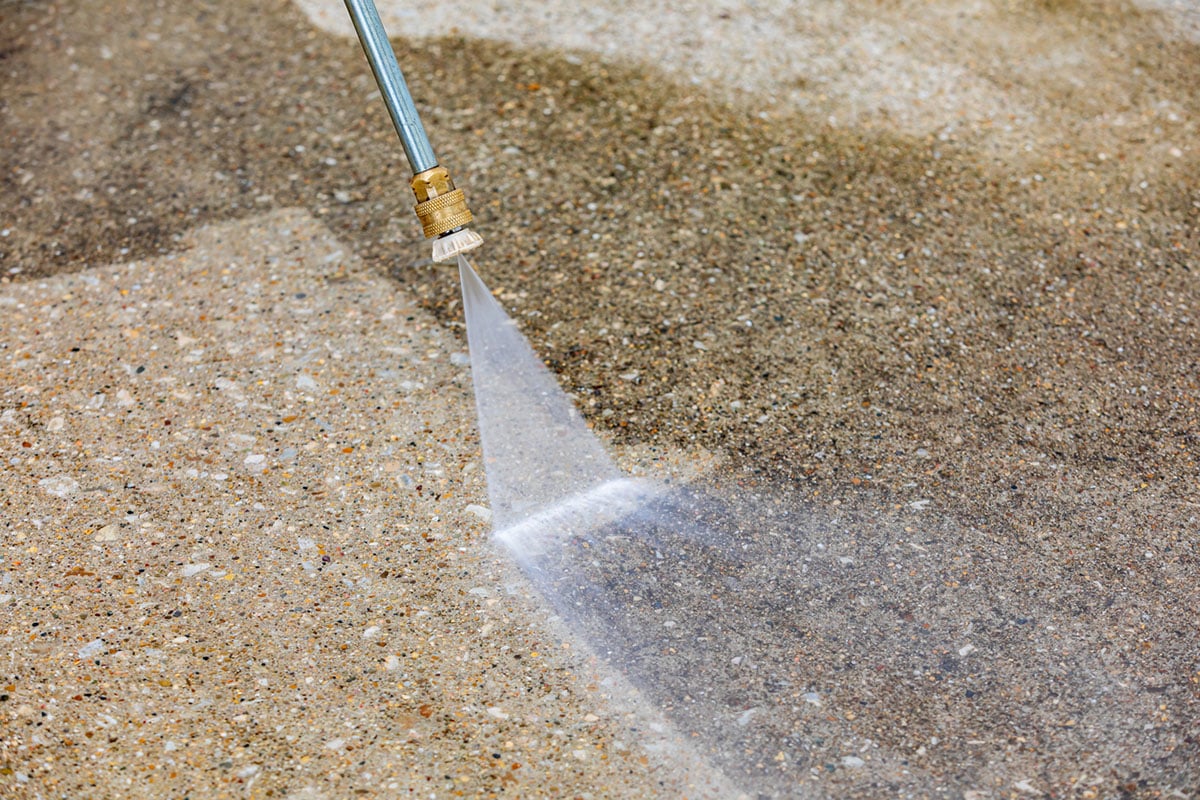
Experts avoid standard wands for large flat surfaces. They use surface cleaners. A surface cleaner is a circular attachment with rotating nozzles.
Benefits of Surface Cleaners
- Consistency: Nozzles remain at a fixed distance from the ground. This ensures an even clean without stripes.
- Speed: A surface cleaner covers a 20 to 30 inch path in one pass. A standard wand covers two inches.
- Containment: The shroud prevents water and debris from spraying onto your house or landscaping.
Professionals also use hot water machines. Cold water fails to break down heavy oil or grease. Hot water melts contaminants, allowing detergents to lift them out of the pores.
The Cleaning Process
A systematic approach ensures the best results. Professionals follow a specific order of operations.
1. Surface Preparation
The area must be clear. This includes moving vehicles, potted plants, and debris. Experts sweep the surface to remove loose rocks.
2. Pre-Treatment
Experts apply a chemical pre-treatment. This mixture usually contains sodium hypochlorite and surfactants. This solution kills organic growth at the root. The solution sits for 10 to 15 minutes. Black algae turns brown or white, indicating the organism is dead.
3. Degreasing
If oil stains exist, technicians apply a professional grade degreaser. These chemicals break the bond between the oil and the concrete. Some stains require dwell time or agitation with a stiff brush.
4. Pressure Washing
The surface cleaner goes to work. The technician moves at a steady pace to ensure total coverage. They overlap each pass to prevent missed spots.
5. Detail Wand Work
Edges, corners, and areas near delicate landscaping require a wand. The technician uses a wider fan tip to rinse corners.
6. Post-Treatment
This is a vital step many DIYers skip. After rinsing, a light layer of cleaning solution is reapplied and left to dry. This brightens the concrete. The solution remains in the pores to prevent new algae growth for several months.
Removing Specific Stains
Different stains require different chemistry.
Oil and Grease
Fresh oil is easier to remove than old oil. Professionals use alkaline cleaners. Old oil leaves a shadow even after cleaning because the oil chemically bonds with the concrete.
Rust Stains
Rust comes from fertilizer or metal furniture. Pressure alone fails to remove rust. This requires an acid-based cleaner. Professionals use oxalic or phosphoric acid to neutralize the iron oxide.
Red Clay or Tannins
In some regions, red clay stains the concrete. Fallen leaves leave brown tannin marks. These require specialized detergents to bleach the stain without damaging the concrete structure.
Long-Term Protection: Sealing
Cleaning is only half the battle. Once the concrete is clean and the pores are open, the surface is vulnerable. Professional pressure washing experts recommend sealing the driveway after a deep clean.
Penetrating Sealers
These sealers dive into the pores. They do not change the look of the concrete. Instead, they create a hydrophobic barrier inside the stone. Water beads on the surface. This prevents freeze-thaw damage in cold climates. When water stays out of the concrete, ice cannot expand inside. This prevents cracking.
Topical Sealers
These sit on top of the concrete. They provide a wet look or a gloss finish. They protect against oil and chemical spills by keeping the liquid on the surface for easy cleanup.
Maintenance Schedule
Clean your driveway every 12 to 24 months. If your property has heavy tree cover, you need annual service to manage organic growth. Regular maintenance prevents the buildup of thick biofilms. Maintaining clean concrete is cheaper than restoring neglected, damaged stone.
Environmental Considerations
Professional companies manage runoff. They use biodegradable soaps. They also understand local regulations regarding wastewater. Many cities forbid soapy water from entering storm drains. Professionals use vacuum recovery systems or berms to redirect water into landscaped areas.
Impact on Property Value
Curb appeal is the first impression of your home. A dark, stained driveway makes a house look aged. A bright, clean entrance increases perceived value immediately. Real estate agents recommend pressure washing before listing a home for sale. This is a low-cost investment with a high return.
Conclusion
Proper cleaning removes elements causing decay. Professional equipment extends driveway life by decades. Follow these steps for the best results.
- Inspect for cracks and deep oil stains.
- Clear the area of all obstacles.
- Hire a professional with a surface cleaner and hot water capabilities.
- Request a post-treatment to keep the surface clean longer.
- Seal the surface to prevent future water damage.