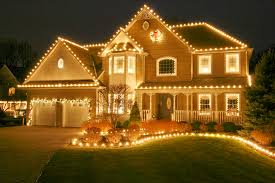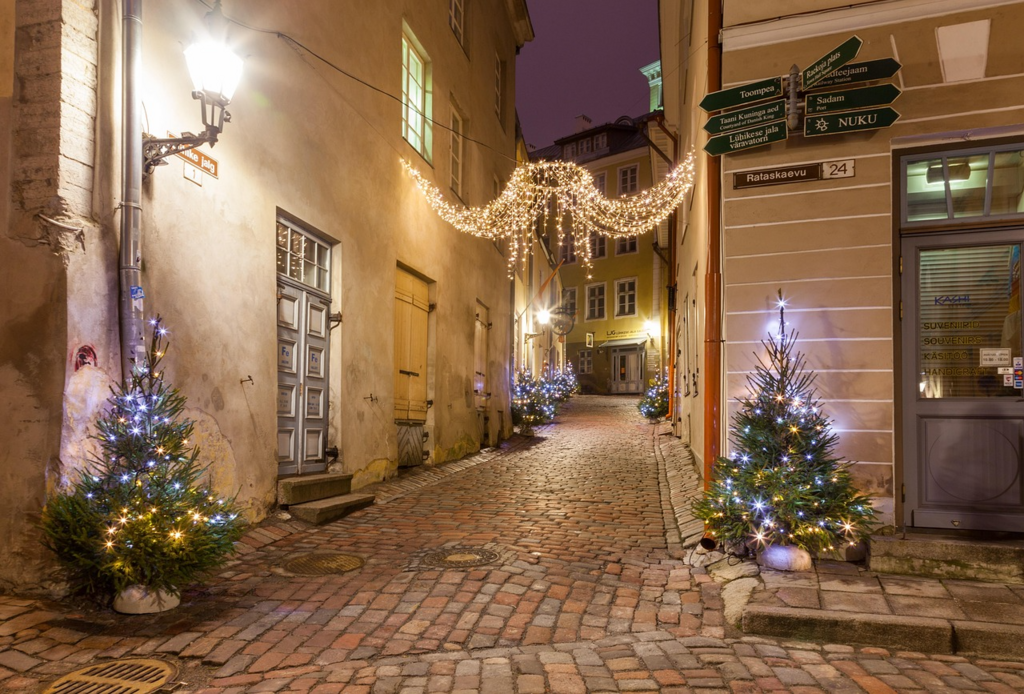

Putting Christmas lights on trees can transform an ordinary yard into one of the most eye-catching parts of a holiday display.
A row of illuminated trunks can frame a driveway. Lights wrapped through branches can turn a mature tree into a dramatic focal point. Even one small ornamental tree near an entrance can add depth to a display that might otherwise be limited to the roofline.
The challenge is getting the placement right.
Use too few lights and the tree can disappear into the darkness. Wrap them unevenly and the result may look rushed. Use the wrong equipment or installation method and you can create unnecessary electrical and ladder hazards.
Whether you are lighting one tree or planning an entire property, here is how to approach placement, wrapping, and safety.
Where Should You Put Christmas Lights on Trees?
Before buying lights, decide which trees will contribute the most to the overall display.
You do not necessarily need to illuminate every tree on the property.
Start with trees that are:
- Near the front entrance.
- Along a driveway or walkway.
- Visible from the street.
- Close to the house or building.
- Part of an important landscape bed.
- Large enough to create a strong focal point.
Think about the property as a complete scene.
If the roofline is already brightly illuminated, tree lights can extend the display down into the landscape. If the building decorations are simple, one or two prominently lit trees can become the main visual feature.
Ware Landscaping commonly combines professional Christmas light installation with roofline lights, tree wraps, shrub lighting, garland, wreaths, and stake lighting to create a more balanced display.
Should You Wrap the Trunk or the Branches?
Both approaches work, but they create very different effects.
Trunk Wrapping
Wrapping the trunk creates a clean column of light and emphasizes the natural shape of the tree.
It works especially well for:
- Trees lining driveways.
- Trees near entrances.
- Multiple trees arranged in a row.
- Properties seeking a neat, symmetrical appearance.
You can stop the lights where the major branches begin or continue onto selected branches.
Trunk and Branch Wrapping
Continuing lights from the trunk into major branches creates a more dramatic display.
Instead of seeing only a glowing vertical line, you begin to see the tree’s entire structure after dark.
This method works particularly well with mature deciduous trees whose branching patterns are visible during winter.
It also requires substantially more lighting and more installation time.
Canopy Lighting
Another option is distributing lights throughout the canopy rather than tightly wrapping individual branches.
This produces a softer, sparkling effect.
Canopy lighting can work well for smaller ornamental trees or evergreens where individually wrapping numerous branches would be impractical.
How to Wrap Christmas Lights Around a Tree Trunk
The basic idea is simple: start near the base and work upward in a consistent spiral.
The quality of the finished display depends on consistency.
First, inspect the tree and determine where the electrical connection will begin. Starting close to the power source reduces unnecessary extension cords running across the property.
Secure the beginning of the light strand without driving nails or tacks into the tree.
Then wrap the lights around the trunk while maintaining approximately even spacing between each rotation.
The tighter the spacing, the brighter and more densely illuminated the trunk will appear.
Periodically step away from the tree as you work. Viewing it from a distance makes uneven spacing much easier to notice than when you are standing directly beside the trunk.
When one strand ends, connect additional strands only according to the light manufacturer’s limits.
How Far Apart Should the Lights Be?
There is no single correct spacing for Christmas lights on trees.
It depends on how bright you want the display to look.
Closer spacing creates a dense, professional-looking column of light. Wider spacing uses fewer lights and produces a simpler effect.
The most important factor is consistency.
A tree where the wraps are four inches apart at the bottom, eight inches apart halfway up, and three inches apart near the top tends to look uneven after dark.
Before beginning a large project, wrap a short section and turn the lights on.
Step back to the viewing distance from which people will normally see the tree. Adjust the spacing before completing the entire trunk.
How Many Christmas Lights Do You Need for a Tree?
The answer depends on more than the height of the tree.
A 20-foot tree with a narrow trunk can require fewer lights than a shorter tree with a thick trunk and several large branches.
Consider:
- Trunk circumference.
- Height you want to illuminate.
- Spacing between wraps.
- Number of branches being wrapped.
- Desired brightness.
- Bulb spacing on the light strand.
Branch wrapping can increase the amount of lighting required dramatically.
For that reason, professional estimates usually consider the actual shape and size of the tree instead of relying only on its height.
Ware Landscaping’s Chicago holiday-lighting packages, for example, may include hundreds or more than a thousand mini lights for trees depending on the display design.
What Type of Christmas Lights Work Best on Outdoor Trees?
Mini LED lights are one of the most useful options for wrapping trees.
Their small size makes them easier to work around trunks and branches, while LED technology provides bright illumination with relatively low energy use.
Most importantly, any lighting installed outside should be specifically rated for outdoor use.
The U.S. Consumer Product Safety Commission recommends checking holiday lights for certification for outdoor use and inspecting strands for cracked sockets, exposed or frayed wiring, and loose connections before installation. Damaged strands should not be used.
The color depends on the style you want.
Warm white creates a traditional and elegant appearance.
Cool white produces a brighter, crisper effect.
Multicolor lights create a more playful display.
You can also coordinate the trees with your roofline and other decorations so the entire property feels intentional.
Avoid Damaging the Tree
Holiday lighting should be temporary.
Avoid driving nails, screws, or sharp fasteners into living trees simply to support light strands.
The CPSC recommends fastening outdoor lighting securely and specifically warns against using nails or tacks for outdoor light strings.
Do not pull the strand excessively tight around the trunk or branches either.
Lights should remain secure enough to withstand normal weather while still being removable at the end of the season.
When taking them down, unwrap them carefully instead of pulling an entire strand free from the ground.
Pay Attention to Outdoor Electrical Safety
Christmas lights spend weeks exposed to rain, snow, ice, and freezing temperatures.
That makes electrical safety particularly important.
Before installation:
- Use lights certified for outdoor use.
- Inspect wiring and sockets for damage.
- Use outdoor-rated extension cords.
- Keep electrical connections appropriately protected from the weather.
- Follow manufacturer limits for connecting multiple strands.
- Use properly protected outdoor electrical outlets.
The CPSC recommends connecting outdoor holiday lights to a GFCI-protected receptacle or portable GFCI. GFCI protection is designed to reduce the risk of electric shock when electrical equipment is used around moisture.
Do not assume that adding more extension cords is an acceptable substitute for planning the electrical layout.
For a large tree-lighting project, determine where the power will come from before installation begins.
Keep Lights Away From Power Lines
One tree should immediately be removed from your DIY lighting list: a tree that places you or your equipment near overhead electrical lines.
Branches, ladders, tools, and light strands should all be kept away from energized utility equipment.
OSHA’s tree-work guidance recognizes electrical lines as a significant hazard around trees, and its standards place strict limitations on working near energized conductors.
If installing lights would require reaching around or approaching overhead power lines, do not proceed as a normal DIY decorating project.
Be Careful With Ladders
The higher the lights go, the more important ladder safety becomes.
Use a ladder appropriate for the height and task, and place it on stable, level ground.
OSHA requires ladders to be used on stable and level surfaces unless they are secured against displacement. It also warns against using ladders on slippery surfaces without appropriate precautions.
Other sensible precautions include:
- Inspecting the ladder before use.
- Keeping the area around the ladder clear.
- Avoiding installation during snow, ice, high winds, or heavy rain.
- Never standing on the top step of a stepladder.
- Repositioning the ladder rather than leaning excessively to one side.
- Having another person nearby when appropriate.
Tall-tree installation can quickly move beyond what is sensible to accomplish from an ordinary residential ladder.
Don’t Forget How the Lights Will Come Down
Tree lighting is only temporary, so removal should be part of your plan from the beginning.
Avoid creating complicated knots between branches that will be difficult to access in January.
When removing lights:
Unplug them before beginning.
Work methodically from the final section back toward the starting point.
Do not stand on the ground and pull lights out of the branches.
Inspect each strand as it comes down and separate damaged sets instead of storing them for another year.
Coil and label usable strands so you know which tree or section they belonged to next season.
Ware Landscaping’s professional holiday-lighting service includes both installation and post-season removal, eliminating the need for homeowners or property managers to return to tall trees in winter conditions.
Common Mistakes When Putting Christmas Lights on Trees
Some mistakes only affect appearance. Others create unnecessary safety problems.
Wrapping without testing the lights first: Discovering a failed section after reaching the top of the tree means doing the job twice.
Using indoor lights outside: Exterior lights should be rated for outdoor conditions.
Spacing wraps inconsistently: Small differences become surprisingly noticeable after dark.
Trying to light every branch: Focus on the tree’s main structure instead of creating an installation that is unnecessarily complicated.
Using too few lights: A lightly wrapped tree can appear disconnected from a bright roofline or surrounding display.
Ignoring the power source: Plan connections before you begin wrapping.
Working too close to electrical lines: Trees around overhead utilities require additional precautions and should not be treated like ordinary decorating locations.
Installing beyond a safe working height: If the job requires unsafe ladder positioning or equipment you do not have, professional installation is the better option.
Create a Display That Works With the Whole Property
The best Christmas lights on trees do not look like an afterthought.
They connect the landscaping to the rest of the holiday display.
Consider repeating the same light color used along the roofline. Wrap trees near the entrance more heavily than those farther away. Use shrubs and stake lights to visually connect illuminated trees with the building.
The result should guide the eye through the property rather than make every element compete for attention.
If you want the impact of beautifully wrapped trees without spending cold November afternoons untangling lights and climbing ladders, Ware Landscaping provides professional Christmas light installation throughout Chicago, Naperville, DuPage County, and surrounding Chicagoland communities.
The team can design, install, maintain, and remove complete holiday displays including tree wraps, rooflines, shrubs, garland, wreaths, and stake lighting.
Request a free quote and let Ware Landscaping turn your trees into part of a professionally designed holiday display.
Frequently Asked Questions
How do you put Christmas lights on outdoor trees?
Begin near the base of the trunk and wrap outdoor-rated lights upward using consistent spacing. You can stop at the first major branches or continue wrapping selected branches for a fuller appearance. Always plan the power source and inspect the lights before installation.
What lights are best for wrapping trees?
Outdoor-rated mini LED lights are a popular option because they are small, bright, energy-efficient, and flexible enough to wrap around trunks and branches.
Do you wrap Christmas tree lights from the top or bottom?
For outdoor trunk wrapping, beginning at the bottom is usually more practical because the power connection is typically near ground level. Work upward while maintaining even spacing.
How tightly should you wrap Christmas lights around a tree?
Lights should be secure but should not be pulled excessively tight around the trunk or branches. The installation is temporary and should be easy to remove after the holiday season.
Can you leave Christmas lights wrapped around trees all year?
It is better to remove temporary holiday lights after the season. Trees continue growing, weather can deteriorate light strands, and wiring left outside for extended periods can become damaged.
Is it safe to put Christmas lights on tall trees?
Height makes installation more difficult and increases fall risk. If reaching the desired branches requires unsafe ladder positioning, work near electrical lines, or specialized access equipment, professional installation is the safer approach.